
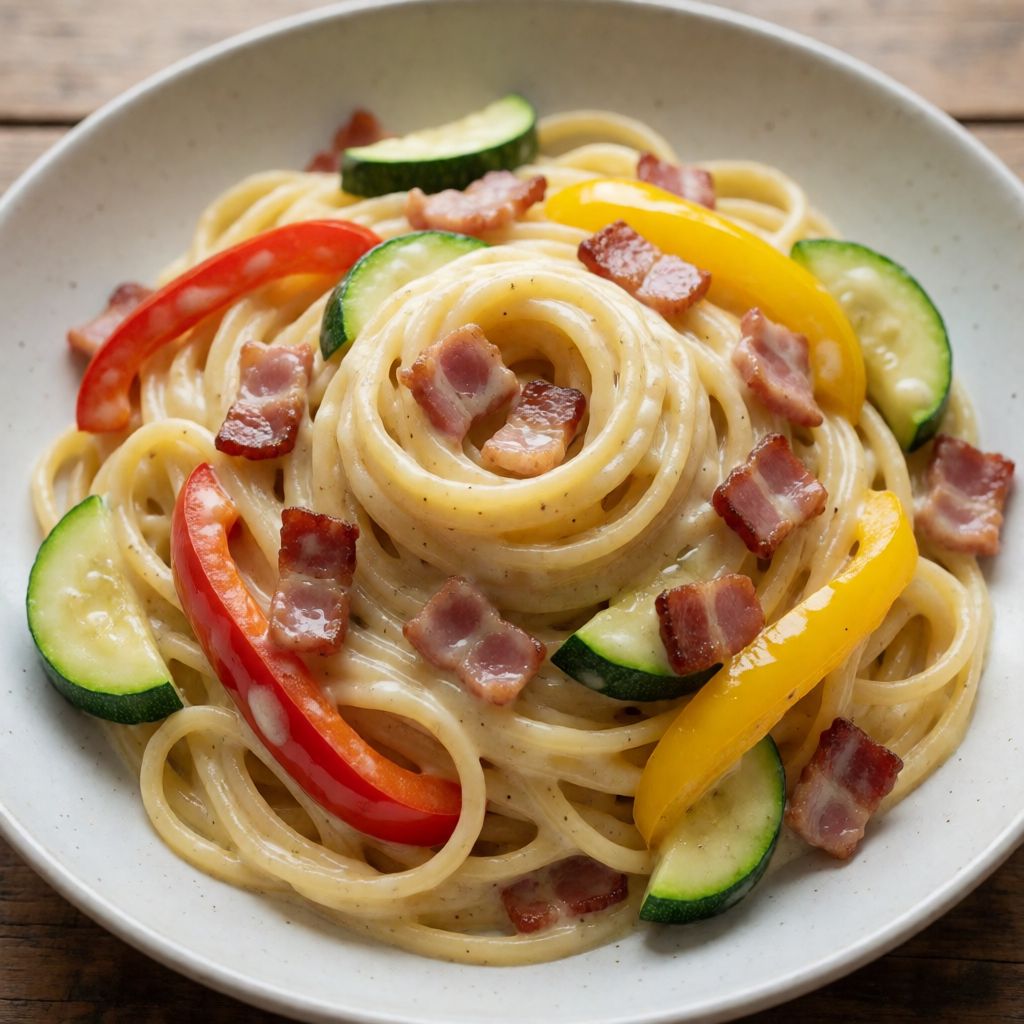
 AI photo
Carbonara with Vegetables
A pasta carbonara brightened with sautéed peppers and courgette alongside crisp pancetta.
Labels are worked out automatically from the ingredients and can be wrong. Check the packaging if it matters to you.
Ingredients
- 400 g Spaghetti
- 1 pcs Bell Pepper
- 2 pcs Courgette
- 1 pcs Shallot
- 120 g Pancetta smoked
- Olive Oil for frying
- Salt to taste
- Black Pepper to taste
- Basil to taste, or mint
- 2 tbsp Pecorino Romano grated, plus extra to serve
- 4 pcs Egg Yolk




Steps
In a frying pan with a little olive oil, sauté the courgette, pat dry with paper towel and set aside; fry the bell pepper the same way.
In the pan, fry the shallot and pancetta until cooked through (internal temperature at least 70°C).
In a bowl, whisk the egg yolks with the Pecorino Romano and black pepper.
Cook the spaghetti until al dente, drain and transfer to the pan with the egg mixture, add the basil (or mint) and Pecorino Romano, toss quickly and serve.
Let's be honest about what this is first: it is not carbonara. It's a pancetta-and-egg-yolk pasta that borrows carbonara's method and then invites courgette and pepper to the party. Real carbonara from Rome doesn't have cream, garlic, or vegetables — it's egg, cured pork, cheese, pepper, pasta, nothing else, and Roman cooks will tell you so with some feeling. This version knows that and doesn't pretend otherwise. What decides whether it works is the same thing that decides any carbonara-style dish: whether the egg yolks turn into a sauce or into scrambled egg.
That's the whole mechanism. Egg yolk sets somewhere around 65°C. The pasta comes out of the pot at around 90°C, carrying heat and a bit of starchy water with it. You pour that hot, wet pasta straight onto raw yolks and cheese, off the stove, and toss. The pasta's own residual heat — not a flame, not a pan on the hob — is what cooks the yolks, slowly enough that they go creamy instead of grainy. The moment you do this over heat, or let the pasta sit and cool first, you've pushed the egg past the point where it stays a sauce. Either it scrambles (too hot) or it stays raw and slides off the pasta (too cold, no residual warmth left to finish it). This is why the instruction to pull everything together fast, off the heat, in the pan the pancetta was fried in — using that pan's warmth and fat as a buffer — isn't fussiness. It's the one window where the chemistry goes your way.
Spaghetti: go with a flour-based dried pasta, not fresh egg pasta — you're already adding egg yolks in the bowl, you don't need more in the noodle. The starch washing off it into the pot matters more than people think: that cloudy pasta water, a splash of it added if your sauce looks tight, is what lets the yolks stretch into a coating instead of clumping. Don't rinse the pasta after draining — you'd wash away the very thing that helps the sauce grip.
Pancetta, smoked: this stands in for guanciale, which is cured pork jowl and the thing actual carbonara is built on. Guanciale is harder to find on a UK shelf, so pancetta is the honest substitution — what you're really after is cured pork fat that renders and seasons the oil it sits in, so look for a cut with visible fat, not lean bacon medallions. The "fry until cooked through, 70°C" instruction is less about food safety theatre and more practical: pancetta that's still pale and flabby won't have rendered its fat, and that fat is doing real work carrying flavour into the courgette and pepper that follow it into the same pan.
Shallot: milder and sweeter than onion, so it dissolves into the background rather than announcing itself over the pancetta. If you've only got a small onion, use it — just chop it finer, since onion holds its shape more stubbornly and you don't want crunchy bits interrupting a sauce that's meant to be smooth.
Courgette and bell pepper: these are the part that would make a Roman cook raise an eyebrow, but think of them as what you do with a vegetable drawer that needs using — any firm vegetable that sautés without collapsing into mush works here, so swap in aubergine or mushroom if that's what's in the fridge. The point of frying them separately rather than all together is that courgette releases water and pepper doesn't; cook them in the same pan at the same time and the pepper just steams in the courgette's runoff instead of getting any colour.
Pecorino Romano: sharp, salty, sheep's milk — it's doing seasoning work as much as flavour work, which is why there's barely any added salt elsewhere in the recipe. If you can't get it, Parmesan is the usual swap, though it's milder and less salty, so taste before you add more on top at the end. Any hard grating cheese with some bite will do; what you're avoiding is anything soft or mild that melts into blandness rather than seasoning the yolks.
Egg yolk, four of them for four people: one each is the ratio that gives enough yolk to coat 400g of pasta without drowning it, and using yolk only — not whole egg — keeps the sauce silky rather than watery, since the white is mostly water and sets harder. Some people throw in a whole egg "to make more sauce" — don't; you'll get a thinner, more rubbery result for your trouble, not more of anything you wanted.
Basil or mint at the end: this is fresh, cooling counterpoint to a dish that's otherwise all fat and salt — tear it in rather than chop, so it bruises less and keeps some brightness instead of going straight to that flat, grassy smell cut herbs get after a knife's been through them.
And patience is the real ingredient the recipe doesn't list: rushing the egg-and-pasta toss, or doing it over a flame because you're worried it'll go cold, is the single most common way this dish turns into scrambled egg on noodles. Give it the minute it needs, off the heat, and let the pasta's own warmth do the quiet work.