
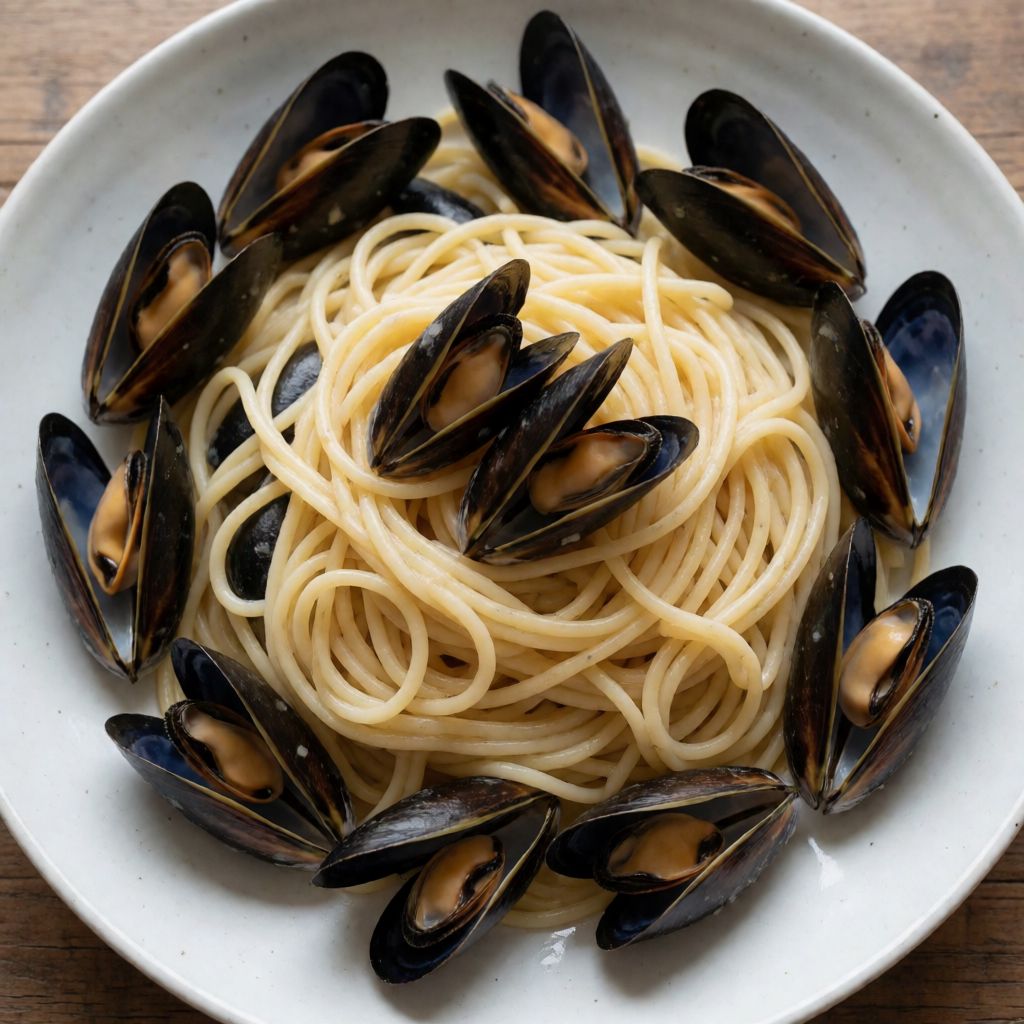
 AI photo
Spaghetti with Mussels
Spaghetti with mussels, a quick and fragrant pasta dish finished with garlic, white wine, parsley and lemon zest.
Labels are worked out automatically from the ingredients and can be wrong. Check the packaging if it matters to you.
Ingredients
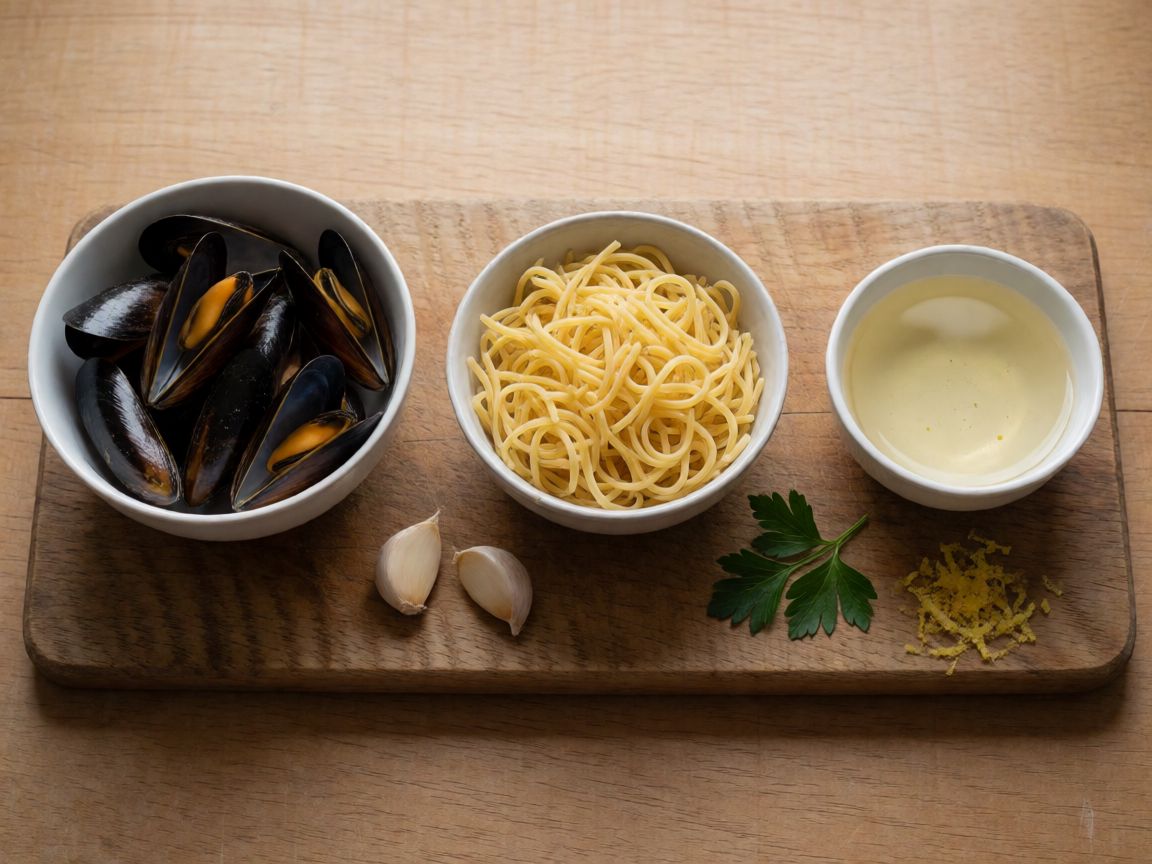
- 1 kg Mussels
- 320 g Spaghetti
- 2 clove Garlic
- 125 ml White wine
- Olive oil to taste
- Salt to taste
- Black pepper to taste
- Parsley to taste
- 1 Lemon zest









Steps
Put the mussels in a pressure cooker with water, close the lid, turn the heat to high and wait for the whistle.
1 minReduce the heat to minimum and cook for exactly 1 minute. Release the steam and discard any mussels that did not open.
1 minRemove most of the mussels from their shells, leaving a few whole for garnish.
Strain the liquid from the mussels through a paper towel into a bowl.
In a large frying pan, heat the olive oil, add the garlic, wine, strained mussel liquid, chopped parsley and mussels, and cook over high heat for 5 minutes.
5 minTransfer the mussels to a plate, leaving only the liquid and garlic in the pan.
Cook the spaghetti in salted water until very al dente (half the time on the packet), drain and transfer to the pan.
Add freshly ground black pepper, cover with a lid and finish cooking for about 4 minutes, stirring.
4 minRemove the garlic, add the mussels, parsley and lemon zest, and mix everything together.
Season with salt and pepper to taste, and add more olive oil if you like.
Serve the spaghetti with mussels immediately, while hot, garnished with a few mussels in their shells.
This is a dish built on borrowed liquid. Everything that makes it taste of the sea comes from the water the mussels gave up while cooking — not from a jar of sauce, not from a splash of fish stock you bought. The pasta finishes cooking inside that liquid, and that's the whole trick: spaghetti that absorbs mussel juice instead of swimming next to it.
Mussels themselves tell you when they're done by refusing to open. A mussel that stays shut after cooking was dead before it went in the pot — it won't open because there's nothing alive inside pulling the muscle loose. Throw it out. No amount of extra time will coax it, and eating it is the one real risk in this whole recipe.
What decides whether this works isn't skill with a knife or a steady flame — it's whether you let the liquid do the talking. Salt comes last, almost as an afterthought, because the sea already salted your mussels for you. Add salt early and you're seasoning blind, guessing at a brine you haven't tasted yet.
Start with the pressure cooker step, because it looks odd on paper and it's the part people skip or distrust. One minute at full pressure is not a typo — mussels are small, thin-shelled, and mostly water already. Longer and the meat inside turns to rubber, tight and chewy, the texture people wrongly blame on "bad mussels" when it was really overcooked ones. The whistle-then-one-minute rule gives you just enough heat to force the shells open without cooking the flesh past the point of tenderness. No pressure cooker at home? A wide pan with a tight lid and a hard boil for two or three minutes does the same job less precisely — watch for the shells gaping, not the clock.
The paper-towel strain matters more than it sounds. Mussels sit in sand and grit their whole lives; even farmed ones carry a little sediment in the shell. Skip the strain and you get a gritty mouthful at the end of a dish that's supposed to taste clean. A paper towel, or a double layer of kitchen roll in a sieve, catches what a sieve alone lets through.
The garlic goes in whole, bruised rather than chopped, and comes back out before the pasta is dressed. Some say you must mince garlic for flavour — no, because minced garlic left in hot oil for the full cooking time turns bitter and burnt-tasting, and bitterness is the one note this dish can't absorb. Whole cloves release enough oil-soluble flavour slowly, then leave quietly.
Half-cooking the spaghetti before it goes into the pan is not a shortcut, it's the method. The pasta needs raw cooking time left in it so it can finish inside the mussel liquid and actually drink it, the way risotto drinks stock. Boil it fully first and the pan stage just reheats already-finished pasta sitting in liquid it can't take up anymore — you'd have wet pasta with sauce on top rather than pasta that tastes of mussel from the inside. A lid over the pan at this stage isn't about trapping heat so much as trapping the steam that's doing the last of the cooking; a plate set over the pan works as well as any lid if that's what your kitchen has.
White wine earns its place by cutting through the richness mussels bring and lifting the smell of the dish — any dry, unsweetened wine does this; a sweet one will fight the salt instead of supporting it. Olive oil should smell of itself but not shout over the sea flavour — "extra virgin" isn't a magic word, it's just oil that hasn't been refined into blandness; any light, clean oil without a strong competing smell will substitute, though you lose a little of that grassy edge.
Lemon zest at the very end, not lemon juice — zest gives you the oil from the skin, sharp and aromatic, without the acidity that would curdle the liquid or sour the whole pan. If you've no lemon, a little grated zest from an orange won't replicate it, but a pinch of finely chopped parsley stem and extra black pepper will at least keep the dish from tasting flat. Patience is the real ingredient across all of this — rushing the mussels toughens them, rushing the pasta stage leaves it starchy and separate from the sauce instead of married to it. Thirty minutes total sounds fast for seafood pasta, and it is, but every one of those minutes is doing a specific job, not filling time.