
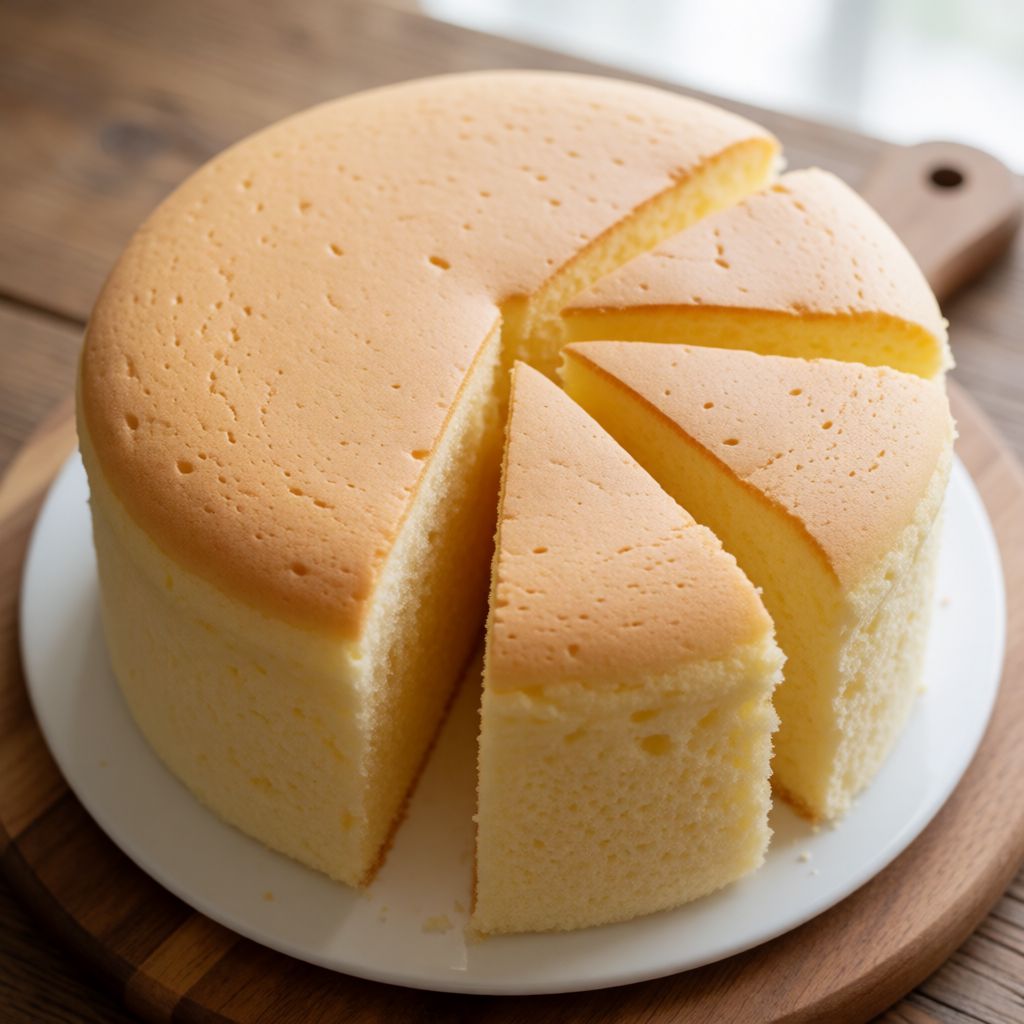
 AI photo
High and Fluffy Sponge Cake (No Raising Agent)
A tall, fluffy sponge cake made without any raising agent, relying on well-whipped eggs for its airy texture.
Labels are worked out automatically from the ingredients and can be wrong. Check the packaging if it matters to you.
Ingredients
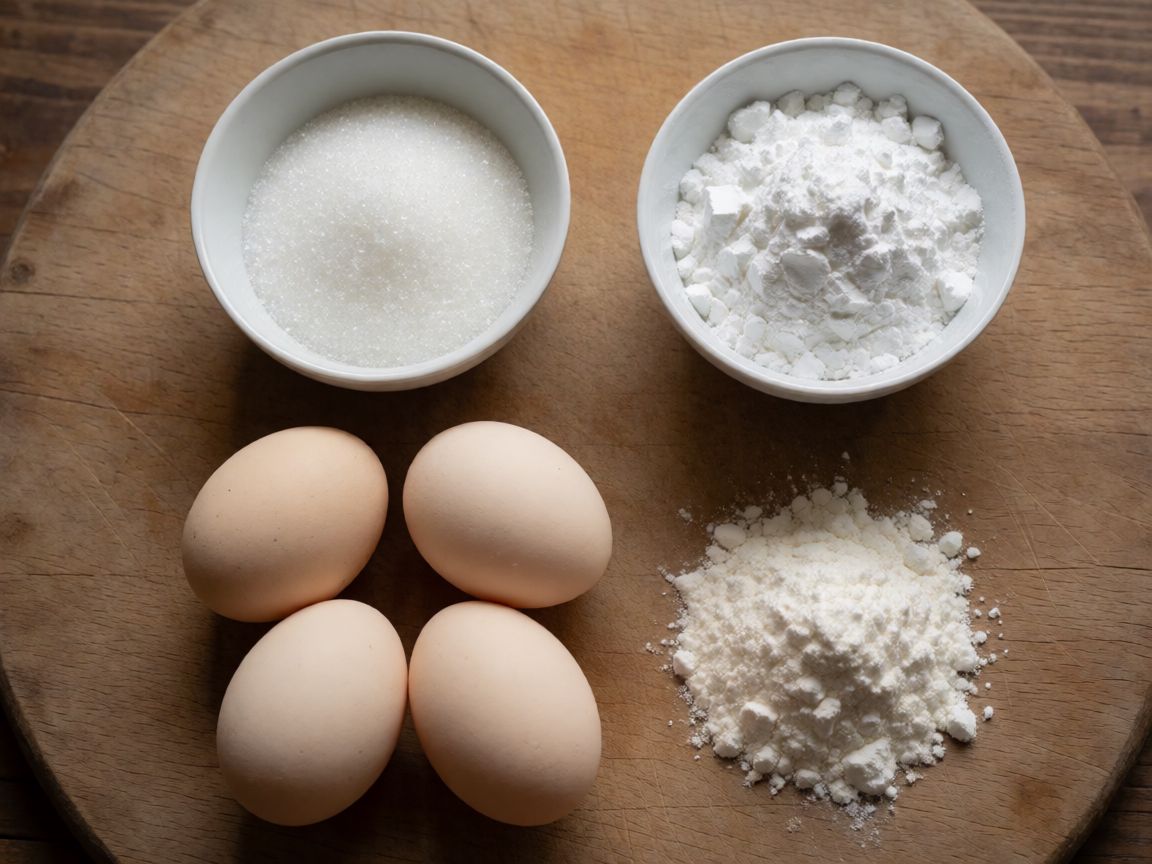
- 4 pcs Eggs room temperature
- 100 g Caster sugar
- 65 g Potato starch
- 65 g Plain flour



Steps
Break the room-temperature eggs into a bowl, add the sugar and beat with an electric mixer for 10-15 minutes, until the mixture turns pale, light and airy.
15 minIn a separate bowl, sift the flour and potato starch together, mix, then gradually fold into the beaten eggs with a spatula, using gentle bottom-to-top movements.
Pour the batter into a 22 cm tin, greased with butter and dusted with flour.
Bake in a preheated fan oven at 180°C for about 25 minutes, without opening the door for the first 20 minutes.
25 minCheck that it's done with a wooden skewer towards the end of baking: it should come out dry or with a few dry crumbs.
Remove the sponge from the oven and leave it to cool completely on a wire rack.
This is a sponge with no raising agent at all — no baking powder, no soda, nothing in a packet. The lift comes entirely from one place: the air you beat into the eggs. Four eggs and sugar, whipped until the mixture is pale and thick enough to hold a ribbon when you lift the whisk — that ribbon of batter sitting on the surface for a second or two before sinking back in. That's the only engine this cake has, so if it stalls, the cake stalls with it.
Everything after the beating is really just damage control — protecting the air you've just trapped. The flour and starch go in by folding, not stirring, because a spoon dragged round and round pops bubbles the same way stepping on bubble wrap does. Bottom-to-top, gentle, done the moment you can't see dry flour anymore — that's the whole instruction, and it's enough.
Some say sponge needs baking powder to rise "properly" — no, because what baking powder does is forgive you for beating badly. Here there's nothing to forgive. The eggs either hold their air or they don't, and that decision is made in the first ten minutes with the mixer, long before the oven comes into it.
Potato starch alongside the flour isn't decoration — it's there because plain flour alone builds too much gluten structure for something this delicate, and the cake turns rubbery instead of staying light. Starch cuts that structure down, which is the whole reason this method survives without a raising agent at all.
Room-temperature eggs matter more than people give them credit for. Cold eggs are stiffer, and stiff egg white and yolk resist trapping air — you'll beat for the same fifteen minutes and get a sadder, heavier foam. Take them out an hour before, or if you forgot, sit them in a bowl of warm (not hot) water from the tap for ten minutes. Hot water starts cooking them at the edges, which you don't want.
Caster sugar, not granulated — the finer crystal dissolves into the egg foam as you beat rather than sitting there gritty, and undissolved sugar is heavy enough to weigh the foam down before it's even in the oven. If all you've got is granulated, give it an extra few minutes in the mixer and don't rush it.
Potato starch is doing a specific, unglamorous job: diluting the gluten-forming proteins in the flour so the crumb stays soft instead of chewy. If you don't have potato starch, cornflour behaves the same way — it's the starch-not-gluten principle that matters, not the particular tuber or grain it came from. Don't swap in more plain flour to make up the weight; that undoes the whole point.
Greasing the tin with butter and a dusting of flour isn't fussy tradition — it's there because a sponge this light will cling to bare metal and tear itself apart coming out, especially round the edges where it's thinnest. The flour gives the batter something to grip that isn't the tin itself.
On not opening the oven door for the first twenty minutes: a sponge rises on trapped air and steam, and a blast of cold air from an opened door drops the temperature fast enough that the structure — still wet, still setting — collapses before it's had the chance to firm up around the bubbles. After that window it's set enough to tolerate a quick look. A domestic fan oven holds heat reasonably evenly, which is one place where a home kitchen actually has it easier than people assume — no kazan-level unevenness to fight here.
Leave it to cool fully on a rack before you touch it with a knife. Cutting into a warm sponge is cutting into something still mid-collapse — the crumb hasn't finished setting, and you'll get a dense streak at the base that has nothing to do with your beating and everything to do with impatience. Patience here isn't a virtue, it's an ingredient, same as the eggs.