Other
Applesauce
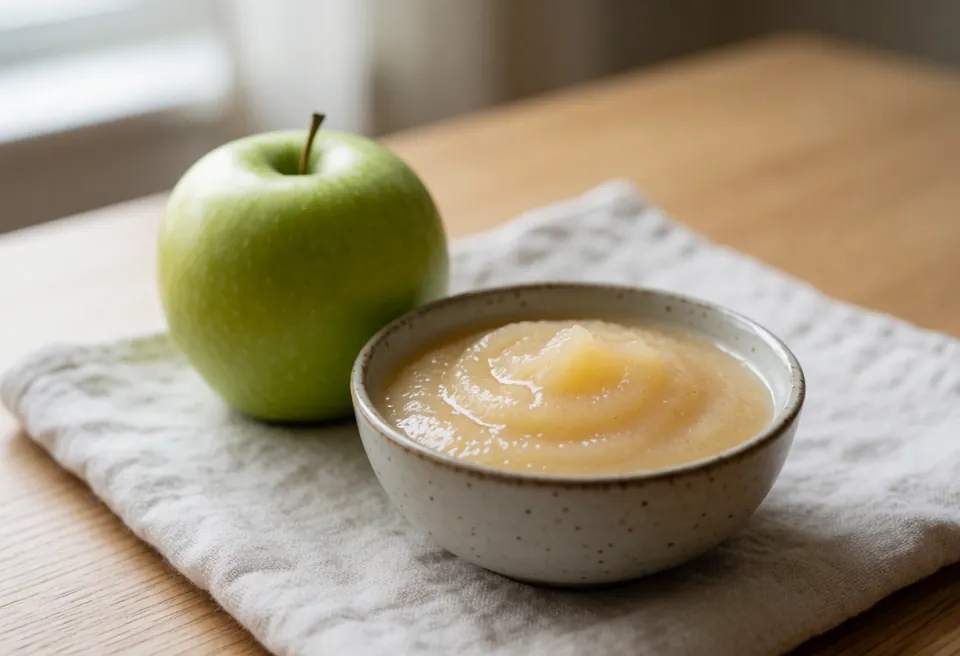
A smooth puree made from cooked apples, eaten on its own, used in baking, or served as a side with meat.
52 kcal per 100 g
Nutrition per 100 g
52 kcal
| Protein | 0.3 g |
|---|---|
| Fat | 0.2 g |
| Carbs | 12.3 g |
Source: USDA FoodData Central, 2026-09-21. Per 100 g of product.
Good to know: Applesauce
Let me tell you about applesauce, and why it behaves the way apples never do.
Once you cook an apple down and break its flesh apart, the fruit gives up its structure. Raw apples hold their shape because the cell walls are intact, like little bricks stacked together. Cook it, mash it, and those walls collapse. What you get is a soft, spoonable mass, with no bite left in it at all — the texture turns from crisp to something closer to cream.
Choose good applesauce by sight first. It should be dense, a little matte, never watery or separated. Smell it — real applesauce smells like apple, warm and a bit sharp, not like sugar syrup with a fruit memory. Taste a spoonful plain. If it needs sugar to taste like anything, the apples were poor.
Some people say applesauce is baby food, nothing for a grown cook's kitchen. No! It's a binder, a moisture-keeper, a way to soften a dense batter without butter. Believe the myth, and you'll reach for oil or egg where a few spoons of good applesauce would do the same work more gently, and taste better besides.