
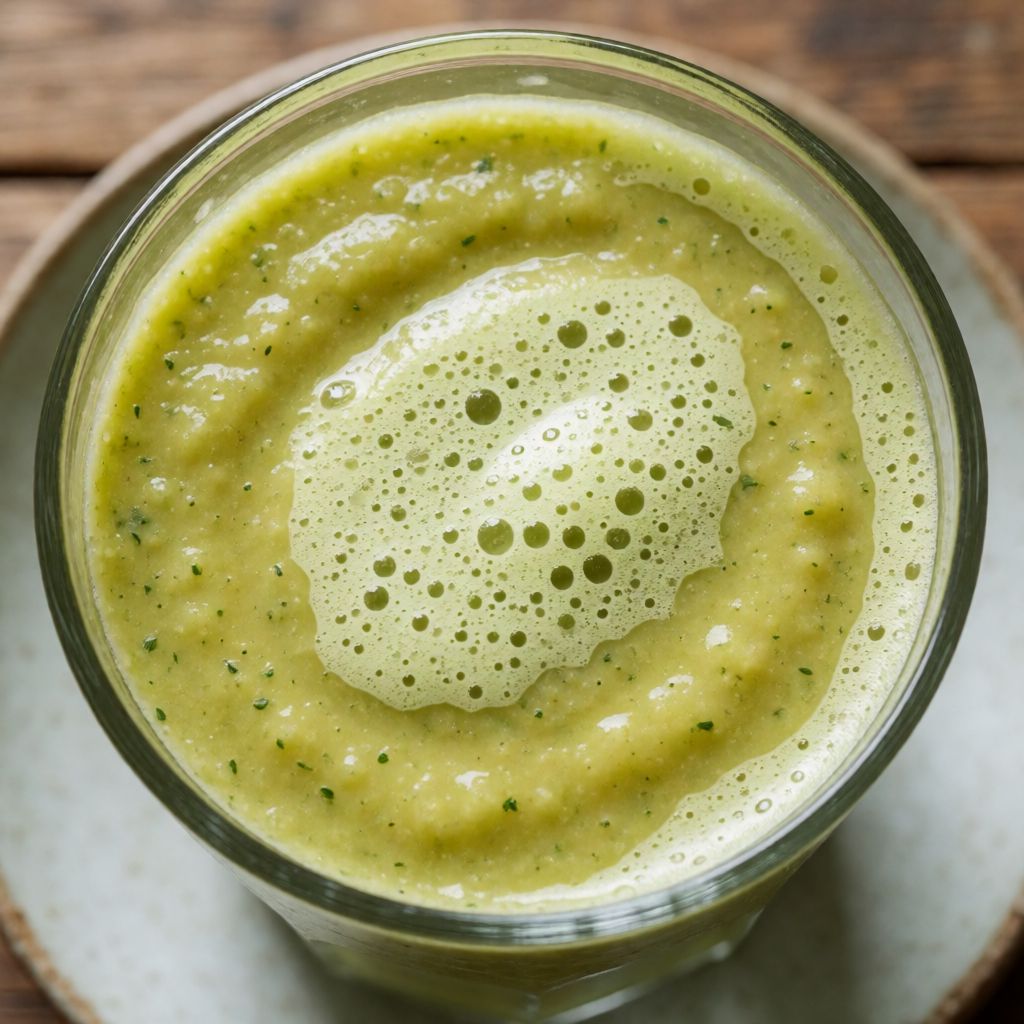
 AI photo
Celery, Parsley, Apple and Carrot Smoothie
A fresh juiced smoothie made from celery, carrot, apple and parsley, stirred together and served right away.
Labels are worked out automatically from the ingredients and can be wrong. Check the packaging if it matters to you.
Ingredients
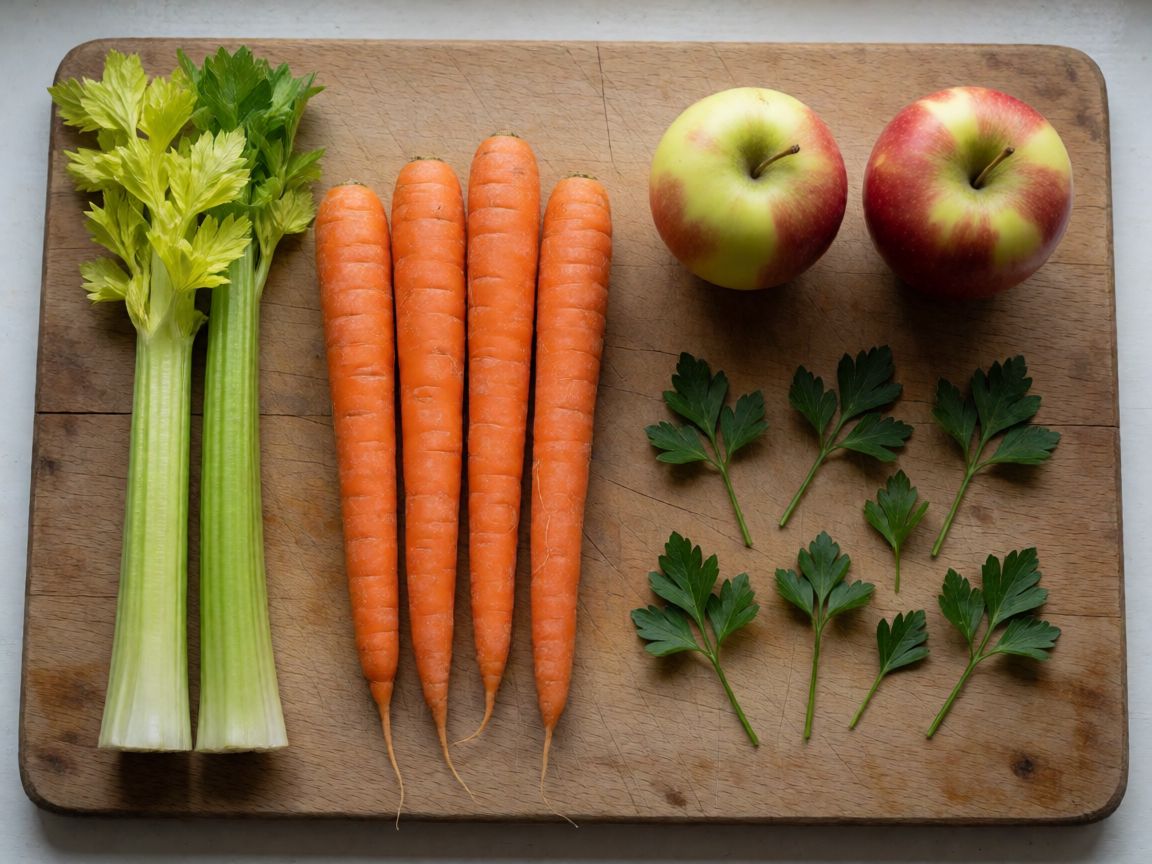
- 2 pcs Celery sticks
- 4 pcs Carrot
- 2 pcs Apple
- 10 pcs Parsley




Steps
Trim and peel the carrots, cut into chunks and put into the juicer.
Wash the parsley thoroughly, roughly chop it and add to the carrots.
Wash the apples, cut into quarters, remove the core and put into the juicer.
Wash the celery, peel off the outer layer, cut into pieces and add to the rest of the ingredients.
Close the juicer container and switch on the appliance.
Stir the resulting juice with a spoon before drinking.
This isn't really a smoothie, whatever the title says — a smoothie keeps the fibre, this is a juice, and a juicer leaves the pulp behind in its basket, not in your glass. Call it what it is: a cold-pressed or centrifugal juice of carrot, apple, celery and parsley. That matters because the whole texture and mouthfeel of the drink depends on which machine you own, not on the recipe.
What decides whether it works is balance, not virtue. Four carrots and two apples bring sugar and body; celery brings salt and a green, slightly bitter snap; parsley is there for colour and a sharp herbal lift, not bulk — ten sprigs is a seasoning, not a vegetable. Get the ratio wrong and you've either made carrot-apple cordial with a green garnish, or something that tastes like you're drinking the inside of a lawnmower.
The other thing that decides it: freshness of the produce going in, and speed getting the juice into a glass. Carrot and celery juice oxidises and separates fast — that's why you stir it with a spoon at the end, not because the recipe is fussy, but because the lighter apple-carrot liquid and the fibrous celery bits want to part company within minutes.
Carrot is the backbone — four medium ones, peeled because the skin carries grit and a slightly soapy bitterness from the soil, not because raw carrot skin is dangerous (it isn't, that's one worth retiring). Chunks, not whole carrots, because a domestic juicer's feed tube is narrow and the blade works better on pieces it can actually grip rather than one it has to wrestle.
Apple gives the sugar that makes the whole thing drinkable rather than medicinal. Any firm, not-too-soft eating apple works — a Braeburn or a Gala, something with enough acid to balance the sweetness, rather than a soft eater that'll turn to mush and clog the juicer's mesh. Core it out because pips carry a trace of cyanide compound (amygdalin) — harmless in the quantity here, but bitter, and bitterness is the thing you're trying to keep out.
Celery is doing two jobs: salt, in the sense of savoury depth, and a faint bitterness that stops the drink reading as pure apple squash. Peel the outer ribs if they're the stringy, old supermarket kind — those strings jam in a centrifugal juicer's basket and you end up picking celery floss out of the machine instead of drinking your juice. If your celery is young and tender, skip the peeling; that step exists to solve a specific, visible problem, not as a ritual.
Parsley is pure accent — ten sprigs, no more. Its job is chlorophyll bite and a green top-note that cuts the sweetness; it's not a cleanse ingredient, nothing here "detoxes" you, your liver does that job whether you drink this or not. If you're out of parsley, a smaller handful of spinach or a stick less celery and a squeeze of lemon gets you something in the same register — anything green and not-too-bitter that isn't trying to dominate.
On equipment: in a British kitchen this usually means a centrifugal juicer sold for exactly this kind of job, loud, fast, leaves foam on top. That's fine — the foam is just air whipped into the juice, harmless, settle it with the spoon-stir the recipe already tells you to do. A slow/cold-press juicer gives a cleaner-tasting, less separated result if you have one, but don't go buy one for this — the centrifugal version gets you the same drink, just noisier and a touch frothier.
Patience here is really just promptness in reverse — drink this within minutes of making it. There's no long simmer to wait out, no dough to prove; the only ingredient that costs you time is not leaving the glass on the side while you answer the phone. Carrot juice left standing goes a flat brownish-orange and loses the vegetal snap that made it worth juicing fresh in the first place.