
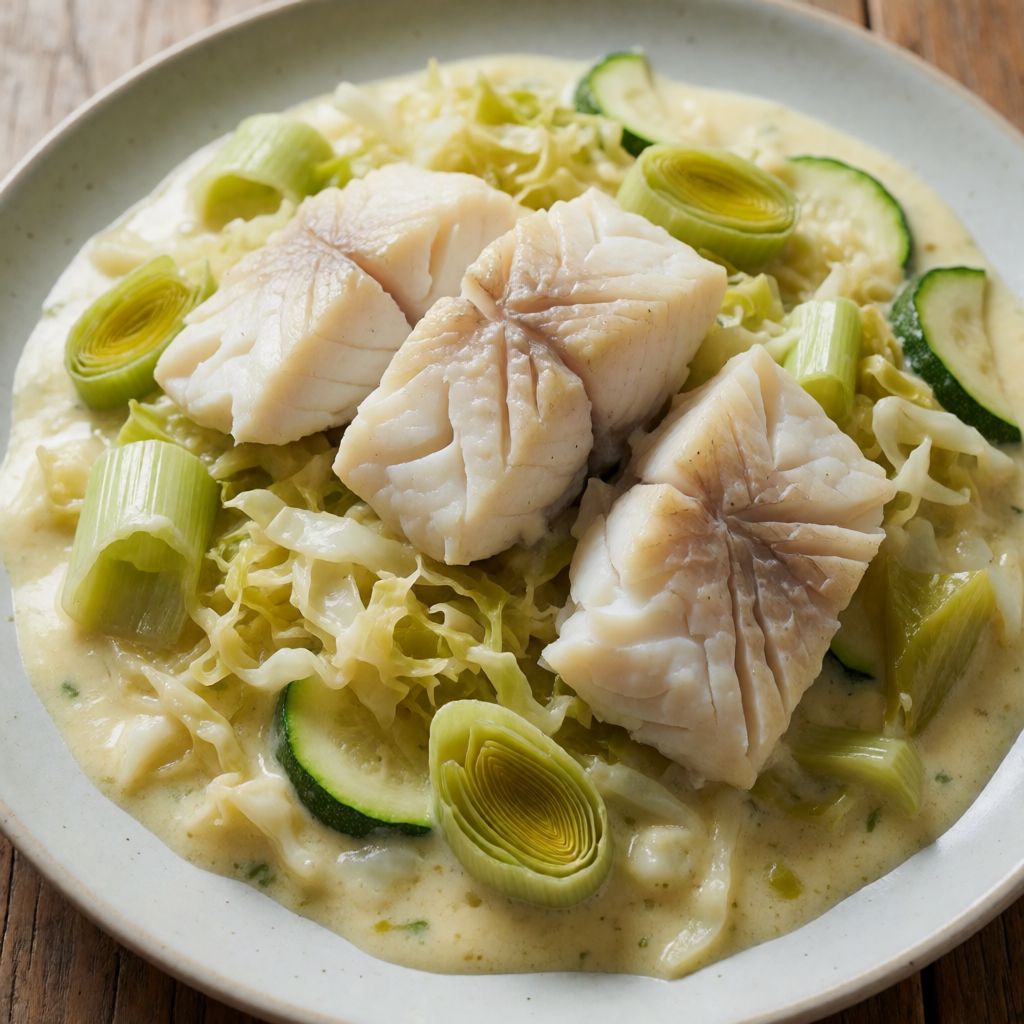
 AI photo
Cod and Leek Bake
A comforting fish bake with leeks, cabbage and courgette under a crisp lemon-herb crumb, finished with chunks of cod.
Labels are worked out automatically from the ingredients and can be wrong. Check the packaging if it matters to you.
Ingredients
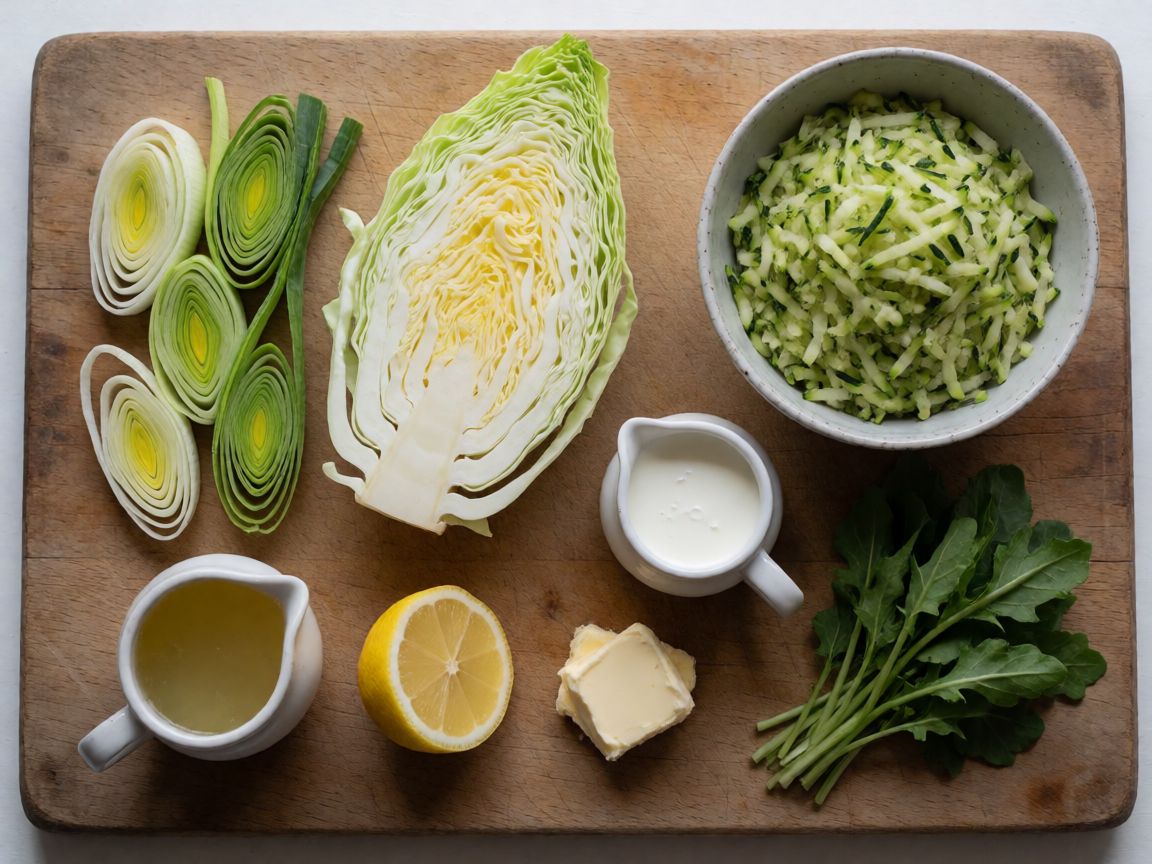
- 3 pcs Leek cut into thin rings
- ½ pcs Pointed cabbage thinly shredded
- 200 g Courgette coarsely grated
- 100 ml Double cream
- 100 ml Stock
- ½ pcs Lemon organic, juice and finely grated zest
- 1 tbsp Butter for the dish
- Salt
- Black pepper freshly ground
- 1 bunch Herbs
- 75 g Breadcrumbs
- ½ pcs Lemon organic, finely grated zest
- 600 g Cod
- 40 g Butter
- Salt
- Black pepper freshly ground
- 1 bunch Herbs finely chopped for sprinkling
- 700 g Potatoes boiled until tender













Steps
Put the leek, pointed cabbage and courgette into a buttered baking dish and mix with the double cream, stock and lemon zest.
Bake in a preheated oven at 180°C (fan) for about 10 minutes.
For the crispy topping, put the herbs, breadcrumbs, lemon zest, salt and black pepper into a mini chopper and blitz until the herbs are finely chopped.
Cut the cod into portion-sized pieces and lay on top of the baked vegetables in the dish, scattering the crispy crumb over the pieces.
Place a small piece of butter on each piece of fish.
Bake for a further 15 minutes or until the cod is cooked through.
Serve with freshly boiled new potatoes and herbs.
This is a two-stage bake, and the whole dish depends on you treating it as two stages, not one. The vegetables go in first and cook down into something closer to a creamy braise than a bed of raw veg — leek, cabbage, courgette all release water as they heat, and the cream and stock are there to catch that water and turn it into a sauce rather than a puddle at the bottom of the dish. Only once that's softened does the fish go on top, with its crust, for a shorter second burn. Cod on top of raw vegetables, all in together for 25 minutes, gives you a fish that's dry on the surface before the leek underneath has given up being crunchy. That's the fault line in this recipe and it's the one thing to respect.
The courgette is grated, not sliced, and that matters more than it looks like it should. Grated courgette has far more cut surface exposed to heat, so it collapses and sheds its water fast — that's exactly what you want here, since that water, not more cream, is half of what turns into sauce. If you sliced it instead, it would stay a bit rubbery at the 10-minute mark and never quite integrate.
Leek is doing more than flavour here — it's the vegetable that gives up its structure most readily under moist heat, turning soft and almost silky rather than stringy, which is exactly the texture you want holding the sauce together. Cut it into thin rings, not chunks, because a thick ring of leek has layers that separate and stay al dente in the centre while the outside's already collapsed; thin rings cook through evenly in the ten minutes you're giving them. If you can't get leek, a mild onion sliced thin will do the job of melting into the cream, though you lose that faint sweetness leek has over a sharper onion bite.
Pointed cabbage (hispi, if you're after it by name in a UK shop) is chosen for the same reason as the leek: it's a looser-leaved, more tender cabbage than a round white or Savoy, so it softens at the same rate rather than needing twice the time. Shredded thin, it behaves almost like a vegetable noodle in the finished sauce. Any cabbage works if you shred it fine enough and don't mind it holding a touch more bite — Savoy is the easiest swap.
Double cream and stock together, not cream alone, is a cost and texture decision as much as a flavour one. Cream alone over 25 minutes of oven heat can split or turn heavy; the stock dilutes the fat content just enough to keep the sauce loose and pourable, while still letting the cream do the job of coating and enriching. If you're using a stock cube, go easy on added salt until you've tasted — stock concentrates as the liquid reduces under the fish.
The lemon zest appears twice — once in the vegetables, once in the crumb — and that's not an oversight, it's two different jobs. In the vegetable base it cuts through the richness of the cream while it's still cooking down. In the crumb it stays raw-ish, baked only briefly on top, so you get a brighter, more citrus-forward hit there than in the sauce underneath. Use the zest only, not the juice, in the crumb — juice would turn the breadcrumbs damp and undo the crispness you blitzed them for in the first place. Organic or unwaxed lemon is specified because you're eating the peel itself, and a waxed lemon's skin carries a coating you don't want grated straight into your dinner.
Cod is the fish of convenience here, mild enough not to fight the cream and firm enough to hold its shape as a portioned fillet rather than flaking apart before it's even cooked. Any firm white fish — haddock, pollock, hake — substitutes on the same logic: firm flesh, mild flavour, a short cooking time. Oily fish like salmon would work differently and change the dish, not just substitute into it.
Boiled potatoes on the side are there for the oldest reason in British cooking: a cream sauce and a crisp crumb are rich, and a plain, unseasoned starch gives your palate somewhere to rest between mouthfuls — the same logic as potatoes alongside a Sunday roast, just without the roasting tray. Boil them whole or halved depending on size, and test the way you'd test any potato — a knife should go in without resistance, not a stopwatch. There's no trick here, just patience: don't rush them off the heat to keep pace with the fish, since they'll happily sit covered for a few minutes once done.
·