
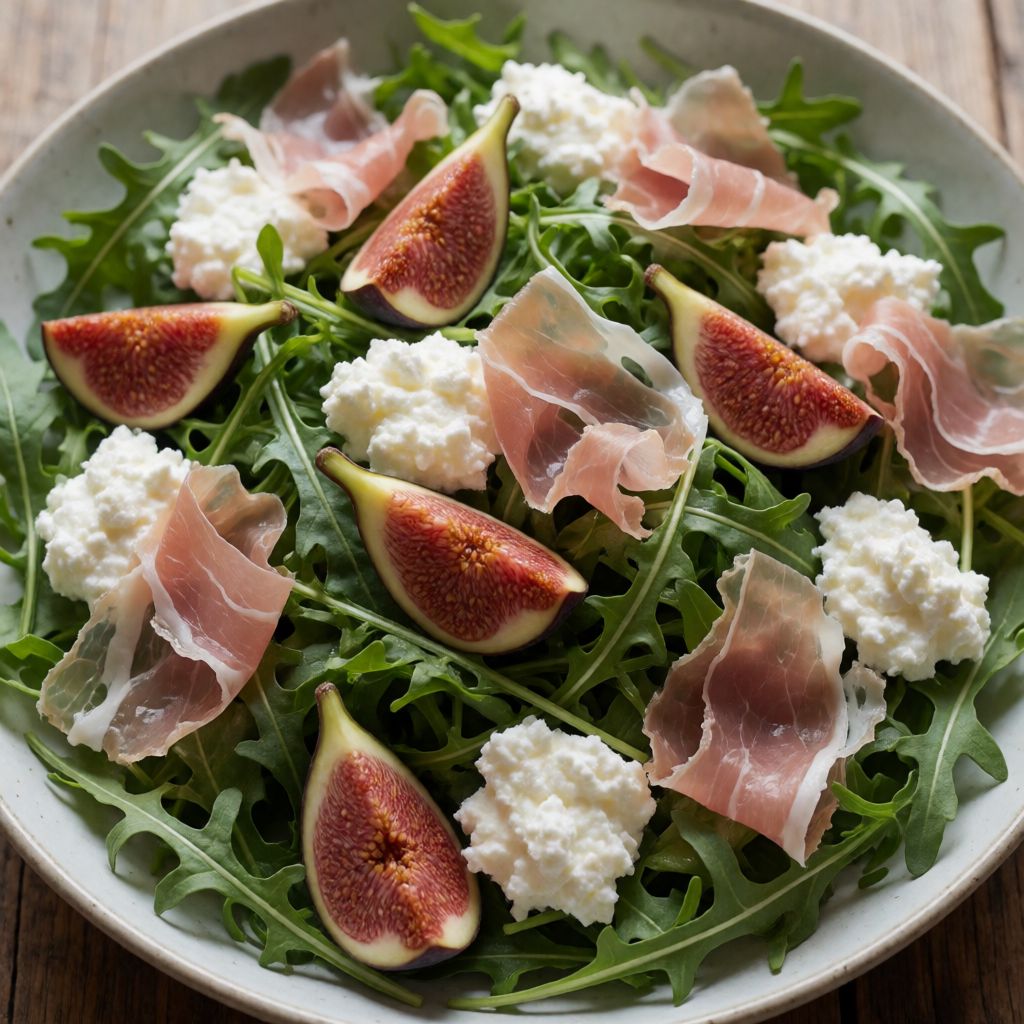
 AI photo
Fig Salad
A fresh salad of figs, rocket and goat's cheese with prosciutto and golden croutons.
Labels are worked out automatically from the ingredients and can be wrong. Check the packaging if it matters to you.
Ingredients
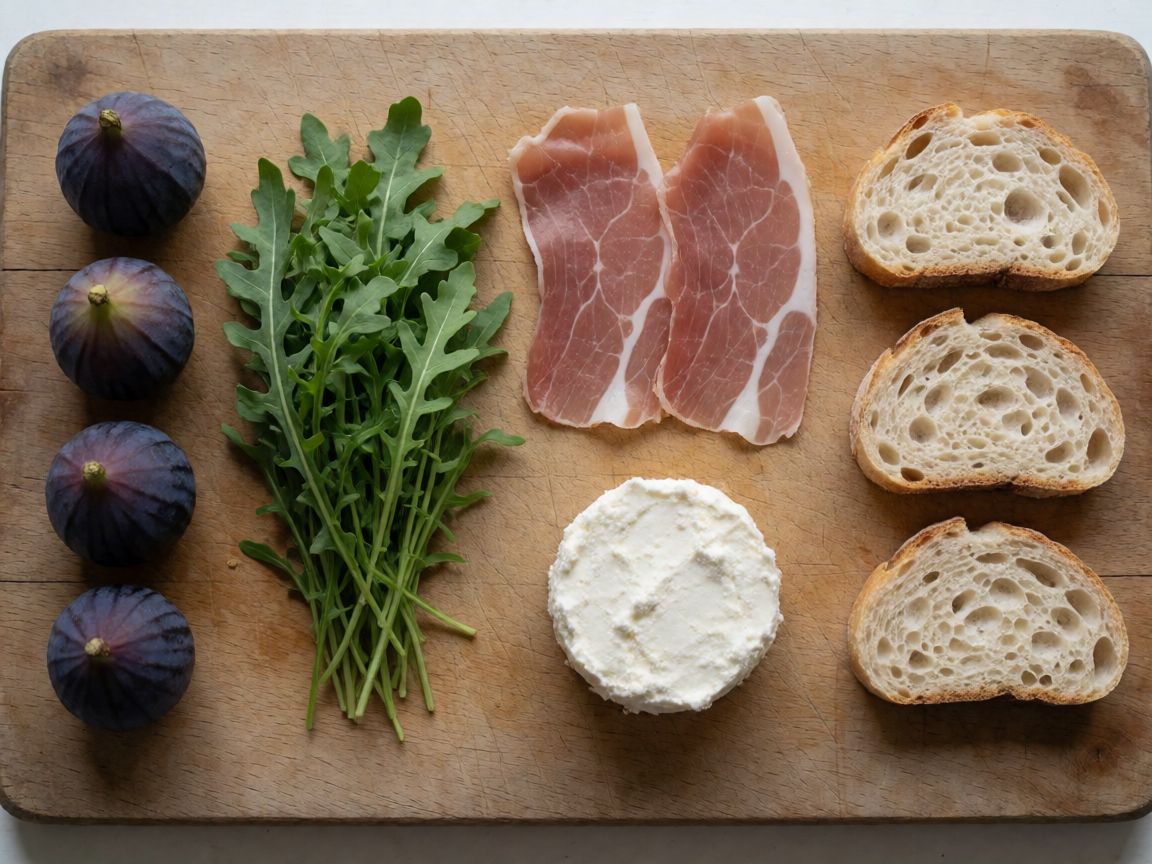
- 4 pcs Figs
- 1 bunch Rocket
- 2 pcs Prosciutto slices
- 1 pcs Goat's cheese
- 3 pcs Bread slices, for toasting
- Olive oil to taste
- Salt to taste
- Black pepper to taste


Steps
Wash the rocket thoroughly under running water and dry it with a salad spinner.
Place the rocket in a salad bowl and add the prosciutto, trimmed of fat and cut into thin strips.
Peel the figs, slice them and add to the salad.
Cut the goat's cheese into small cubes and add to the salad with the rocket and figs, then toss.
Toast three slices of bread, then cut them into cubes.
Heat olive oil in a pan, add the bread cubes and fry until golden brown.
Add the toasted bread to the salad and season with salt and black pepper to taste.
This isn't really a salad, it's an argument between four things that don't agree but somehow don't fight either: bitter leaf, sweet fruit, salty cured meat, sharp cheese. Add crunch and you've covered everything a mouth can register in one bite. That's the whole engineering. Nothing here is cooked in any meaningful sense — your one real job is composition and timing, not heat.
What decides whether it works is restraint with quantity and precision with contrast. Four figs, a bunch of rocket, a handful of prosciutto, a disc of goat's cheese — this feeds four as a starter, not as a meal, and if you stretch it to be dinner you'll dilute the point of it. The croutons go in last and go in just before the plate reaches the table, because bread sitting in dressed leaves for ten minutes isn't a crouton anymore, it's a sponge.
Some say figs need peeling always, properly, formally, like you're prepping for a photograph — no, because the skin on a ripe fig is thin and edible and half the people who tell you to peel it are repeating what they were told, not tasting the difference. Peel if the skin is tough or the fig is underripe and bitter at the edge. If it's soft enough to bruise under your thumb, leave it.
The figs are the centre of gravity — everything else is built to support or cut against their sweetness. Press one at the shoulder, near the stem: give means ripe, resistance means wait a day on the counter, don't force it in the fridge. If you genuinely can't get decent figs — and in a lot of the UK outside summer, you often can't, because fresh figs don't travel or store well and supermarkets sell them underripe out of necessity, not malice — a pear, properly ripe, does a similar job: sweet, soft, textural contrast to the leaf. It's not the same fruit but it's the same function.
Rocket's job is bitterness and bite, and it's non-negotiable in character even if the leaf itself is swappable — watercress does something close, with more pepper and less bitterness. Wash it properly and dry it properly, and that second part matters more than people think: wet leaves don't hold olive oil, they repel it, so your dressing pools at the bottom of the bowl instead of coating anything. A salad spinner isn't fuss, it's the difference between dressed leaves and leaves sitting in a puddle.
Prosciutto gives salt and a cured, slightly sweet depth you can't get from fresh meat — that's the whole reason cured ham exists as a category, people needed meat to survive without refrigeration, and the by-product of that preservation is a flavour nothing fresh replicates. Trim the fat if it's thick and waxy rather than thin and silky; thin fat melts a bit against the warmth of the croutons, thick fat just sits there chewy. No prosciutto in the house — any dry-cured ham works, speck, even a good serrano, the mechanism is the same: salt-cured, thin-sliced, eaten raw.
Goat's cheese is there for sharpness and a bit of acidity against the sweet fig, and texture matters more than brand: a firm log cuts into clean cubes, a very soft one just smears through the leaves, which isn't wrong exactly, it just changes the dish from "composed" to "mixed." If goat's cheese isn't your thing, a feta gives you similar salt-and-tang without the same specific goatiness.
The croutons are the one place real heat happens, and the point of frying rather than just toasting-and-cubing is a second layer of crunch with the olive oil carried right into the bread — they go gold and you stop, because past gold they turn bitter from the oil breaking down, which is the usual reason home-fried croutons taste burnt and acrid even when they don't look black. Use an oil with no flavour of its own if you want the bread to taste of bread and oil, not of the oil — a light olive oil or any neutral oil does that; use your best peppery extra virgin only in the final dressing, where you can actually taste it, not in the pan, where it just gets cooked away.
There's no formal dressing here beyond oil, salt, pepper — and that's deliberate, not an oversight. With this many competing flavours — bitter, sweet, salty, sharp — a vinaigrette with vinegar or lemon adds a fifth voice that starts arguing with the fig's natural acidity. Toss with the oil while the croutons are still warm, salt and pepper at the very end, and taste before you add more: the prosciutto's already salty, the cheese often is too, and over-salting here is the easy mistake because you're seasoning blind, without the dish built yet in front of you.