
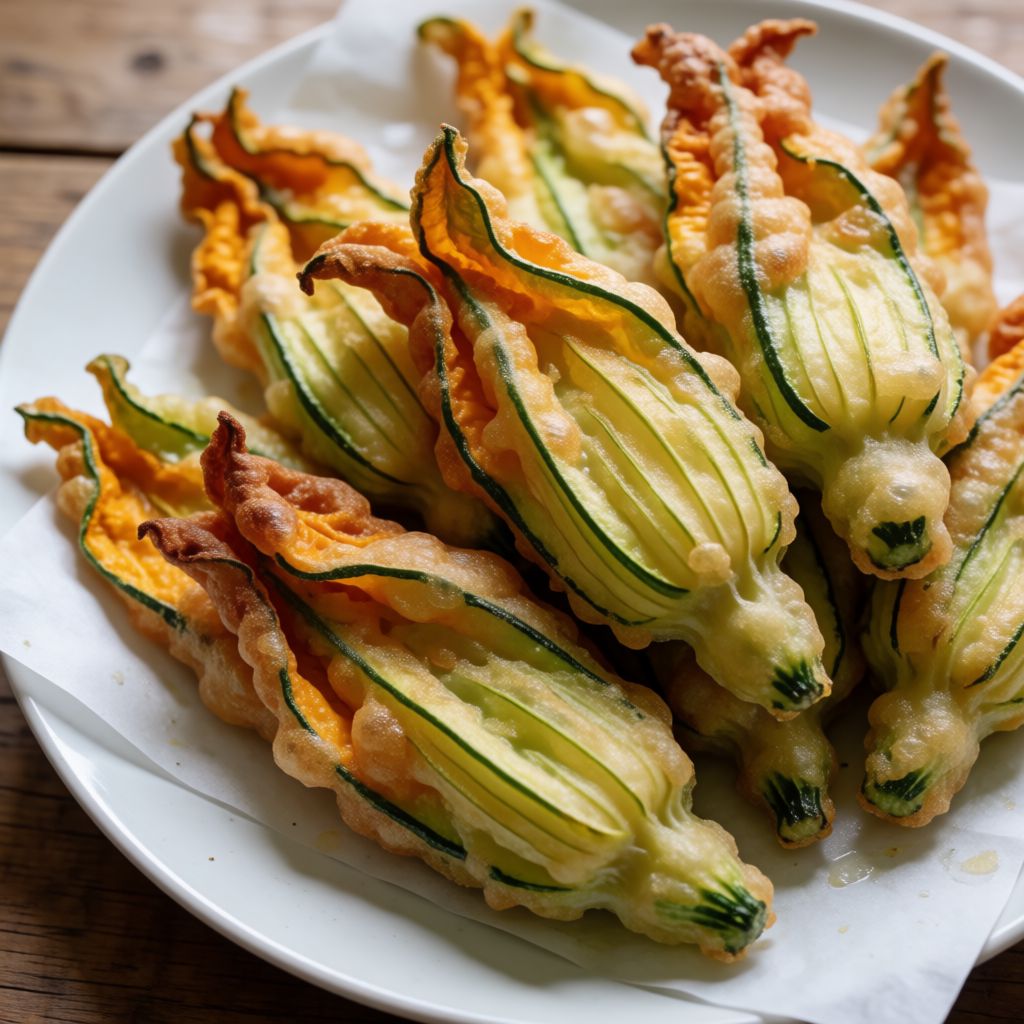
 AI photo
Courgette Flowers in Beer Batter
Crisp beer-battered courgette flowers, deep-fried until golden and served hot.
Labels are worked out automatically from the ingredients and can be wrong. Check the packaging if it matters to you.
Ingredients
- 16 pcs courgette flowers
- 125 g plain flour
- 220 ml beer
- 1 tbsp olive oil
- 10 g salt
- peanut oil to taste, for frying


Steps
Remove the central pistil, stem and tip from the flowers. Rinse them thoroughly in plenty of water and dry well.
Sift the flour into a bowl, add the beer and whisk together until smooth.
Add the olive oil and salt to the batter and mix until smooth and even.
Heat enough peanut oil for deep-frying.
Dip the courgette flowers in the batter, then carefully lower them into the hot oil.
Fry until golden on all sides.
Place the cooked flowers on paper towel to drain excess oil, and serve hot.
Courgette flowers in beer batter are nothing more than a lace coat thrown over something mostly air. The flower itself has almost no structure — it's a thin membrane, barely holding its shape — so the whole dish lives or dies on the batter staying thin, crisp, and not greasy. This isn't a stuffed-and-baked situation, it's a flash-fry: in and out of hot oil in the time it takes to say the word "fritto".
Beer instead of water or egg is the whole trick, and it's chemistry, not whimsy. The carbonation gives you bubbles already made for you — no need to beat egg whites into a froth, no resting time for yeast. Those bubbles puff and then set rigid the second they hit the heat, giving you a shell that's crisp rather than a skin that's chewy. Some say any fizzy liquid works the same — no, because beer also brings a faint bitterness and a bit of alcohol, and alcohol evaporates fast in hot oil, which dries the coating quicker than water-based batters ever could. That's why beer batter crisps up lighter than a flour-and-water paste ever will.
What decides success is heat control at the pan, not minutes on a clock. The oil needs to be hot enough that the batter seizes the instant the flower goes in — if it's lukewarm, the flower sits there leaching water into the oil, the batter goes soggy and pale instead of blistering gold. You're watching for colour and sound: a confident hiss, not a lazy simmer, and the batter turning the colour of a ripe apricot, not biscuit-brown, which is already past the point of bitterness creeping in from the beer's sugars burning.
Take the flowers seriously about cleaning, not because of ritual but because of the pistil. It's bitter, it holds pollen and sometimes a tiny insect, and it turns tough when fried — leave it in and you get an off note right in the centre of an otherwise delicate bite. Rinse gently; the petals are paper-thin and bruise if you're rough, and a bruised flower cooks unevenly, going dark in patches while the rest stays pale.
Drying matters more here than in almost any other fried dish. Any water clinging to the flower meets hot oil and the oil spits — that's the oil protecting itself, flinging water droplets back out violently, which is where kitchen burns happen. Pat them properly, give them a few minutes on a tea towel. A damp flower also won't let the batter grip evenly, so you get bald patches that blister and burn while the coated parts are still cooking.
Plain flour, sifted, is there for lightness, not tradition for its own sake — sifting breaks up clumps so the batter whisks smooth without overworking it. Overwork flour with gluten in it and you get elasticity, which is lovely in bread and wrong here: a chewy batter instead of a shattering one. If you only have self-raising flour, use it, but cut the amount of beer slightly, because the extra raising agent will puff the batter further and you don't want it ballooning into something cake-like.
The beer should have no strong personality of its own — a light lager or pale ale, cold from the fridge. Cold matters: a cold batter meeting hot oil creates a sharper temperature shock, which sets the crust faster and thinner. A heavy stout will work but will taste of itself, fighting the courgette flower's subtlety, which is really just a mild echo of courgette and a faint sweetness. If you've got no beer at all, sparkling water with a pinch more flour gets you most of the crispness, just without the colour and the slight bitter edge.
The tablespoon of olive oil in the batter isn't for flavour so much as for texture — fat coats the flour proteins a little, discouraging gluten strands from linking up, so the fried crust stays short and crumbly rather than tough. Salt goes in the batter itself rather than after frying because it needs to be distributed through the whole coating, not just sitting on the surface where it would draw moisture back out of the fried crust and soften it.
For frying, peanut oil is specified because it tolerates high heat without smoking or breaking down into off-flavours — it has a high smoke point and very little taste of its own to lay over the flowers. Any neutral oil with a high smoke point does the same job: sunflower, groundnut, rapeseed in a pinch. Olive oil alone, even a light one, will smoke and turn bitter at the temperature you need for this, so save it for the batter, not the fryer.
On a British domestic hob, you're not working with a wok-sized flame or a kazan's heat retention — you're working with an electric ring or a modest gas burner, so don't crowd the pan. Fry in small batches: too many flowers dropped in at once drops the oil's temperature sharply, and that's the single most common reason home-fried batter goes soft and sad instead of crisp. Give each flower room, let the oil recover its heat between batches, and use a wide, heavy-based pan rather than a narrow saucepan — more surface area means the oil temperature doesn't crash the moment the flowers go in.
Draining on paper towel isn't optional dressing — it's removing the surface oil that would otherwise sit and continue cooking the batter after it's out of the pan, turning crisp to soggy within minutes. Serve them hot, straight off the paper, because this dish does not wait. There is no reheating a fried batter back to its first crispness; once it's gone soft, it's gone. That's the one piece of patience this dish asks of you — not in the cooking, but in getting everyone to the table before the flowers cool.
·