Fruit
Plantain
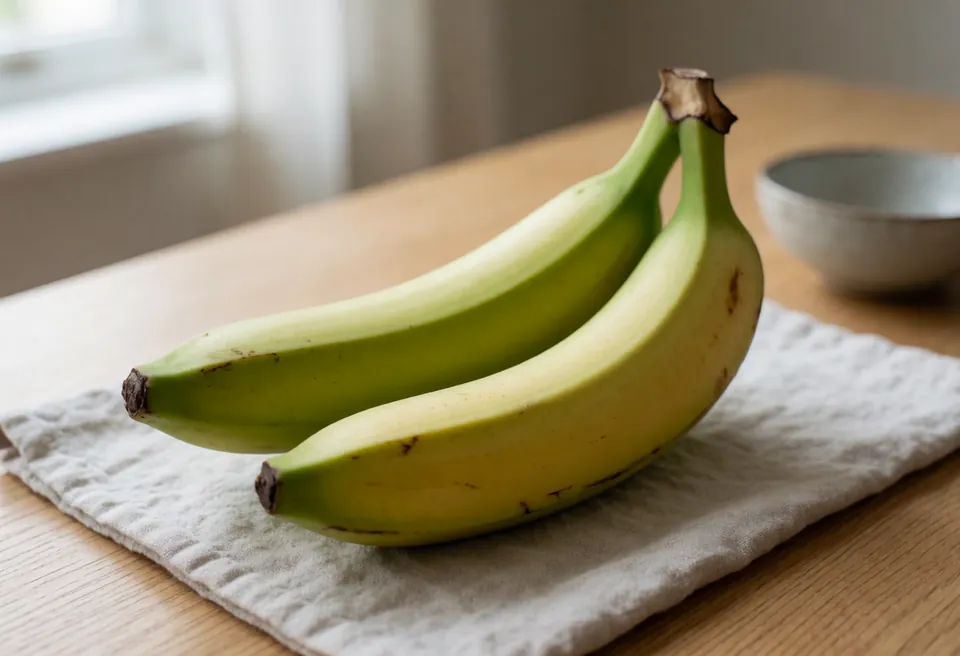
Plantain looks like a banana but is firmer and less sweet. It's always cooked before eating — fried or boiled.
136 kcal per 100 g
Nutrition per 100 g
136 kcal
| Protein | 1.2 g |
|---|---|
| Fat | 0.9 g |
| Carbs | 30.9 g |
| Fiber | 2.1 g |
Source: USDA FoodData Central, 2026-09-21. Per 100 g raw (per USDA FDC).
Good to know: Plantain
Let me tell you about plantain, and let's clear something up right away: it looks like a banana, grows the same way, sits in the same bunch almost — but in the kitchen it behaves nothing like one, and that's what matters to you.
A banana is a fruit you eat as it is. Plantain is a fruit you cook like a vegetable. Cut into one and you'll feel it under the knife: dense, barely giving, nothing like the soft slide of a dessert banana. Heat is what wakes it up: fry it, boil it, grill it. Only then does it turn tender, and the smell changes from raw and starchy to sweet and toasted.
Choose it by color and firmness: green means starchy and savory, good for frying into chips or tostones; black and spotted but still firm means sweeter, better for caramelizing. If it's soft and leaking, it's gone too far — into the bin, not the pan.
Some people say it's just a banana for savory cooking, so you can treat it the same way. No! Bite into a raw green plantain expecting it to taste good on its own, and you'll get something hard, chalky, and dry in the mouth, nothing like a fruit. Trust your hands and your nose: if it still feels like a root vegetable and smells of nothing much, it belongs on the stove, not on the table as is.