
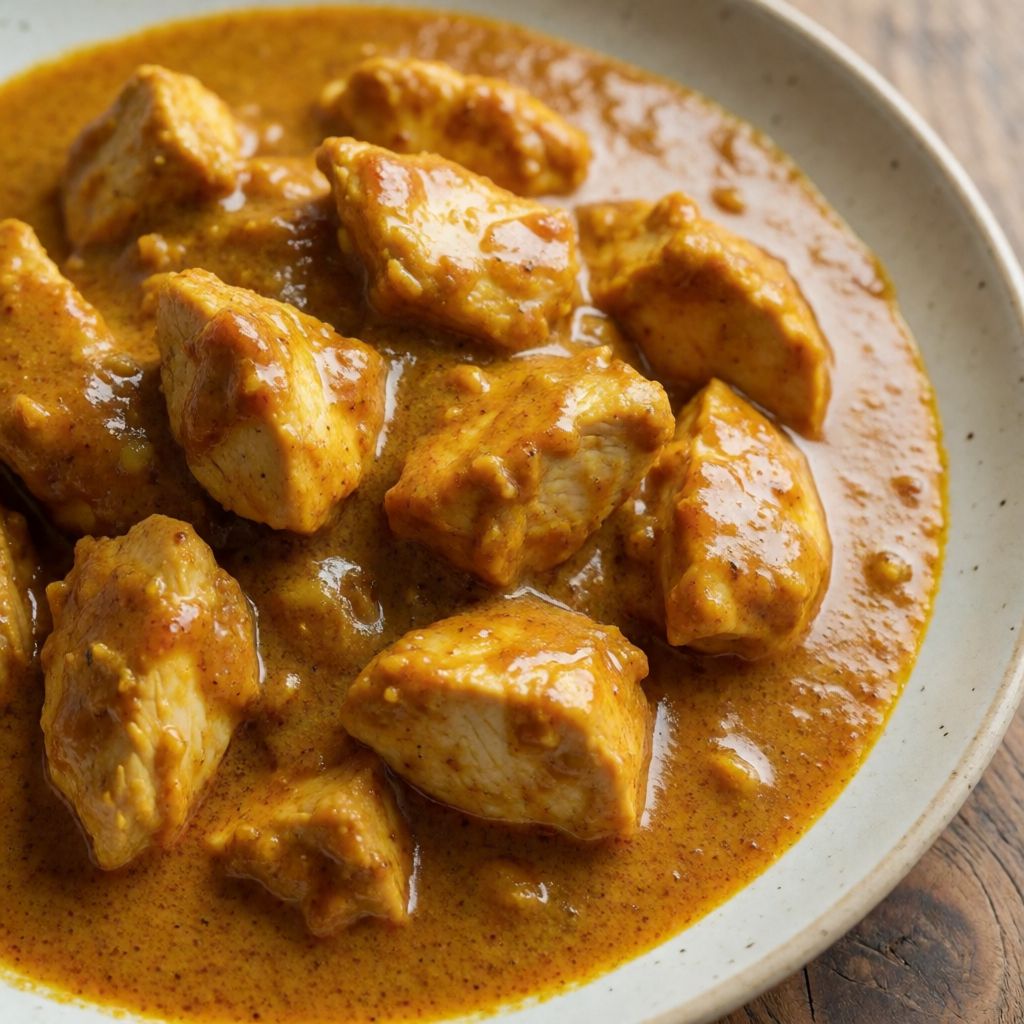
 AI photo
Indian-Style Chicken Curry
A fragrant Indian-style chicken curry, marinated in yogurt and lime, then simmered in a spiced tomato and coconut sauce.
Labels are worked out automatically from the ingredients and can be wrong. Check the packaging if it matters to you.
Ingredients
- 400 g Chicken breast
- 100 ml Greek yogurt
- 1 pcs Lime juice of
- 3 tbsp Curry powder medium hot
- 1 tsp Cinnamon ground
- 0.5 tsp Cloves ground
- 1 tsp Cardamom
- 2 clove Garlic finely chopped
- 1 tbsp Ginger finely grated
- 2 pcs Onion roughly chopped
- 400 g Canned chopped tomatoes
- 1 pcs Bell pepper cut into large chunks
- 400 ml Coconut milk
- 1 pinch Chilli pepper optional, to taste
- 3 tbsp Olive oil
- Salt to taste
- Black pepper to taste, freshly ground
















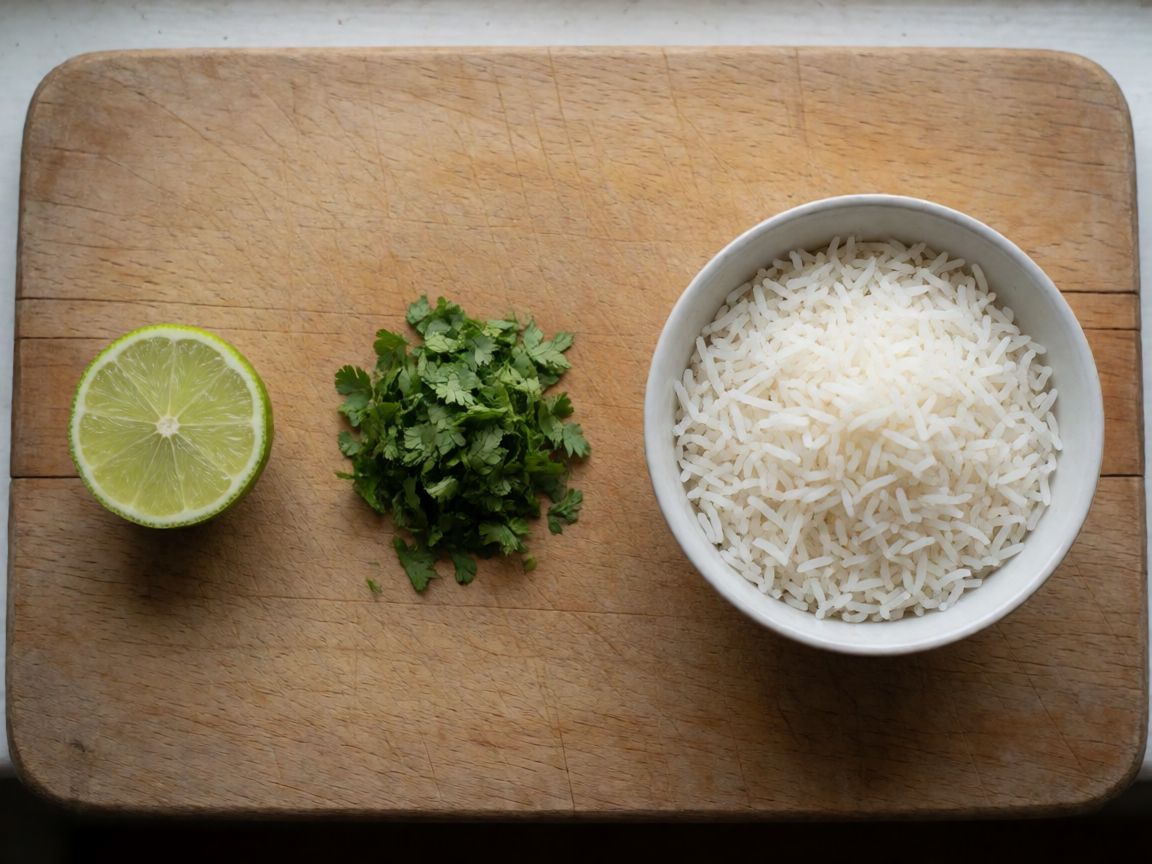
to serve


Steps
Cut the chicken breast into 2×2 cm pieces, mix with the yogurt and lime juice, and leave the chicken to marinate for at least 2 hours, or ideally overnight.
120 minPlace the spices in a hot pan and stir until fragrant. Lower the heat, add the oil, onion, garlic and ginger, and fry, stirring, until the onion is soft and golden.
Add the chicken along with the marinade and the chopped tomatoes. Stir and simmer uncovered for about 15 minutes, or until the chicken is tender.
15 minAdd the bell pepper and coconut milk and heat through well. Season with lime juice, salt and pepper, and add a little chilli or cayenne pepper if you like.
Serve with rice and fresh coriander, and with naan bread if you like.
Forget "curry" as one thing — it's a British word for a whole family of sauced dishes, born partly in Anglo-Indian kitchens, partly in the curry houses that grew up around British cities. This version is a home-weeknight compromise: a yogurt marinade to tenderise and season the meat, a toasted spice base for depth, and coconut milk at the end to round it off. It's not trying to be any single regional dish — it's trying to work on a UK hob in under an hour of actual cooking, and it does that honestly.
What decides whether it works is the marinade and the dry-toast. Two hours in yogurt and lime isn't a flavour flourish — lime's acid and yogurt's gentle enzymes loosen the muscle fibres in the chicken breast, which is a lean, low-fat cut that turns to sawdust if you just fry it hot and fast. Skip the marinade and you get curry-flavoured rubber. Overnight is better than two hours for the same reason bread dough prefers a long cold rise: the chemistry doesn't rush.
The other hinge is step two — spices into a dry hot pan before any liquid touches them. Ground cinnamon, cloves, cardamom and curry powder are mostly aromatic oils sitting in dead plant matter; heat wakes those oils up and lets them bloom into the fat you add seconds later. Skip this and the spices stay flat and dusty-tasting, however much you pile in. Some say more spoonfuls of curry powder equals more flavour — no, because unbloomed spice just sits on the tongue like chalk, it doesn't spread through the dish.
Chicken breast, not thigh, is the choice here, and it's worth knowing why that's a gamble worth managing rather than a mistake. Breast is lean and cooks fast — fifteen minutes of simmering is already pushing its luck — which is exactly why the yogurt-lime marinade isn't optional small print. If you've only got thigh, use it; it's more forgiving of a slightly longer simmer and won't turn stringy, though it won't take up the marinade quite the same way since it's got its own fat doing some of that tenderising work already.
The spice list — cinnamon, cloves, cardamom, curry powder — is doing two different jobs. Curry powder is the workhorse blend (turmeric, coriander, cumin, chilli in some ratio depending on brand) that gives the base savoury-hot backbone. Cinnamon, cloves and cardamom are the "warm" spices layered on top — they don't make it hotter, they make it rounder, closer to a garam-masala effect. If you only have garam masala in the cupboard, use a couple of teaspoons of that instead of all three separately — it's built from roughly the same family and does the same job in one jar.
Onion, garlic and ginger cooked slow after the spice bloom are the actual body of the sauce, not a garnish for it. The onion wants to go from pale gold to the colour of ginger biscuit — soft, sweet, no longer sharp on the breath — and that's the doneness cue, not a clock. A kitchen timer can't smell when raw onion has turned; you can. Some say you should brown onions hard and fast for curry — no, because scorched onion turns bitter and you'll taste that bitterness in every spoonful later; low and slow converts starch to sugar instead of carbon.
Canned chopped tomatoes carry acidity and body — they're there to loosen the sauce and balance the richness coming later from coconut milk, not for a fresh-tomato flavour you'd actually notice. If you've only got whole tinned tomatoes, crush them by hand in the pan; passata works too, just reduce it a touch longer since it's thinner.
Coconut milk: buy the full-fat tinned kind, not the thin stuff sold in cartons for pouring on cereal — that's mostly water and will thin your sauce to nothing. If you're avoiding coconut, any dairy cream with no flavour of its own (double cream, not single, which can separate under heat) gets you a similarly rich finish, though you lose the faint sweetness coconut brings.
Lime does two separate jobs and that's why it appears twice in the list — once early to help tenderise and season the marinade, once at the end to brighten a sauce that's gone rich and heavy with coconut fat. Don't substitute lemon thinking it's interchangeable out of politeness to what's in the fruit bowl; lemon's sharper and less floral, and it'll nudge the whole thing a shade more "Mediterranean" than you want.
Basmati rice cooked separately, by packet instructions, is the right call for a UK kitchen without a rice cooker — a wide pan and a plate as an improvised lid work fine for the absorption method, just don't lift the lid to check, since that lets the steam that's actually cooking the top grains escape. Patience here again: resist poking it.