
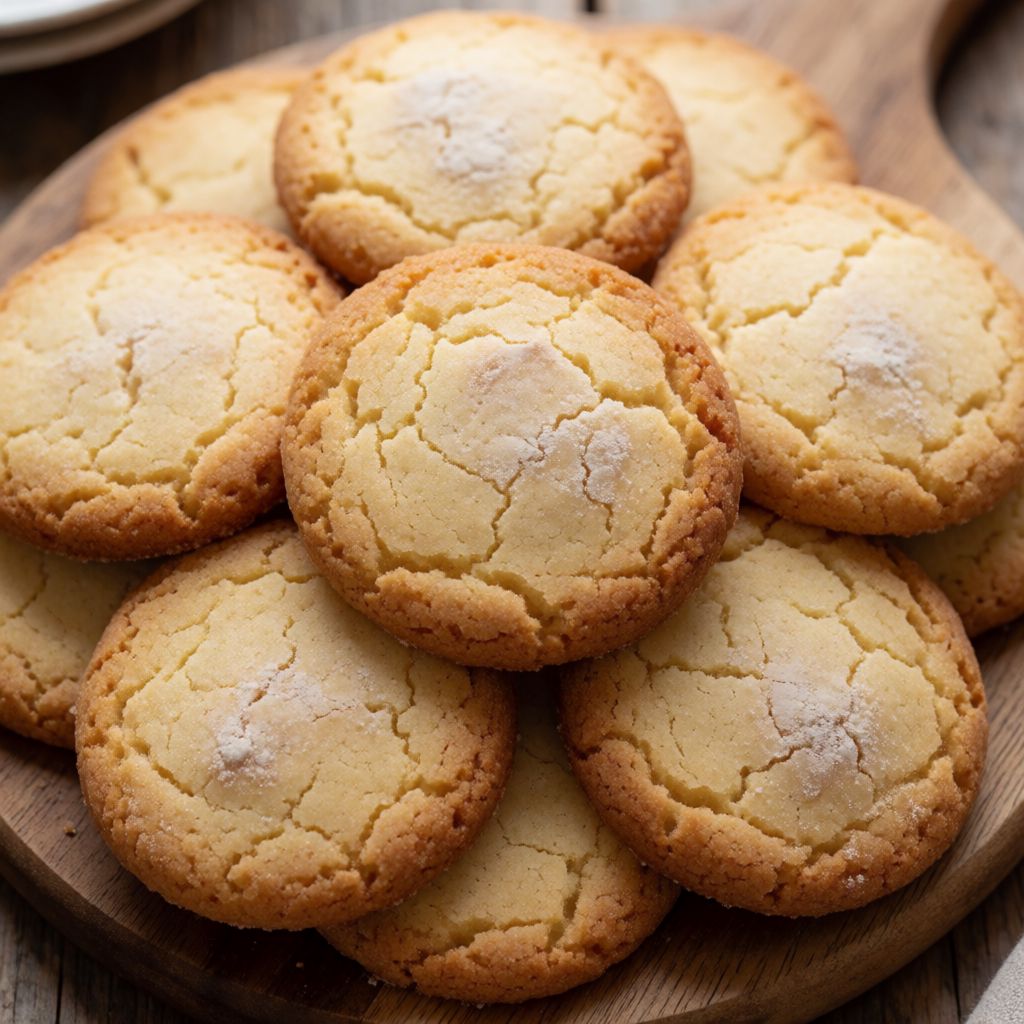
 AI photo
Honey and Spice Gingerbread Biscuits
Festive spiced biscuits made with honey, cinnamon, nutmeg and cloves, cut into fun shapes and iced for decoration.
Labels are worked out automatically from the ingredients and can be wrong. Check the packaging if it matters to you.
Ingredients
- 400 g Plain flour
- 200 g Caster sugar
- 150 g Butter
- 150 g Honey
- 1 tbsp Nutmeg
- 2 tbsp Cinnamon
- 1 tbsp Ground cloves dried
- 2 pcs Eggs
- 2 tsp Baking soda
- Salt to taste
- 1 pcs Egg yolk for the icing
- 200 g Icing sugar











Steps
Sift together the flour and sugar.
Cut the butter into cubes, place in a bowl and add the nutmeg, cinnamon and ground cloves. Mix by hand for a few minutes.
Add the honey and mix until it is fully absorbed into the dough.
Transfer the mixture to a mixer bowl and beat until it reaches a crumbly consistency.
Add two eggs and beat for a few minutes until smooth.
Remove the dough, shape it, wrap it in cling film and chill in the fridge for 1 hour.
60 minRoll out the dough carefully with a rolling pin, cut out biscuits using gingerbread man cutters, and repeat until the dough is used up.
Place the biscuits on baking parchment and bake for about 20 minutes at 180°C.
20 minIn a bowl, whisk an egg yolk until frothy, gradually adding icing sugar to make the icing.
If you like, divide the icing, add food colouring, transfer to a piping bag and decorate the biscuits.
Let the biscuits cool completely.
What was changed
Removed as it does not suit this biscuit dough; added Egg yolk for the icing step.
Gingerbread biscuits are really just a honey-fat-flour ratio with spice riding along for the smell. What decides whether they snap clean or bend like rubber is one thing: how much the butter and honey got worked into the flour before the eggs ever arrived, and how cold that dough was when you rolled it.
Some say gingerbread needs to rest overnight, like a good stew, for the flavours to "marry". No — spices don't need courtship, they need fat to carry them, and butter does that job in minutes, not hours. What the hour in the fridge actually buys you is a dough firm enough to cut clean shapes without the gingerbread man losing his arms to the worktop. Skip that chill and you're not disrespecting tradition, you're just fighting warm butter with a rolling pin, and butter always wins — your shapes will slump.
The mixing order matters more than it looks like it should. Butter gets cut small and worked with the raw spices first — cinnamon, nutmeg, cloves — because fat dissolves spice better than flour does; this is how you avoid that one bitter clove hiding in biscuit number six while the rest taste of nothing. Only then does honey go in, warmed enough by your hands kneading it that it actually disappears into the fat rather than sitting in sticky pockets.
On the flour and sugar: sifting together isn't ceremony, it's distribution — sugar crystals left in clumps will sit as hard little grit in the baked biscuit rather than dissolving into the structure. Plain flour, not self-raising — you already control the lift with soda, and self-raising here would mean guessing at two leaveners fighting each other.
Butter is doing a double job: carrying spice flavour and keeping the baked biscuit from turning into a cracker. Any firm, cold, unsalted fat with a clean taste works in principle — the reason it's always butter in these recipes isn't nostalgia, it's that butter solidifies on cooling and gives snap, where oil never fully firms up and leaves you with soft discs instead of proper gingerbread men. If you only have salted butter, fine — just go easy on any extra salt.
Honey's job is moisture, colour, and that particular flavour depth sugar alone can't give — it's also mildly acidic, which is precisely what the baking soda needs to react against for lift. Runny, cheap honey from the supermarket works exactly as well here as an expensive single-flower one; its subtlety is lost the moment it meets a tablespoon of cloves. If you're out of honey, golden syrup is the honest substitute — same stickiness, same browning, just rounder and less floral.
The three spices aren't interchangeable in proportion even though they sit together in the same jar aisle. Cinnamon is the backbone — two tablespoons because it's the mildest of the three and can take the volume. Nutmeg and cloves are both strong enough that a tablespoon each is already assertive; cloves especially will turn medicinal if you're heavy-handed, which is the real reason recipes keep it modest rather than any rule about "balance."
Two whole eggs bind the dough once the fat-sugar-honey base is already crumbly — added too early, before that crumb stage, and you get a slick paste that won't hold its shape under a cutter. This is also why step 4 asks for a mixer to reach "crumbly" first: by hand you can do it, but it takes real forearm patience, and a stand mixer just saves your wrist the argument.
For the icing, egg yolk plus icing sugar is just a dense, glossy glaze that sets hard on cooling — the yolk's a little fat and a little protein, enough to bind the sugar into something pipeable rather than wet. If raw egg yolk isn't something you want to eat uncooked, water or lemon juice whisked into icing sugar gives you the same set without the risk, just a touch less shine. Either way, let the biscuits go properly cold before icing — warm biscuit meets wet icing and you get a sugar glaze sliding straight off onto the parchment, which is less "disaster" and more just bad timing on your part. For four people this batch gives a generous plateful — good with tea, better with patience while they cool, because a warm gingerbread biscuit bends where a cooled one snaps, and that snap is the whole point.