
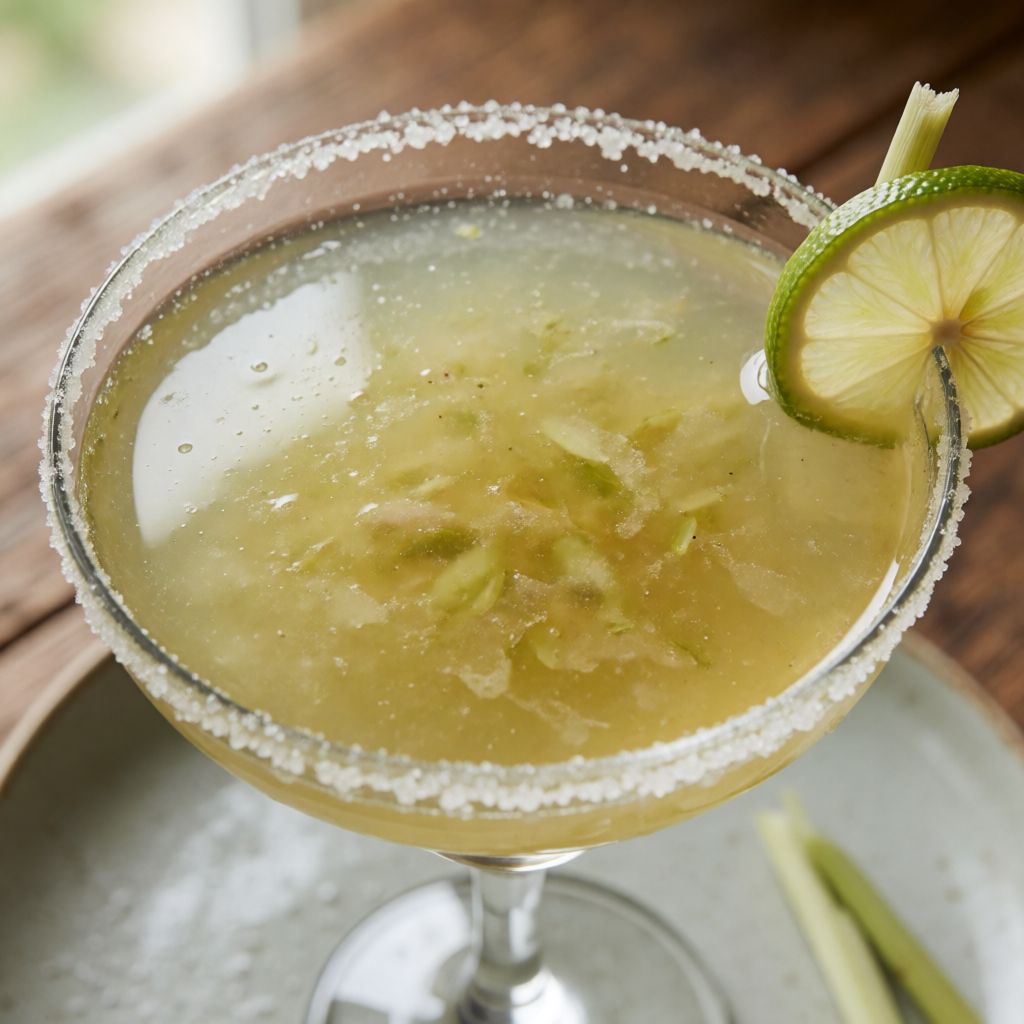
 AI photo
Citrus & Lemongrass Margarita
A zesty margarita infused with lemongrass and ginger syrup, lime juice and tequila.
Labels are worked out automatically from the ingredients and can be wrong. Check the packaging if it matters to you.
Ingredients
- 1 pcs Lemongrass finely grated
- 20 g Ginger finely grated
- 15 g Glucose Syrup
- 75 g Sugar
- 2 pcs Lime unwaxed, for juice
- 75 g Water
- 4 tbsp lemongrass and ginger syrup
- 60 ml Tequila
- 1 pcs Lime unwaxed, juice of half, rest in wedges
- pcs ice cubes in cubes






Steps
Put the finely grated lemongrass, ginger, glucose syrup, sugar and water into a pan, bring to the boil and cook until the sugar has completely dissolved.
4 minLet it cool in the pan, add the lime juice and strain the syrup through a fine sieve.
15 minPut the lemongrass syrup, tequila, lime juice and ice into a shaker and shake well.
Serve in a glass filled with ice, with a wedge of lime.
1 min
This isn't a margarita with a garnish bobbing in it — it's a margarita built on a syrup you make yourself, and that syrup is the whole point. A standard margarita leans on triple sec for its citrus-and-sugar backbone. Here you replace that with a lemongrass-ginger cordial, which means you're not buying the flavour in a bottle, you're cooking it, and that changes what can go wrong and what you control.
What decides whether it works is the syrup, not the shaking. Lemongrass is fibrous and waxy on the outside — grate it fine or bruise it hard, because whole or sliced it just sits in the hot water releasing almost nothing, and you end up with sweet water that tastes vaguely of lawn. Ginger, by contrast, gives up its heat fast once broken open, so the two together on the same timer is a compromise: the lemongrass needs the full simmer, the ginger is just along for the ride and would still work at half the time.
The sugar dissolving — not a clock — is your actual finish line for step one. You're not reducing anything, you're just forcing sucrose into solution and coaxing oil out of lemongrass fibres, so "boiling for four minutes" is a floor, not a target. Run your finger along the bottom of the pan with a spoon: grit means wait, smooth means stop. Boil it longer out of habit and you'll just cook off water and thicken the syrup past where it pours.
Lemongrass: buy it firm, pale at the base, not papery or browning at the cut end — that's the only freshness test that matters, since smell alone is hard to judge raw. If you can't get it fresh, a stalk from a jar or even lemongrass paste works for the syrup stage, because you're extracting it by heat anyway, not eating it raw. No lemongrass at all — use the zest of a lemon plus a strip of lime zest; it won't be the same but it fills the same "citrus-floral top note" role.
Ginger: grate it, don't slice it, skin on or off doesn't matter much here since you're straining it out — the point is surface area, so the more torn cell walls, the more heat and flavour leach into the syrup in four minutes flat. Old, wrinkled ginger has lost moisture and pungency; firm and heavy for its size is what you want.
Glucose syrup's job is texture, not sweetness — it resists crystallising the way plain sugar syrup can if you let it cool slowly or disturb it while setting. Skip it and your cordial will likely still taste fine, but it may turn slightly grainy or set too firm in the fridge over days. Golden syrup is the honest substitute here, since it's the same sticky invert-sugar logic, just with its own faint caramel note — fine in this drink, not fine in something delicate.
Lime, unwaxed and for two different jobs: one batch goes into the syrup once cooled, one batch goes in fresh at the shaker. Unwaxed matters more for the wedge garnish, since you'll be touching that rind to your lips — waxed limes just carry a thin shine of preservative you don't want there. If all you have is waxed, give it a hot-water scrub before cutting; it's not magic, it just physically removes most of the coating.
Tequila: this is not the place for the cheapest bottle on the shelf, nor the place for something you'd sip neat. A blanco or silver tequila is what the drink wants — unaged, so the agave flavour stays forward and doesn't fight the ginger and lime for attention. A reposado works too and adds a vanilla-oak note, but anything heavily aged starts to taste wrong against citrus, the way putting cream in a strong black tea with lemon would curdle the whole idea.
On the "water" measured in grams — that's not odd, it's just precision. 75g of water is near enough 75ml, since water's density is close enough to 1 for kitchen purposes; weighing is just more consistent than eyeballing a jug, especially for a syrup where ratio is everything.
Shaking with ice isn't for show — it's doing two jobs at once: diluting the drink slightly (which balances the sugar and acid) and chilling it fast, since a margarita served lukewarm just tastes like strong, sweet lime juice. Shake until the shaker itself turns cold and slightly frosted to the touch — that's your cue, not a stopwatch.
Patience here is mostly in the cooling of the syrup. Fifteen minutes feels long when you just want a drink, but rushing it with lime juice straight into hot syrup is exactly the shortcut that dulls the citrus. Make a double batch of syrup while you're at it — it keeps, covered, in the fridge for a couple of weeks, and then this stops being a five-minute cook and a fifteen-minute wait and becomes a thirty-second pour.