
 AI photo
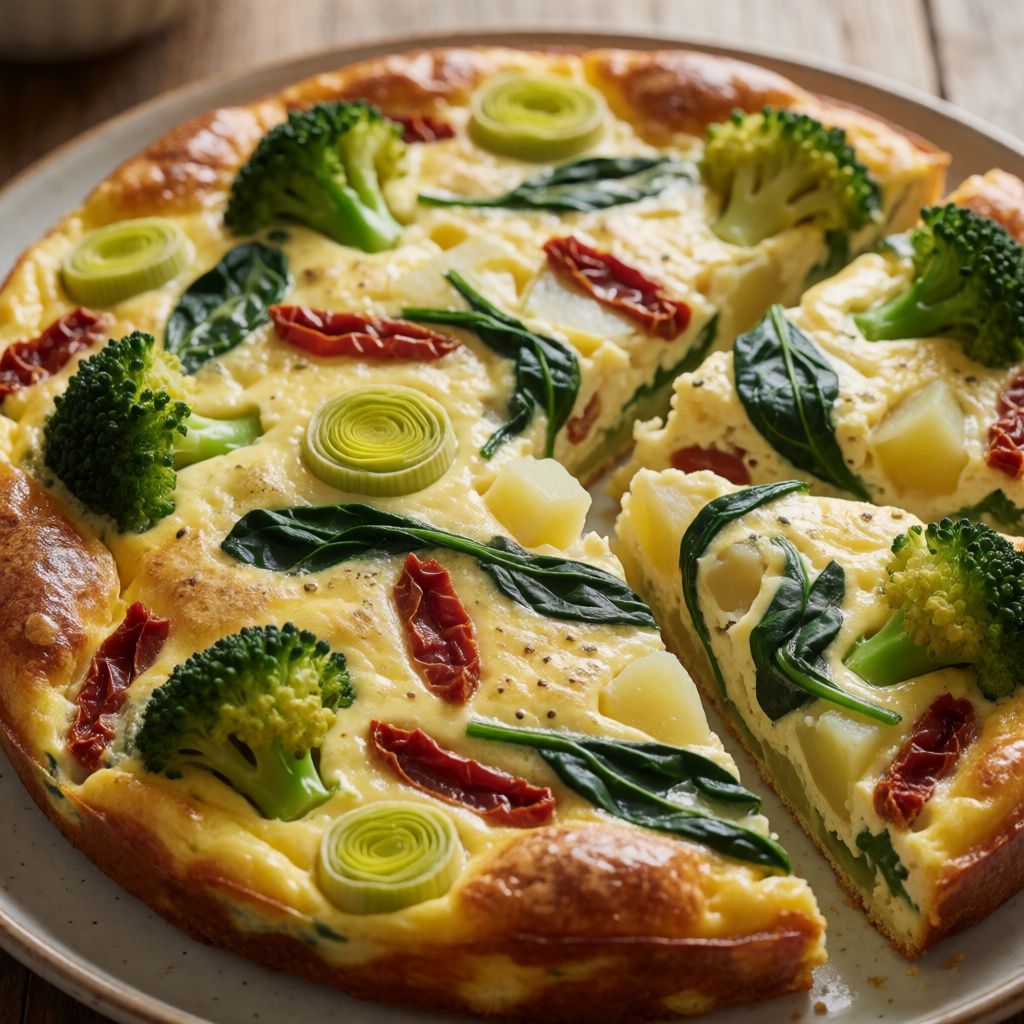
Baked Vegetable Frittata
A baked egg dish loaded with broccoli, leek, spinach, potato and sun-dried tomatoes.
Labels are worked out automatically from the ingredients and can be wrong. Check the packaging if it matters to you.
Ingredients
- 200 g Broccoli cut into florets
- 2 pcs Leek sliced into rings
- 50 g Spinach
- 300 g Potato boiled, cooled, diced
- 50 g Sun-dried tomatoes finely chopped
- 10 pcs Eggs
- 200 ml Crème fraîche
- 0.5 tsp Dried thyme
- 10 g Butter for the dish
- Salt
- Black pepper freshly ground
- 100 ml Chives finely chopped
- 6 pcs Rye bread sliced













Steps
Place the broccoli, leek, baby spinach, boiled cooled diced potato and sun-dried tomatoes into a greased baking dish and mix together.
10 minWhisk the eggs, crème fraîche and thyme together in a bowl until smooth.
5 minPour the mixture over the vegetables in the dish and bake in a preheated 175°C (fan) oven for 30–45 minutes, until the egg is set.
40 minServe the baked frittata with finely chopped parsley and rye bread.
A frittata like this is really a custard with vegetables suspended in it, baked rather than fried on the hob. That one fact decides everything about how it behaves in the oven. Eggs and crème fraîche aren't just "mixed together" — they're a protein-and-fat emulsion that sets at a specific point, and your whole job is to get the vegetables cooked (or pre-cooked) before that point arrives, because the custard won't rescue raw broccoli.
Notice the potato is already boiled and the broccoli goes in raw, barely blanched by residual heat from the oven alone — that's deliberate. Potato holds its shape and gives bulk without needing further cooking; broccoli, leek and spinach are all vegetables that shed water as they cook, and that water is the enemy here, because it will thin your custard and leave you with a wet, sliding layer at the bottom instead of a dish that holds together when cut.
Some say a frittata needs a lid or a steamy environment to set evenly, the way you'd finish an omelette on the hob under a plate. No — in an oven the heat comes from all sides at once, so the surface and the centre are closer in temperature throughout, which is exactly why this method, done in a wide dish in a domestic oven, actually behaves more evenly than a pan ever could on a British hob with its usual one strong ring and one weak one.
Ten eggs and 200 ml crème fraîche feeding four people is a generous ratio, and that's the point — a frittata meant as a light supper uses fewer eggs and more vegetable; this one is closer to a savoury flan, heavier, meant to sit alongside rye bread as a proper plate rather than a snack. Crème fraîche's job is fat and acidity: the fat keeps the set custard tender instead of rubbery, the acidity firms the egg proteins slightly faster and gives a cleaner set. If you've none in the house, double cream works but lacks the tang, so add a squeeze of lemon; natural yoghurt works in a pinch but needs more care, since it can split if the oven runs hot.
Leek goes in raw-sliced because it's mostly water held in layers, and those layers collapse and sweeten with heat regardless — forty minutes in a hot custard is plenty to take it from sharp to mellow without any pre-frying. Spinach, by contrast, is almost pure water structurally; 50g looks like a lot raw and vanishes to almost nothing, so don't be tempted to add more "to be safe" — excess spinach is the single likeliest reason a frittata weeps liquid onto the plate when you cut it.
Sun-dried tomatoes earn their place by being the opposite of everything else here: concentrated, salty, slightly chewy against the soft egg and potato. They're a seasoning as much as a vegetable. If you don't have them, a tablespoon of tomato purée worked through the custard gets you some of that depth, though not the texture — there's no real substitute for that particular chew, so don't force one if you've none to hand.
The butter greasing the dish isn't decoration — it's what stops the set egg welding itself to the ceramic or glass, which is the difference between lifting out a clean wedge and scraping up a mess. Any fat with no flavour of its own does the job; a flavourless oil works just as well if that's what's in the cupboard, butter just browns slightly at the edges and adds a bit of savouriness there.
Thyme, dried, is used sparingly — half a teaspoon in ten eggs' worth of custard — because dried herbs are concentrated and bitter if overdone, unlike fresh, which you could be freer with. Chives scattered at the end stay raw and sharp; cooking them into the custard would waste their whole reason for being there, which is a clean oniony bite against the richness of the cream.
Rye bread alongside it is doing real work, not just sitting on the side — its dense, slightly sour crumb is built to carry something rich without disappearing under it, the way softer white bread would. Dark, properly fermented rye, the kind with visible grain, holds up best; a lighter rye loses that contrast. Think of this less as brunch food and more as a cold-weather Sunday plate — it shares that instinct with a roast, something substantial built around eggs and vegetables instead of meat, and the rye bread stands in for the potatoes you'd otherwise pile on the side.