
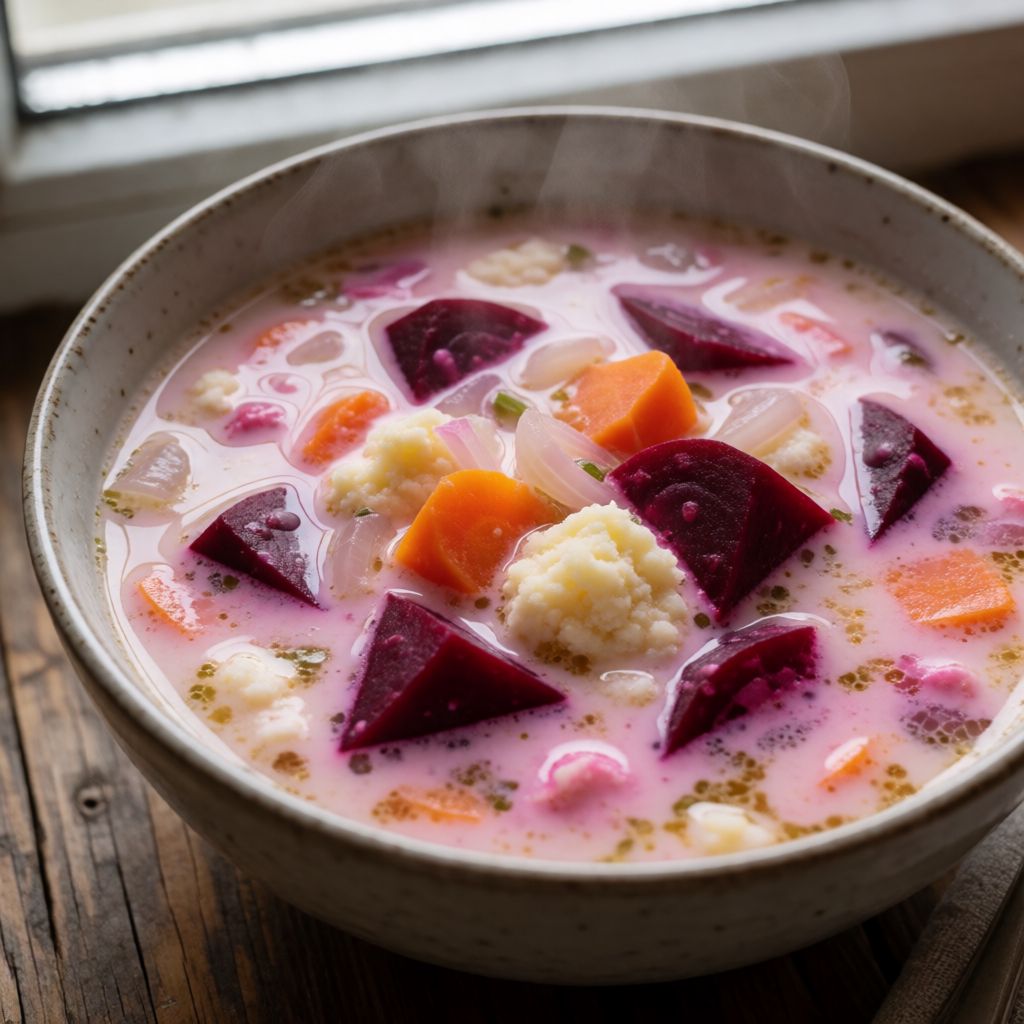
 AI photo
Beetroot Cream Soup
A smooth, creamy beetroot soup finished with yogurt, parsley and croutons or toasted almonds.
Labels are worked out automatically from the ingredients and can be wrong. Check the packaging if it matters to you.
Ingredients
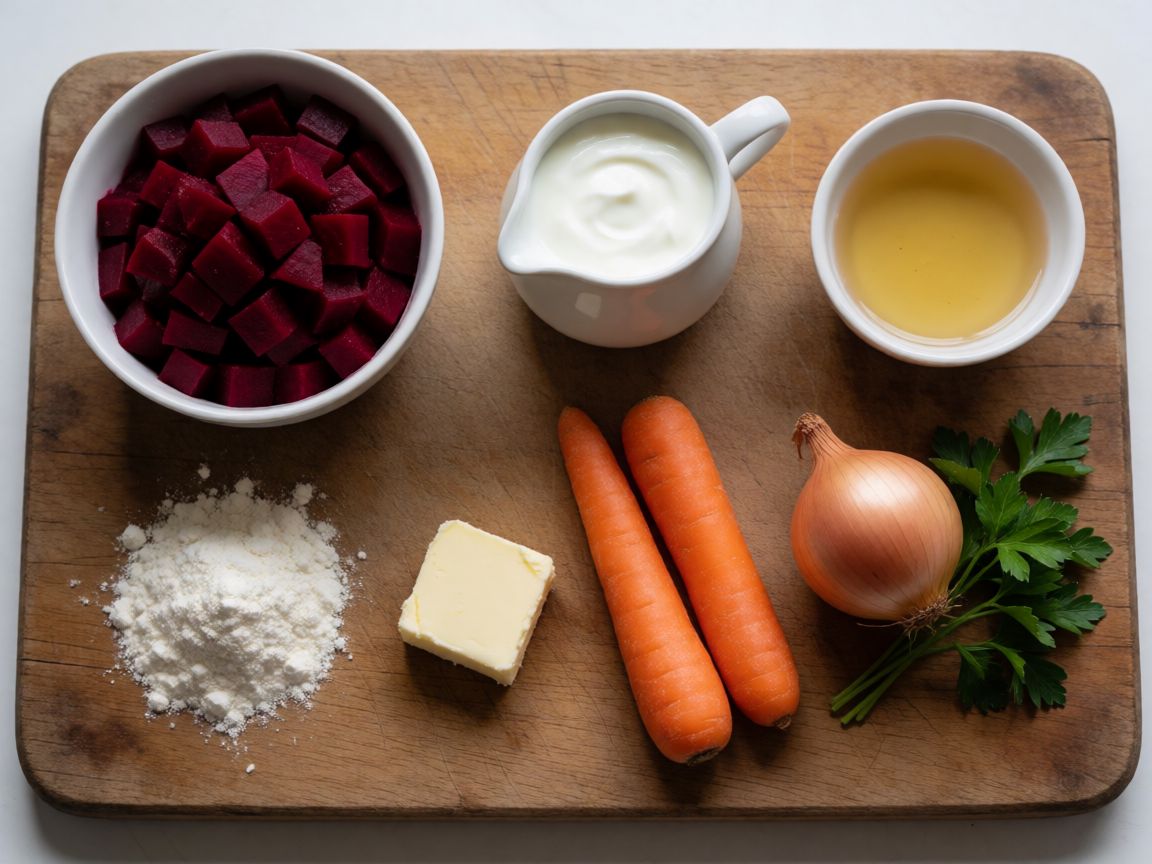











Steps
In a pan, melt the butter over low heat; remove from the heat just before it fully melts and let it rest for a few minutes.
Gradually add the flour and whisk briskly to a smooth, lump-free consistency.
Finely dice the beetroot, carrot and onion, and transfer them into the pot with the prepared roux.
Pour in 1.5 litres of warm water, then add the red wine vinegar and salt.
Simmer gently for about an hour, stirring occasionally.
60 minOnce the beetroot is tender, remove the pot from the heat and let it cool.
Blend the mixture with a stick blender until it forms a thick cream.
Transfer the soup to a bowl, add the yogurt and chopped parsley.
Mix thoroughly and serve in deep bowls with croutons or toasted almonds.
This is a borscht with the ambition pared down to one vegetable and smoothed into a cream — no cabbage, no meat, just beetroot, carrot and onion carried by a butter-and-flour roux and finished with yoghurt. What decides whether it works is patience in two completely different places: the roux at the start, and the simmer at the end. Rush either one and you get a soup that tastes of raw flour or one where the beetroot stays stubbornly waxy under the blade of the blender.
The roux is the part people skip or botch, because "melt some butter and add flour" sounds trivial. It isn't decorative — it's the thickener that will carry this soup, since there's no potato or rice doing that job here. Butter that's gone from liquid to just-setting-again, taken off the heat and left to sit, cools enough that when the flour goes in it doesn't fry and catch; it folds in silky. Add the flour to butter that's still spitting hot and you get scorched lumps you'll be picking blender-blade splinters of for the rest of the cook. So: heat until it goes toward liquid, pull it back, breathe, then whisk.
Everything else in the pot is diced small on purpose — not for looks, but because an hour of gentle simmering has to be enough to turn raw beetroot into something a stick blender can actually turn into cream, not grainy mush with hard flecks in it. Some say beetroot needs boiling hard to soften it. No — hard boiling just toughens the outside before the inside gives up; gentle and long does the job evenly, the way braising a tough cut beats blasting it.
Beetroot is the whole dish, so don't economise on it — go for roots that feel heavy for their size and give no softness when you squeeze them; a beetroot that's gone spongy has already lost moisture and sweetness to storage. You can use the vacuum-packed cooked beetroot sold in every UK supermarket if you're short on patience, but then you're cutting your own simmer time roughly in half, since you're only softening carrot and onion at that point, not the beet itself — taste and judge by the carrot, not the clock.
Carrot and onion aren't flavouring here in the usual stock-vegetable sense — this isn't a mirepoix built to be strained out. They stay in, get blended in, and give the soup its body and a sweetness that tempers the beetroot's earthiness. Any firm, fresh carrot works; a carrot that bends like rubber before it snaps has been in the fridge too long and will give you less sweetness for the same hour of cooking.
The butter-flour roux wants a butter with no competing flavour of its own fighting the beetroot — plain salted or unsalted is fine. If you're avoiding dairy at that stage, a neutral oil (sunflower, not olive, which has too much personality) with the same weight of flour will thicken the same way, though you lose a little richness. The flour itself is just a thickener; plain white flour is correct, nothing fancier needed.
Yoghurt goes in only at the end, off the heat, and that's not a style choice — it's to stop it splitting. Boil yoghurt and its proteins curdle into grainy specks instead of staying smooth; added to a soup that's already cooling, it just loosens and brightens the cream. Use a plain, unsweetened yoghurt with some body to it — Greek-style sits nicely, thin "drinking" yoghurts will water the soup down. Soured cream is the honest substitute if that's what's in the fridge.
The vinegar is doing colour-chemistry, not seasoning, as mentioned — but if you want extra tartness on the plate rather than in the pot, a squeeze of lemon at serving does that job without touching the colour-locking that needs to happen early.
On the UK hob: there's no need for a lid as such, a plate over the pot holds enough heat in during the long simmer, and "gentle simmering for about an hour" means small bubbles breaking the surface here and there, not a rolling boil — turn it down the moment it looks energetic, because a hard boil just reduces your 1.5 litres of water faster than it tenderises the beetroot. Croutons from yesterday's bread, toasted almonds roughly chopped, parsley on top — these are texture against the cream, nothing more mysterious than that, and worth doing because a bowl of pure smooth soup with nothing to bite into gets tiring by the third spoonful.