
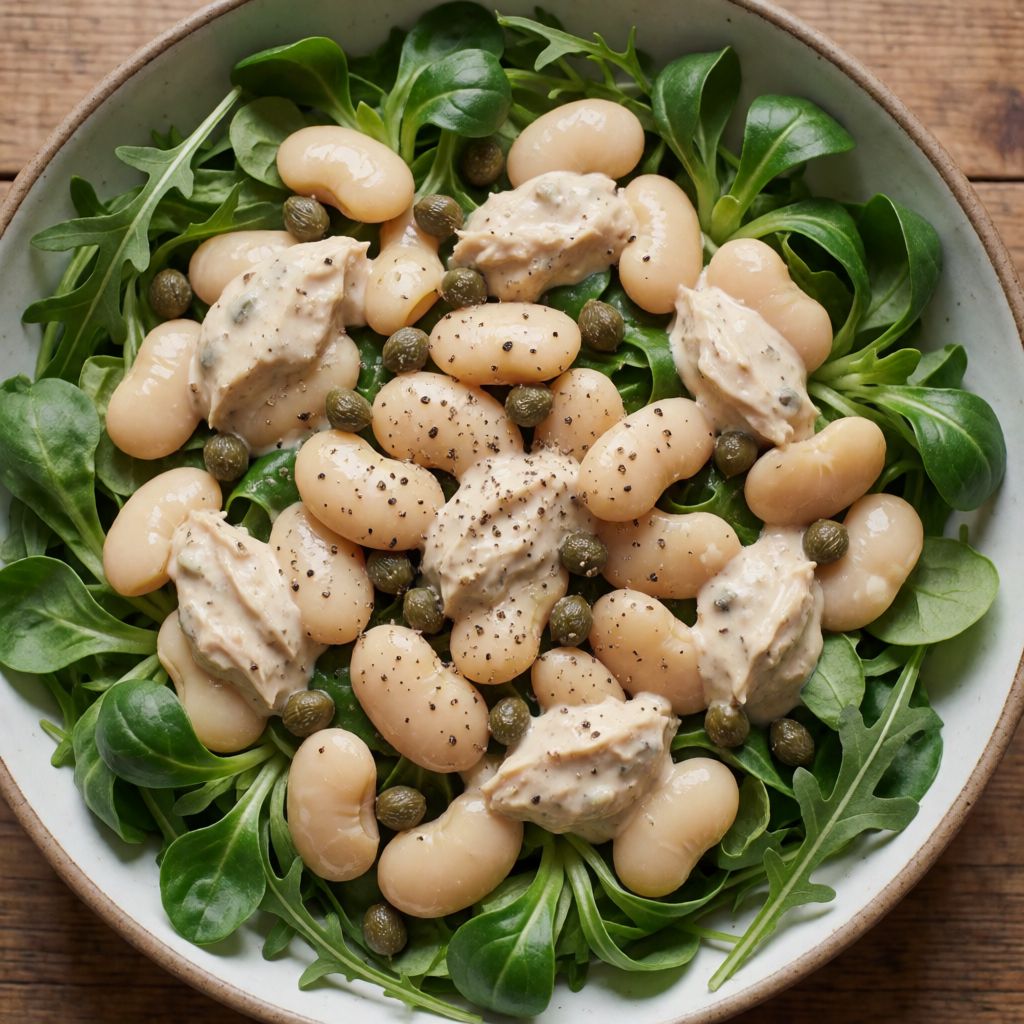
 AI photo
Butter Bean Salad with Tuna Cream
A fresh salad of butter beans and peppery leaves, finished with a smooth tuna cream and crunchy rye croutons.
Labels are worked out automatically from the ingredients and can be wrong. Check the packaging if it matters to you.
Ingredients
- 1 can Butter beans drained and rinsed
- 125 g Lamb's lettuce
- 125 g Rocket
- 10 pcs Caper berries
- Salt to taste
- Black pepper freshly ground, to taste
- 1 can Tuna
- 100 ml Crème fraîche 18%
- 2 tbsp Capers
- 2 pcs Rye bread slices
- 2 clove Garlic crushed
- 1 tsp Dried thyme
- 3 tbsp Butter for frying









Steps
Put the tuna, crème fraîche and capers in a blender and blitz to a smooth, lump-free cream.
2 minCut the bread into small cubes, about 1 cm, and toss with the garlic, thyme, salt and pepper.
3 minFry the bread cubes until crisp in a hot pan with butter, or bake in the oven at 175°C for 15 minutes.
15 minMix the tuna cream with the butter beans until well combined.
1 minArrange on a plate with the lamb's lettuce and rocket, scatter over the croutons and capers, and finish with salt and pepper to taste.
2 min
This isn't really a salad, it's a cream with a salad leaning against it for support. The whole dish stands or falls on step one: tuna and crème fraîche blitzed into something with no texture memory of either ingredient — no flake, no curd. If you can still identify "this bit was tuna" when you taste it, you haven't blended long enough, you've made a chunky mayonnaise substitute instead of the thing this recipe actually wants.
Some say tinned tuna needs draining hard and patting dry before it goes anywhere near cream, or the dish turns watery. No — because the crème fraîche is already thick enough to carry the tuna's liquid without collapsing, and the oil or brine in the tin is flavour you paid for. Tip it all in. The blender sorts out the texture; your job is not to throw away seasoning before it's even had a chance.
The butter beans exist to be bland on purpose. They're starch and shape — bite without opinion — so the tuna cream has something to cling to and something to balance it. Stir them through the cream rather than dressing them separately; a bean coated thinly all over does more work than a bean swimming in a pool of it. This is the same logic as any bean salad that isn't just beans in a tin with parsley thrown at it: binding is the point, not garnish.
Crème fraîche at 18% fat is doing a specific job here — it's thick enough to set up into a cream rather than a sauce, but still loose enough to take on the tuna without turning gluey. Go lower in fat and the cream won't hold its shape on the plate; it'll weep. If you only have soured cream or full-fat Greek yoghurt, use it, but expect a sharper, thinner result and maybe hold back a tablespoon of liquid until you see how it sits — the criterion is "coats a spoon without sliding off," not a brand name.
Tuna: oil-packed over water-packed, because oil carries the fish's flavour into the cream, where water just dilutes everything you're trying to build. Any firm, meaty tin will do the job — mackerel works, even salmon, as long as it's packed in something with flavour and not just brine for the sake of a lower calorie count on the label.
Capers and caper berries aren't doing the same job, even though they come from related plants pickled in similar ways. The small capers, stirred into the cream, dissolve their sharpness through the whole mixture — that's seasoning. The caper berries, scattered whole on top, are there to be bitten into separately, a sudden burst of vinegar and salt against the soft cream underneath. Swap one for the other and you lose a contrast, not just an ingredient — don't double up on the small capers to make up the count, it flattens the dish instead of sharpening it.
Garlic crushed, not sliced, because you want it to coat the bread cubes evenly in that short frying time rather than sit as isolated hot spots that burn before the bread colours. This is also why the thyme goes on dry, tossed with the bread before it hits the pan, rather than added to the butter itself — thyme in hot fat alone scorches fast and turns bitter; thyme clinging to a starchy surface toasts instead.
Rye bread for the croutons is a historical accident worth knowing, not a rule worth defending: it's what was cheap and available where this kind of dish comes from, dense enough to hold its shape when cubed small and fried hard. Any firm, slightly stale loaf does the same mechanical job — day-old sourdough, a dense wholemeal, anything that isn't so soft it collapses into crumbs the second the knife touches it. Fresh, squashy white bread will just turn to paste in the pan; staleness here isn't a flaw to work around, it's the actual requirement.
Lamb's lettuce and rocket are chosen for opposite reasons that balance each other: lamb's lettuce is mild, almost sweet, rocket is peppery and sharp. Together they stop the plate reading as one-note alongside a cream that's already rich. If you can't get lamb's lettuce — it's seasonal and vanishes from UK shops for stretches — a baby spinach leaf does the mild half of the job well enough, though it won't have quite the same faint nutty note.
And give the croutons their own patience: pulled too early, soft in the middle, they go soggy the second they touch the cream, which defeats the entire reason they're in the dish. Let them go properly crisp, let them cool a minute off the heat before scattering — that minute matters more than it looks like it should.