
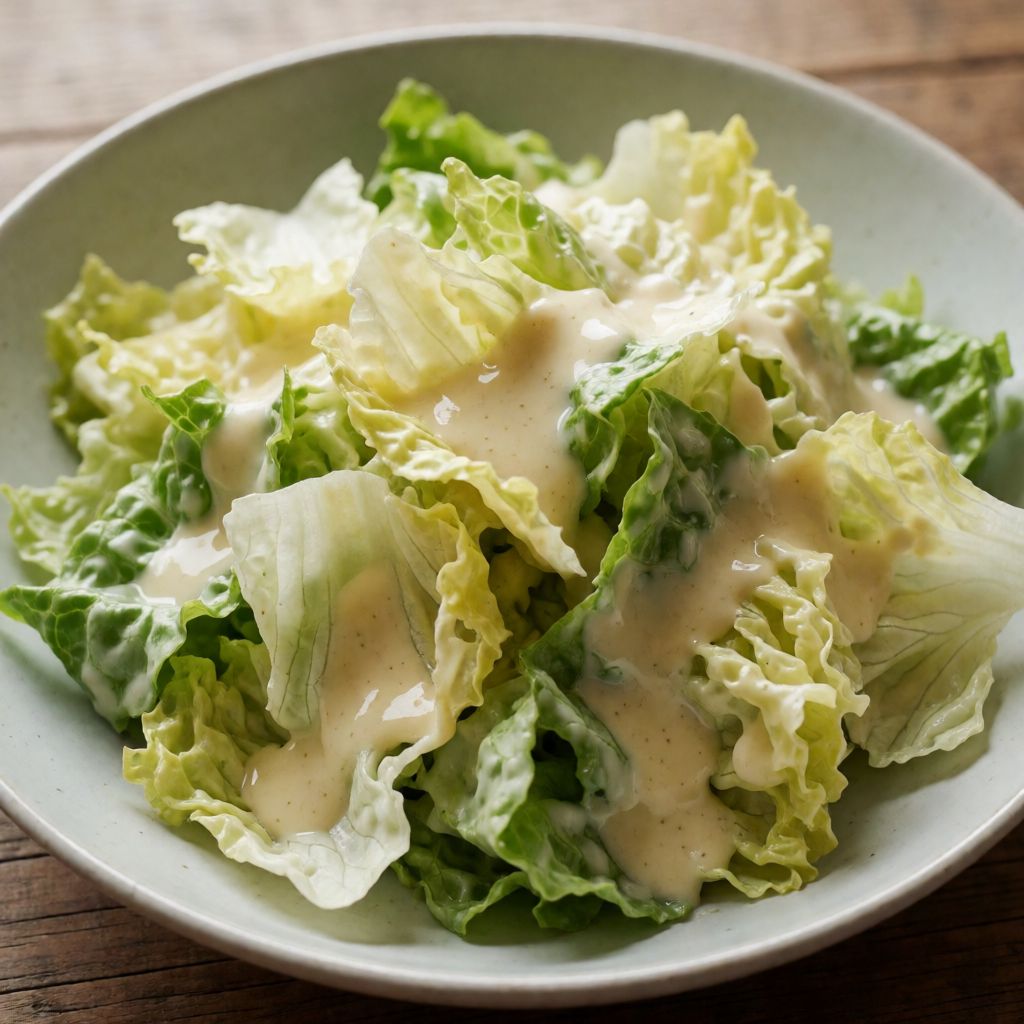
 AI photo
Caesar Salad
A classic Caesar salad with crisp romaine, garlic croutons, pan-fried chicken breast and a creamy homemade dressing.
Labels are worked out automatically from the ingredients and can be wrong. Check the packaging if it matters to you.
Ingredients
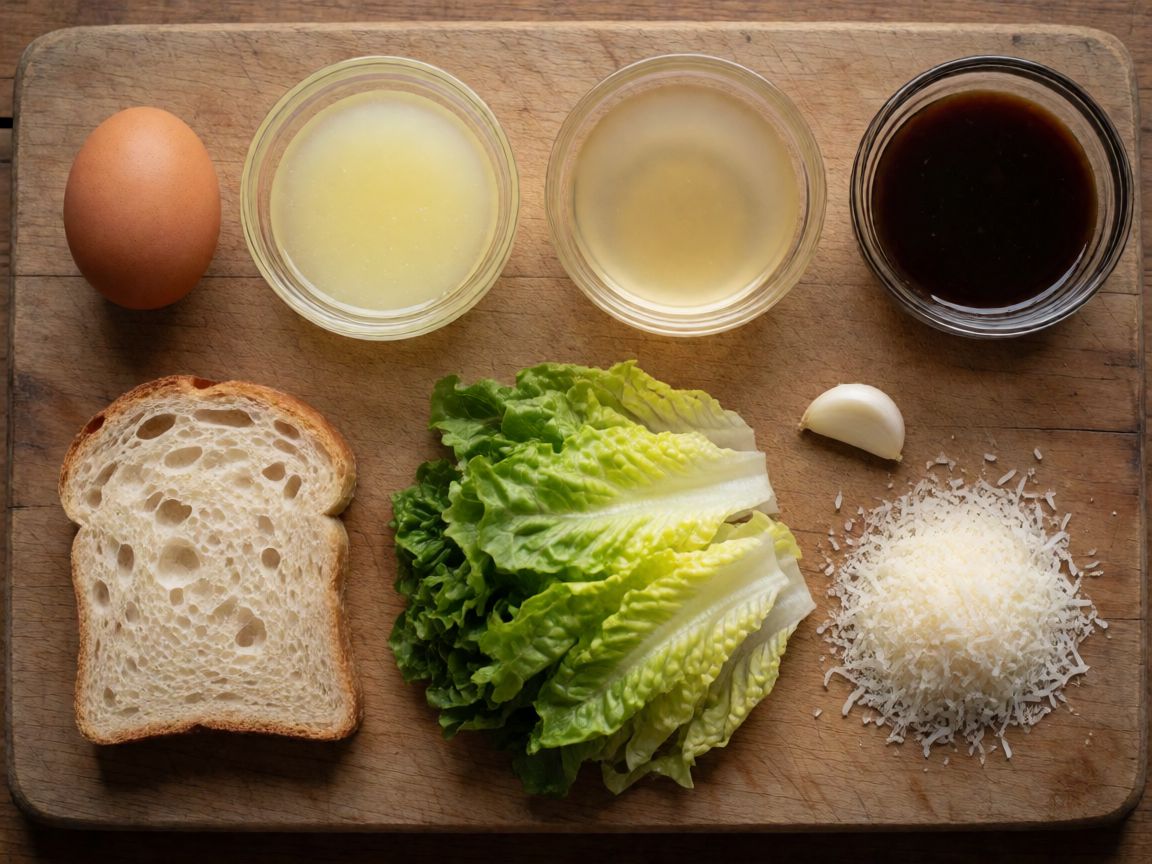
- 1 pcs Egg
- 2 tbsp Lemon juice
- 1 tbsp Vinegar apple cider or wine vinegar
- 1 tbsp Worcestershire sauce
- 100 ml Vegetable oil
- 50 ml Olive oil
- Salt to taste
- 500 g Romaine lettuce
- 60 g Baguette
- 1 clove Garlic
- 60 g Parmesan
- 300 g Chicken breast
- Black pepper to taste












Steps
Wash the romaine lettuce, spin dry in a salad spinner, cut into pieces and lay out on a towel to dry.
In a blender jug put the egg, lemon juice, vinegar, salt and Worcestershire sauce. Blend, gradually adding the oil, until the sauce thickens.
Put the Caesar dressing in the fridge.
Cut the baguette into even cubes. In a non-stick pan heat oil with garlic and fry the bread cubes until golden and crisp.
In the pan fry the chicken breast for 3 minutes on each side until cooked through.
6 minSlice the chicken breast.
Arrange the romaine lettuce on plates, add the bread cubes, chicken slices, finish with Parmesan shavings and drizzle with Caesar dressing.
Caesar is an emulsion wearing a salad as a disguise. The whole dish stands or falls on whether that egg-and-oil sauce holds together, and everything else — lettuce, croutons, chicken — is there to carry it to your mouth in interesting textures. Get the dressing right and you have a classic. Get it wrong and you have an expensive oily soup over leaves.
Some say you need a coddled or raw egg "for safety and tradition" because that's how Caesar Cardini supposedly made it in Tijuana in 1924, tableside, with diners watching. No — the egg isn't there for theatre, it's there because egg yolk carries lecithin, the molecule that lets oil and water-based liquid (lemon juice, vinegar, Worcestershire) hold hands instead of separating. That's the whole trick of mayonnaise, and this dressing is a loose, sharp cousin of mayonnaise. The blender does the emulsifying for you — much more reliable than a whisk and an unsteady hand, which is the real reason home cooks fail at it, not some lack of showmanship.
What decides the dish, in order: the sauce must actually thicken (pour oil in slowly, the blender needs time to beat it into the liquid, not dump it in one go and hope); the lettuce must be properly dry (wet leaves dilute the dressing and make it slide off instead of cling); and the chicken must not be dry inside, which with a flat domestic hob and a boneless breast is the easiest thing to get wrong in the whole recipe.
Patience here isn't poetic, it's mechanical — rushing the oil into the blender is the single most common reason the dressing splits and refuses to thicken.
The egg does double duty: lecithin for the emulsion, and body — it's what turns "oil and lemon juice" into something that coats a leaf rather than running off it. If you're nervous about raw egg, know that commercial mayonnaise exists precisely because this emulsion is stable and safe when made with fresh eggs and used promptly; still, if you'd rather skip it, a spoon of good mayonnaise or Dijon mustard will emulsify the oil just as well — mustard has its own natural emulsifiers, which is why French dressings so often lean on it.
Lemon juice and vinegar aren't decoration, they're the acid that cuts the richness of two kinds of oil and the fat in the Parmesan — without it the whole plate tastes flat and greasy. Worcestershire sauce is doing something subtler: it's fermented, anchovy-based, salty-savoury — it gives the dressing the background hum of umami that a classic Caesar needs without you ever tasting "fish." If you have no Worcestershire, a mashed anchovy fillet or even a dab of fish sauce gets you closer than leaving it out entirely.
Two oils, vegetable and olive, is a cost-and-flavour compromise, not a rule carved in stone. Straight olive oil can turn bitter and overpowering once blended hard and fast; a neutral oil — "any oil with no smell of its own," sunflower or rapeseed will do — carries the emulsion without shouting over the lemon and garlic, while the smaller measure of olive oil keeps some of that character in. Use what's in your cupboard; just don't go all one way with a very assertive extra-virgin, or the dressing stops tasting like Caesar and starts tasting like salad dressing from a bottle.
Romaine lettuce is chosen for its rib — it's sturdy enough to hold dressing and stay crunchy instead of wilting into mush the way a soft butterhead would. If your shop doesn't stock romaine, a firm cos lettuce (same family, often sold under either name here) or even the crunchier inner leaves of a Little Gem will survive the dressing better than anything delicate.
The croutons are there to answer a real problem: a Caesar made only of leaves and sauce has no crunch and no carbohydrate, so it reads as a side dish, not a meal. Frying stale-ish baguette cubes in oil infused with garlic — rather than tossing raw garlic into the salad — gives you the aroma without the raw bite that lingers on your breath for the rest of the afternoon; this is the same logic behind garlic bread and garlic-infused oils generally, the flavour moves into the fat, the harshness stays behind in the clove.
The chicken turns a salad course into Sunday-lunch-worthy plate of food, which is probably why it ended up a fixture on British menus — protein justifies calling it dinner. The marker to watch isn't the clock, it's the breast firming up and the centre losing its pink translucency; press it and it should spring back rather than feel soft and yielding. A flat domestic hob doesn't throw the fierce, even heat a restaurant stove does, so don't expect a thick breast to be done at the same mark every time — a thinner, butterflied piece cooks faster and more evenly than a thick one left whole, and that's worth doing before it ever hits the pan.
Parmesan shavings, not grated dust, because shaved pieces hold their shape and give you a hit of salt and savour in bites, rather than disappearing invisibly into the dressing. A vegetarian hard cheese of similar age and saltiness works if Parmesan proper isn't to hand, though the flavour won't be quite as sharp.