
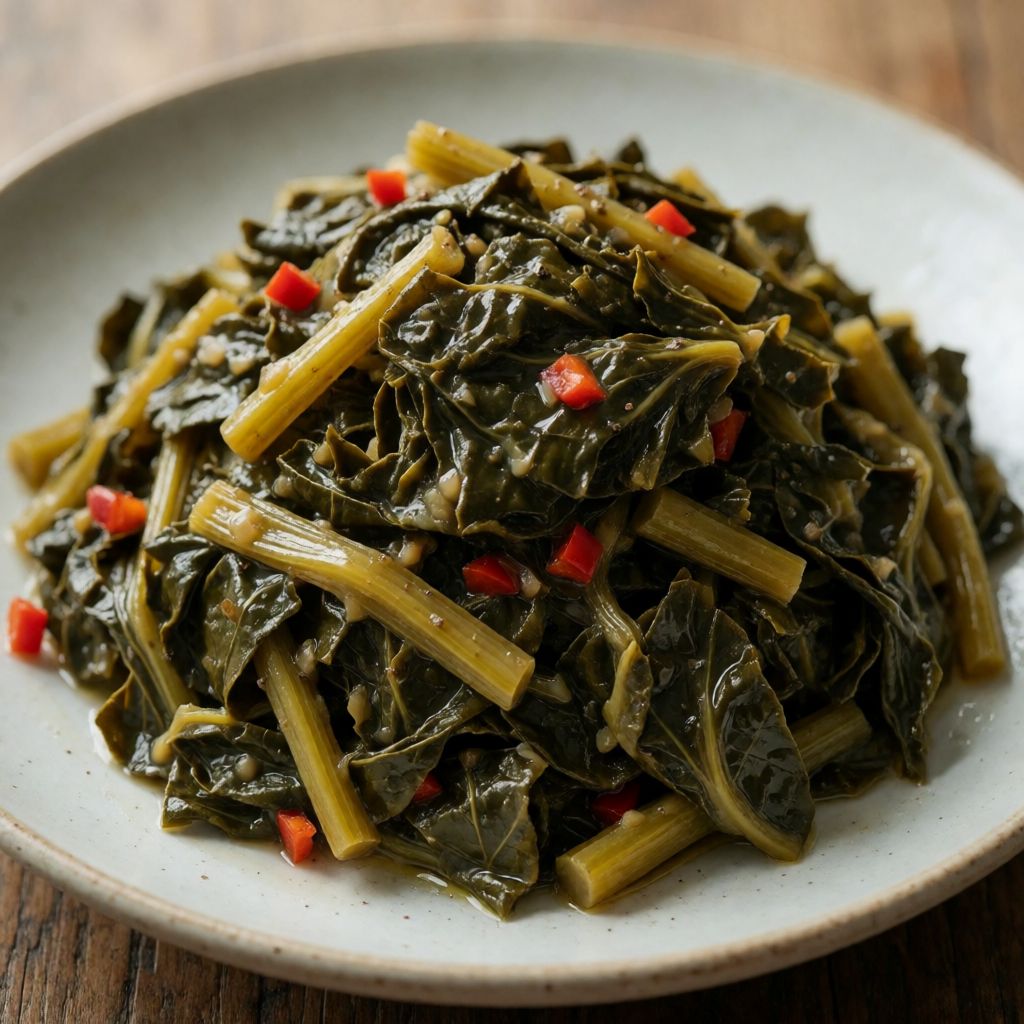
 AI photo
Pan-Fried Cime di Rapa
A simple pan-fried turnip greens side dish, blanched then finished in olive oil with chilli.
Labels are worked out automatically from the ingredients and can be wrong. Check the packaging if it matters to you.
Ingredients
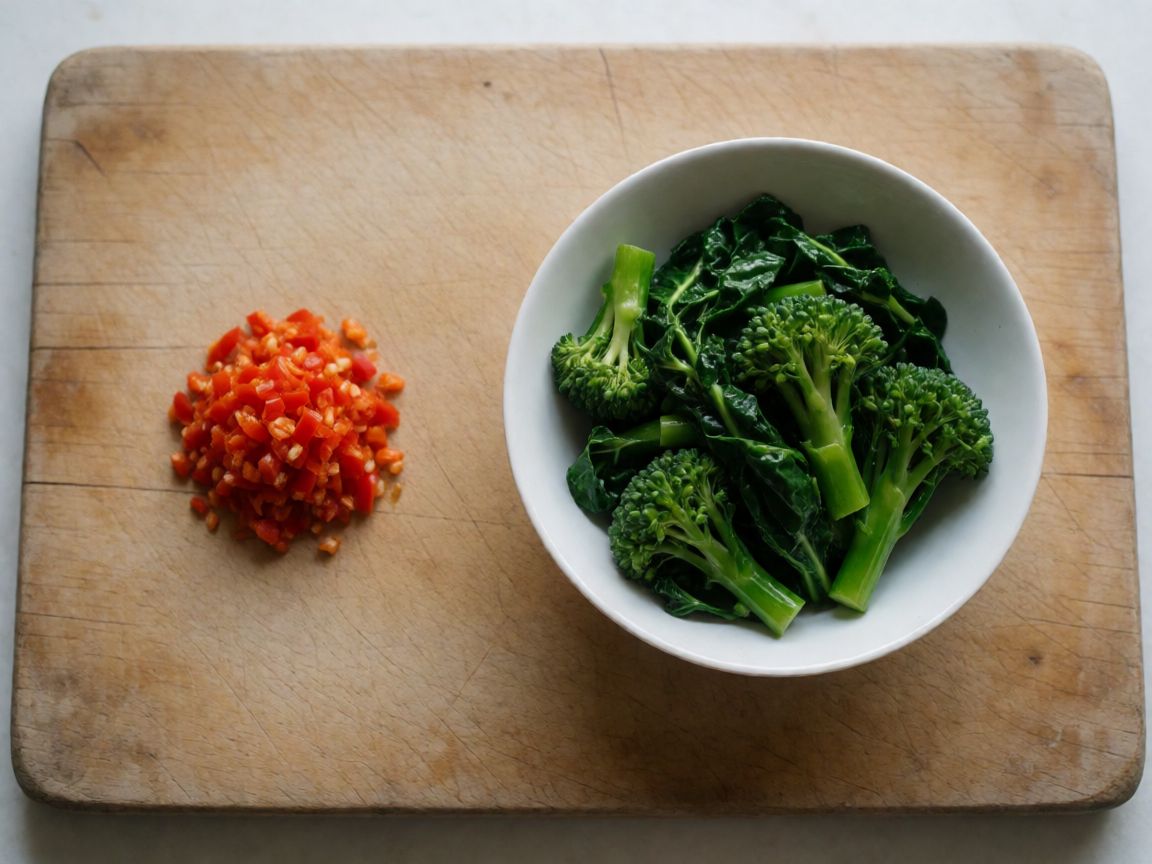
- 1 kg Cime di rapa
- Olive oil
- Salt
- Black pepper
- Chopped chilli peppers




Steps
Remove the toughest leaves and thoroughly clean the cime di rapa of any soil. Wash well under cold water.
Pour water into a large pot and bring to the boil.
Add the whole cime di rapa to the boiling water and cook for 5–10 minutes.
8 minDrain in a metal colander and press well to remove excess water.
Heat olive oil in a fairly large non-stick frying pan.
Add the greens to the pan, season with salt, black pepper and chilli to taste.
Cook over medium heat, uncovered, for about 10 minutes, until the greens are fairly dry.
10 minServe hot, topped with grated Parmesan if you like.
Cime di rapa — turnip tops, broccoli rabe if you're buying it in the UK, though it's a different plant to actual broccoli — is one of those vegetables that's bitter by design, not by accident. That bitterness is glucosinolates, the same family that makes Brussels sprouts divisive at Christmas. You don't fight it. You manage it: boil it hard first, in plenty of water, so the bitter compounds leach out into the water rather than staying locked in the leaf. Then you fry it, so the water that's left evaporates and the oil can actually do something — coat, not steam.
What decides whether this works is drainage, not timing. Boiled greens hold water in their stems like a sponge, and if you tip that straight into hot oil, you get spitting, a pan that never gets properly hot, and greens that stay grey and sad instead of turning that deep, slightly glossy green you want. Press the colander hard. Squeeze with your hands if you have to. The oil step only earns its place once the greens are dry enough to fry rather than stew.
Some say you should always chop cime di rapa before boiling, to cook it faster and evenly. No — boiling it whole, stems and all, keeps the leaves from disintegrating into mush in the pot, and you can chop afterwards, in the pan, with a wooden spoon or spatula edge, which is gentler and gives you more control over the final texture.
The greens themselves are the only ingredient that matters here, and buying them right matters more than anything you do in the pan. Look for tight, dark, unblemished leaves and firm stems — if it's gone yellow or limp, it's already losing the slight peppery edge that's the whole point of the vegetable, and no amount of chilli will bring that back. A kilo sounds like a lot; it isn't, once it's boiled down. Cime di rapa loses volume fast, which is standard for leafy greens with high water content — think spinach, but tougher.
Olive oil here isn't decorative, it's doing real work: carrying the chilli's heat into the leaf and giving you that final glossy coating once the water's gone. Use something with actual character — this is the one place in the recipe where the oil's own flavour is welcome, unlike a neutral oil you'd use for frying something delicate. If you've only got a milder oil in the cupboard, it'll still work; you'll just lose a layer of flavour you can't get back later.
Chilli and black pepper aren't there to mask the bitterness — nothing masks bitterness, that's not how taste works — they're there to give you a second, sharper sensation that sits alongside it, so your palate has two things to pay attention to instead of one. Salt does the heavier lifting: it draws moisture and rounds the bitter edge the way it does with aubergine or radicchio. Add it in the pan, not the boiling water — salted boiling water here just gets poured away, so it's wasted.
Parmesan at the end, if you use it, is a British habit colliding gently with an Italian one: grated hard cheese adds salt and a savoury weight that makes the dish feel more finished, more like a proper side rather than "just greens." Entirely optional, and skip it without guilt if cheese isn't your thing that day.
On heat and time: "medium heat, about ten minutes" isn't a stopwatch instruction, it's a description of what you're watching for — the greens going from wet and limp to visibly drier, with some edges starting to catch and darken slightly where they touch the pan. That's doneness. The ten minutes is the minimum it usually takes to get there, not a deadline. If your hob runs cooler than you think — and most domestic hobs do, compared with the heat a professional range or an open fire gives a kazan or a big pot — give it the extra few minutes rather than turning the heat up and scorching the outside before the inside's caught up.
Patience is the actual ingredient people skip. Rushing the drain, rushing the fry — both just push the water you were trying to get rid of back into the dish. Give the colander a minute of real pressing. Give the pan its ten minutes without crowding it with a lid, because a lid traps steam and you're right back to boiling, just with oil in the mix now.