
 AI photo
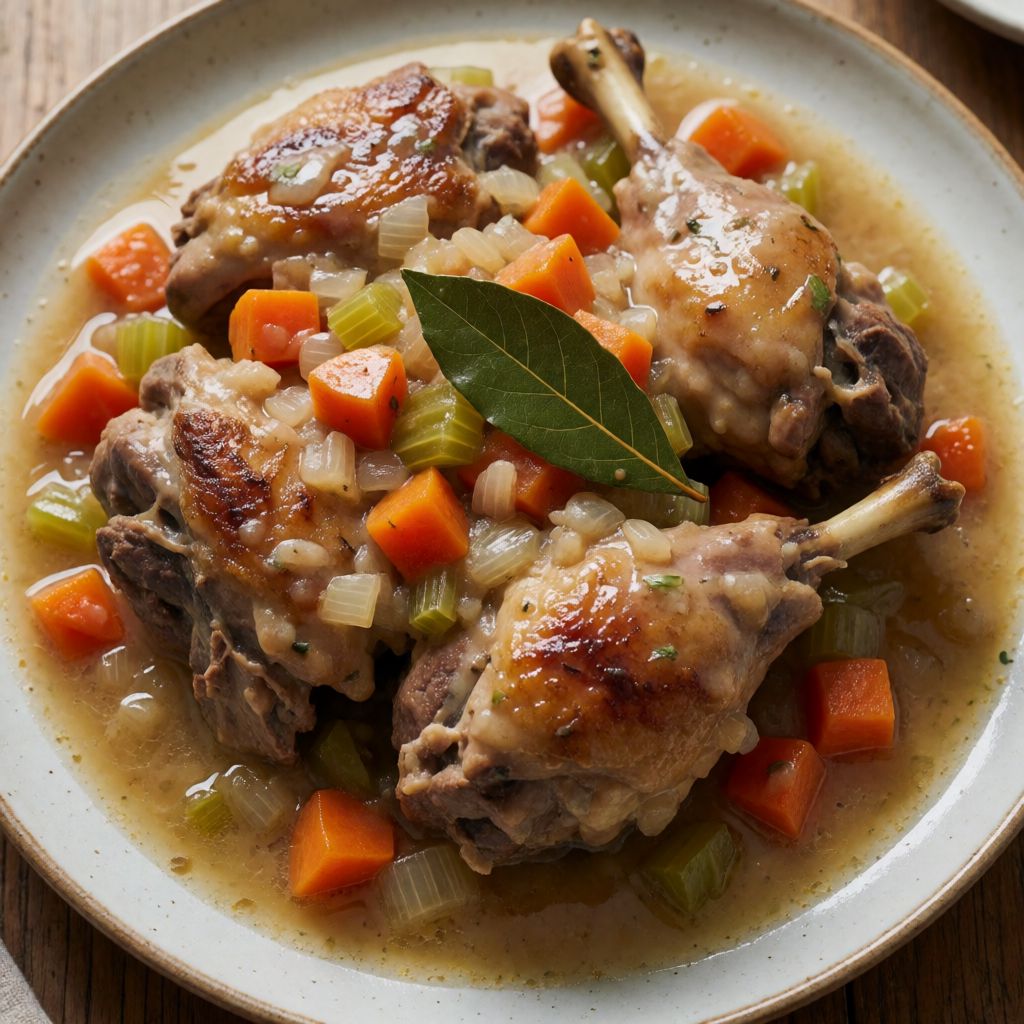
Hunter's Rabbit Stew
A hearty hunter-style rabbit stew, braised slowly with wine, tomatoes and herbs until tender.
Labels are worked out automatically from the ingredients and can be wrong. Check the packaging if it matters to you.
Ingredients
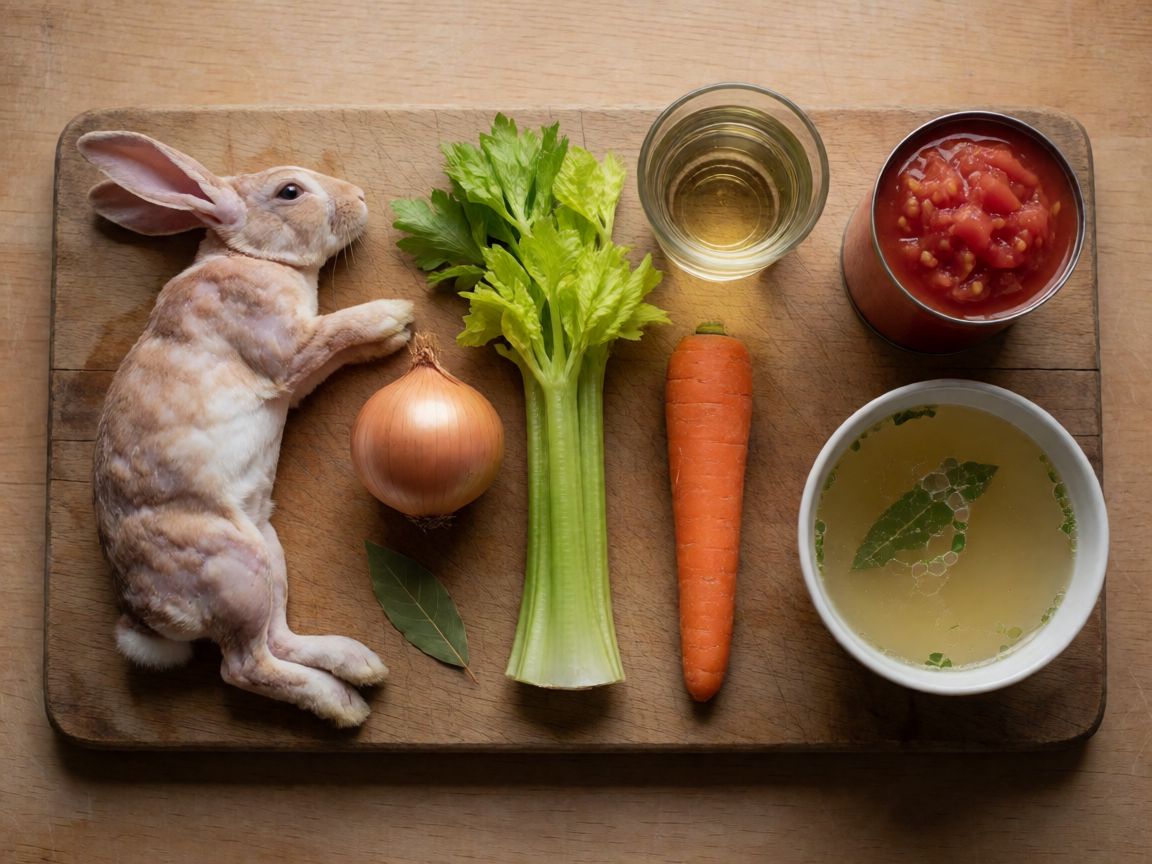
- 1 kg Rabbit
- 1 pcs Onion
- 1 pcs Celery stalk
- 1 pcs Carrot
- 1 pcs Bay leaf
- 250 ml White wine
- 500 g Tinned chopped tomatoes
- 2 tbsp Olive oil
- Salt to taste
- Black pepper to taste
- Stock a splash, as needed
- Plain flour for dusting
- Basil a few leaves, to finish










Steps
Slice the onion thinly, and finely chop the carrot and celery stalk. Dust the rabbit in flour.
Fry the onion in olive oil, add the rabbit and brown it all over on a high heat.
Add the carrot, celery and bay leaf, and fry for a few minutes.
5 minPour in the white wine and let it bubble away, then stir in the tomatoes and black pepper and cook for a few minutes more.
5 minAdd the stock along with the rabbit's liver and kidneys, if you have them.
Simmer the rabbit gently over a medium-low heat, topping up with stock if it looks dry.
60 minStir in the basil leaves about halfway through cooking, if you like.
Rabbit stew, hunter's style, is really a lesson in what happens to a lean animal when you cook it like a tough one. Rabbit has almost no fat running through the muscle — nothing like the marbling in a shoulder of lamb you'd roast on a Sunday. That means two opposite risks: cook it fast and it seizes up dry as cardboard, cook it slow in liquid and it gives up its collagen and goes tender the way oxtail does. This recipe chooses the second path, and everything in it is built to get you there without the meat turning to wet string.
The flour dusting isn't cosmetic. It does two jobs: it gives the meat a surface that actually browns — bare wet rabbit just steams in the pan and goes grey — and once it hits the liquid, that same flour thickens the sauce from the inside, so you're not relying on boiling the tomatoes down for an hour to get body. Some say you should brown meat to "seal in the juices" — no, searing does nothing of the sort, juices move by osmosis and heat, not sealing wax. What browning actually buys you is flavour: the Maillard reaction on the surface, meat sugars and proteins charring into something savoury that a boiled grey lump never gets near.
On ingredients: the rabbit itself matters more than anything else on the list. A wild rabbit has worked for its living — more muscle, more connective tissue, deeper flavour, and it wants the full, patient simmer this recipe gives it. A farmed rabbit is softer and milder; it'll cook through sooner, so watch the meat rather than the clock once you're past the hour mark. If you genuinely can't get rabbit, chicken thighs on the bone are the honest substitute — similar lean-to-connective-tissue balance in the leg, though you'll shave real time off the simmer because chicken gives up far more easily.
The onion, carrot and celery together are the base nearly every European braise starts from — the French call their version a mirepoix, the Italians soffritto, and the reason it's everywhere isn't tradition for its own sake, it's that onion brings sweetness once it cooks past raw sharpness, carrot brings a different, more vegetal sweetness, and celery brings a savoury, almost bitter backbone that stops the whole pot tasting one-note sweet. Chop them small and genuinely fry them in the fat left from browning the rabbit — that's not a garnish step, it's where a second layer of flavour builds, because they're picking up everything that stuck to the pan.
White wine isn't there to taste "winey". Letting it bubble away before the tomatoes go in burns off the raw alcohol sting and leaves behind acidity, which does real work later — it cuts through the richness of the meat and keeps the tomato from sitting flat and sweet. If you've no wine, a splash of vinegar or lemon juice in with the stock gets you most of the same acid lift, just without the extra flavour wine carries. Tinned chopped tomatoes are a fair modern stand-in for fresh — out of season, tinned ones were picked and processed ripe, so they're often more reliably flavourful than a pale supermarket tomato in January; that's economics, not a compromise.
Liver and kidneys are optional, and whether you bother is really a question of whether your rabbit still came with them — a lot of shop-bought rabbit doesn't. They're there because offal breaks down fast and adds a deep, mineral savouriness and a bit of extra thickening to the sauce, the same logic behind adding chicken livers to a ragù. Skip them without guilt; the dish still works, it's just a shade less rich.
Olive oil is specified for flavour, not because fat choice is sacred — any oil with no strong smell of its own will brown the rabbit fine, but olive oil's own mild fruitiness suits the tomato and wine here. A neutral oil works if that's what's in the cupboard; butter would burn before the rabbit's properly coloured, so leave it out of this particular step.
On your hob: a rabbit this size wants a wide, heavy pan rather than a tall narrow pot — more surface means the liquid reduces and thickens properly instead of just sitting deep and watery. If your lid doesn't fit snugly, a plate sat loosely over the pan does the same job of holding steam in without sealing it so tight the sauce can't reduce at all. And remember patience is genuinely an ingredient here — there's no shortcut that gets you tender rabbit in forty minutes; rushing the simmer just gets you dry meat sooner.