
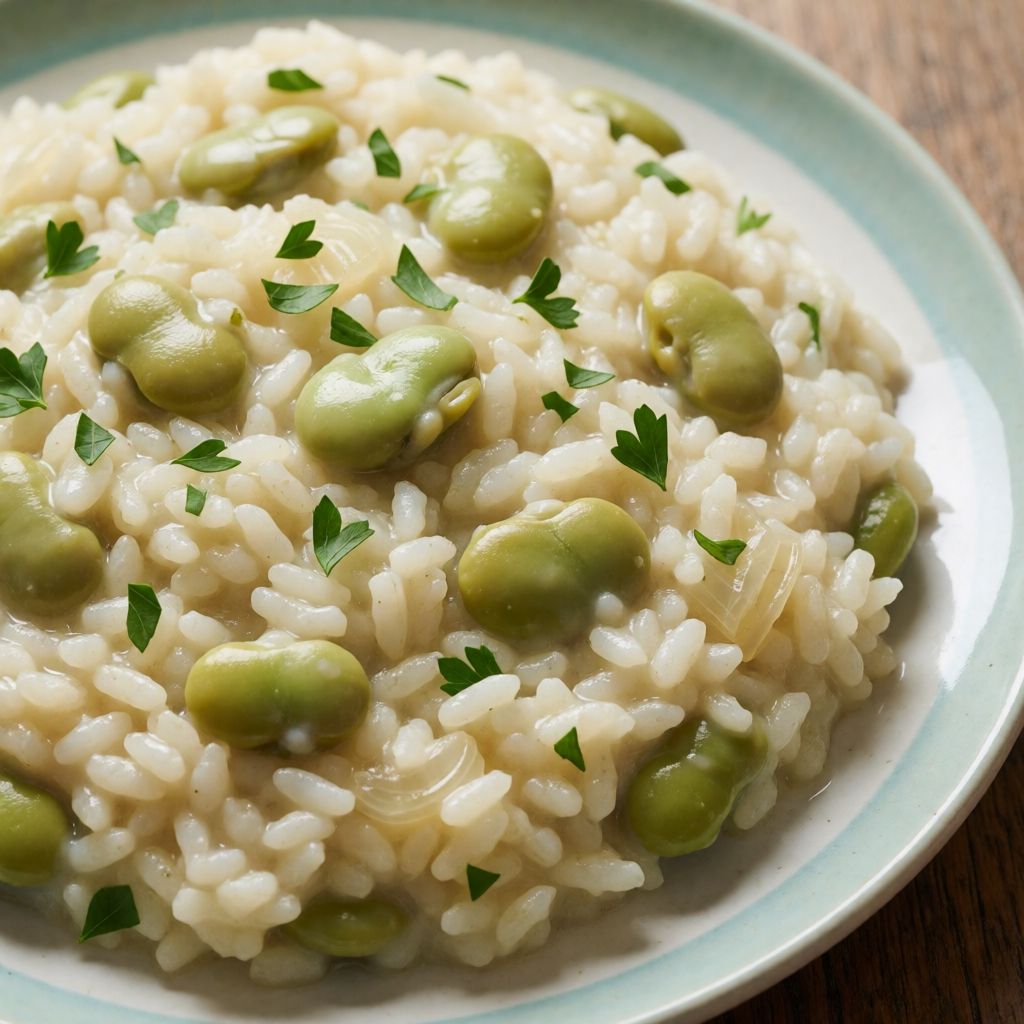
 AI photo
Broad Bean Risotto
A simple risotto made with rice and broad beans, finished with parsley.
Ingredients
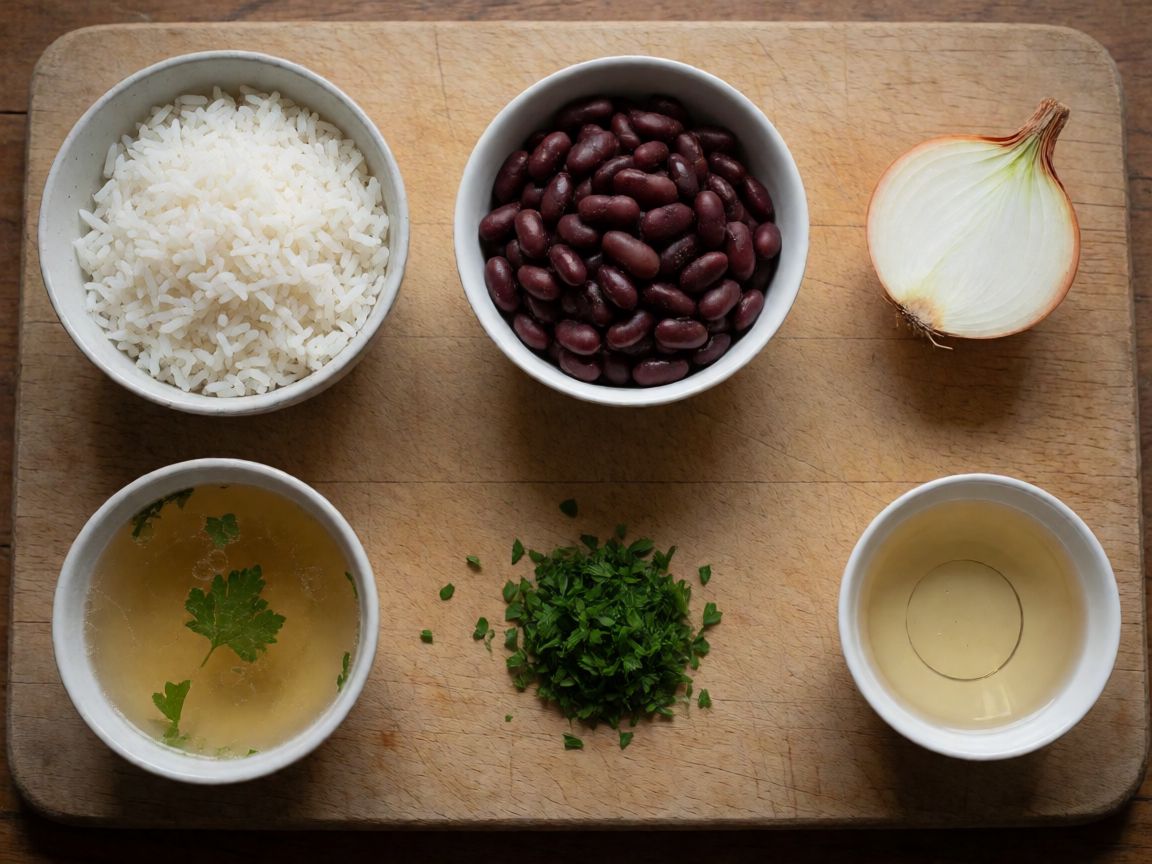
- 120 g Rice
- 60 g Broad beans
- 1/2 pcs Onion
- 500 ml Vegetable stock
- 1 tbsp Parsley
- Salt to taste
- Black pepper to taste
- Olive oil to taste
- 240 ml Wine









Steps
Peel the broad beans, removing the thin outer skin completely.
Fill a pan with water, bring to the boil and cook the broad beans until soft.
Drain and set the broad beans aside in a bowl.
Prepare the vegetable stock (500 ml).
Finely chop half of the onion with a knife.
Put the chopped onion in a saucepan and fry gently until soft.
Add the rice and toast it for a few minutes until translucent.
Pour in the wine and let it evaporate completely.
Stir the risotto and add a ladleful of vegetable stock.
Let the rice absorb the stock, then keep adding it a ladleful at a time until the rice is cooked through.
Add the cooked broad beans and stir gently.
Season with salt and black pepper to taste.
Serve with parsley and slices of onion.
Risotto is not a rice dish. It is a starch-extraction process that happens to use rice as the raw material. Every grain is wearing a thin coat of amylopectin on the outside and a firm, barely-cooked core underneath — and your job for half an hour is to rub that coat off, one ladle of stock at a time, until it dissolves into the liquid around it and turns broth into sauce. The beans are almost a side issue to the mechanism; they're there for colour, sweetness, and a textural argument with the creaminess — bite against give.
What decides whether it works is attention, not skill. You are not cooking rice in stock the way you'd cook pasta in water — drop it in, walk away, drain it. You are adding liquid in instalments small enough that the rice never floats free and never sits dry, because both of those let the grain cook unevenly: dry patches turn chalky while the surface overcooks, floating grains tumble past each other without releasing starch into contact with the pan. The ladle-at-a-time business isn't fussiness for its own sake — it's how you keep every grain touching hot metal and thickening liquid at once.
The rice is the whole argument, so choose by what it contains, not by what the packet calls it. You want a short-to-medium grain bred to be starchy on the outside and resilient in the centre — Arborio is the supermarket default, Carnaroli holds its bite a little longer if you find it, Vialone Nano cooks faster and softer. Basmati or long-grain will not do this; they're bred for the opposite trait, to stay separate and fluffy, which is exactly what you don't want here. If all you have is a long-grain rice, you will get rice in stock, pleasant enough, but not risotto — the mechanism simply isn't in the grain.
The onion gets chopped fine and cooked gently, not for flavour alone but because a burnt or browned onion base turns bitter and that bitterness sits under everything you add afterwards — you can't stir it back out. Gentle here means the onion turns translucent and soft without colouring, going from sharp white to a kind of pale gold; if it's catching colour, your pan is hotter than this step wants. On a domestic hob without the wide shallow surface and steady low heat of a kazan-style pan, this usually means lower than you'd think and a slightly wider pan than you'd reach for — risotto rewards surface area, because more grains touching metal means faster, more even starch release.
Toasting the rice for a few minutes before any liquid goes in seals the outside of the grain just enough that it holds its shape through half an hour of simmering instead of collapsing into porridge — you're looking for the grains to turn from opaque white to a slight translucency at the edges, almost glassy. The wine goes in next and needs to fully evaporate, not just be "added" — its job is to deglaze whatever's stuck to the pan and burn off its raw alcohol sharpness, leaving acidity behind, which is what lifts the final creaminess from merely rich to actually appetising. If you skip that evaporation and rush the stock in too soon, you'll taste raw wine in the finished dish — a genuinely common defect and an easy one to fix: wait until the smell of alcohol is gone, not until a timer says so.
Stock quality matters more than people expect for a dish seasoned so simply at the end. A thin, salty stock cube water will make a thin, salty risotto — there's nowhere for bad stock to hide once it's reduced and concentrated into the rice over thirty minutes. If you're making your own, any vegetable trimmings you'd otherwise bin — onion skins aside, carrot tops, celery ends — will do; the only sin is letting it taste of nothing.
Broad beans peeled twice seems like belt-and-braces but isn't: the pod protects the bean, and the thin skin on the bean itself is there to protect the bean from drying out, and it's tough and slightly bitter when cooked — leave it on and you get a mealy little jacket on every spoonful that fights the creaminess of the rice instead of complementing it. Boil them just until they bend rather than crunch, then stop — overcooked broad beans go grey and pasty, and that colour loss is also a flavour loss, the sugars have cooked out into the water instead of staying in the bean.
Olive oil at the start and parsley at the end are doing two different, non-overlapping jobs — one is cooking medium, one is a fresh, grassy top note added after the heat's off so it doesn't wilt and dull. Use an oil with no strong character of its own for the cooking stage — a plain, not aggressively peppery olive oil, or a neutral vegetable oil if that's what's in the cupboard; save any good extra-virgin for drizzling raw at the very end if you want the flavour rather than just the fat.
And the patience bit isn't decoration — thirty minutes of ladling and watching is the actual technique, not a wait before the technique. Walk away and you'll come back to a pan that's either dry and sticking or soupy and underdone, and there's no fixing either after the fact without it showing.