
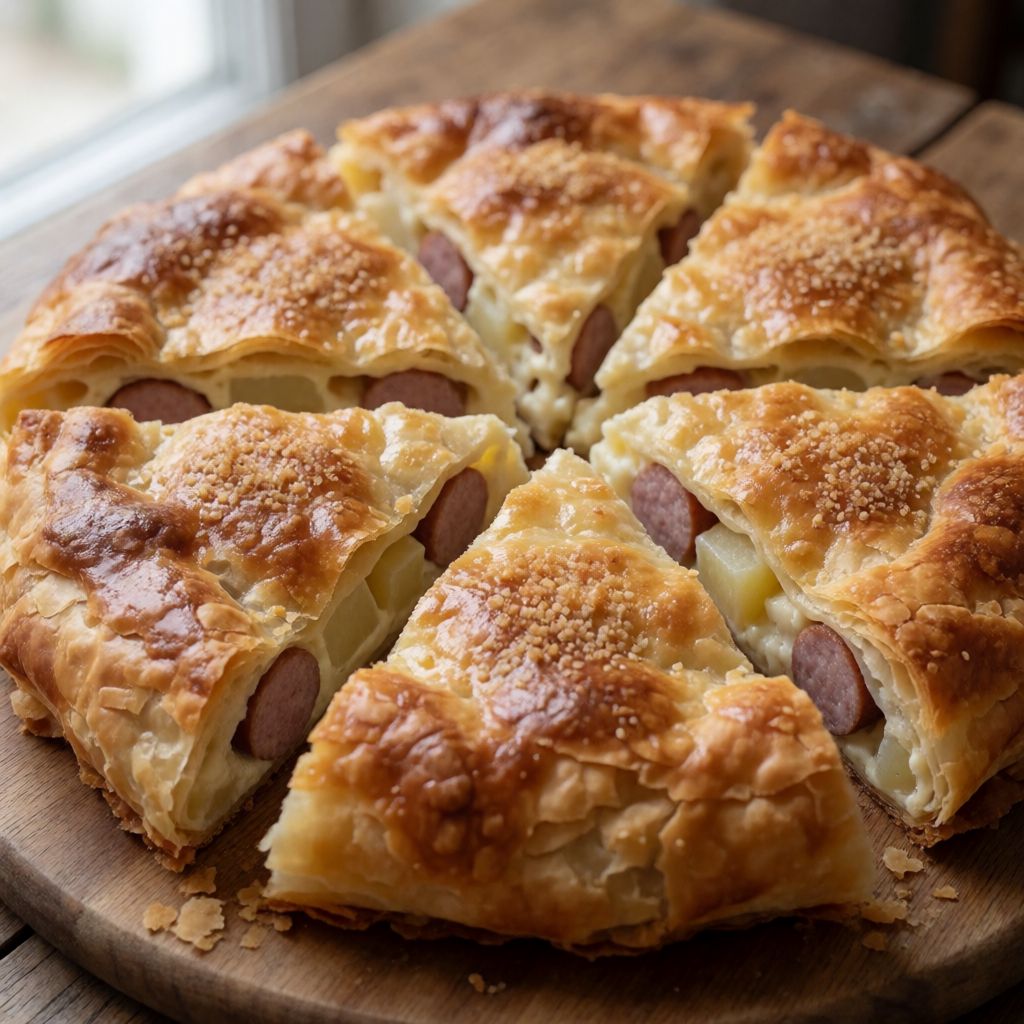
 AI photo
Puff Pastry Pie with Frankfurters, Potato and Mozzarella
A simple puff pastry pie layered with sausages, potato and mozzarella.
Labels are worked out automatically from the ingredients and can be wrong. Check the packaging if it matters to you.
Ingredients
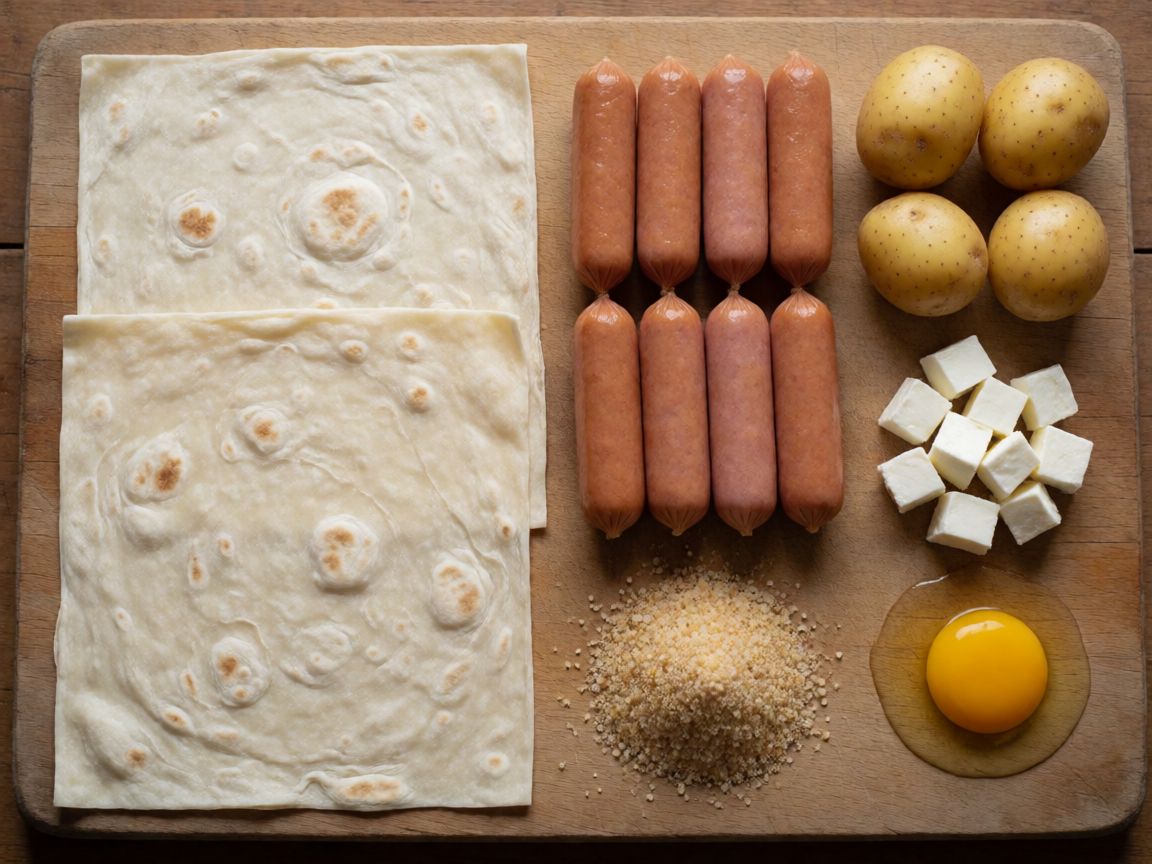
- 2 pcs Ready-rolled puff pastry
- 8 pcs Frankfurters
- 4 pcs Potatoes
- 1 pcs Buffalo mozzarella diced
- pinch Breadcrumbs to taste
- tbsp Olive oil to taste
- 1 pcs Egg yolk





Steps
Line a baking tin with the first sheet of puff pastry and prick the base with a fork.
Scatter a handful of breadcrumbs over the base.
Spread the sliced potatoes, sliced frankfurters and diced buffalo mozzarella on top.
Drizzle with a little olive oil.
Cover with the second sheet of puff pastry, pinch the edges together and brush with egg yolk.
Bake at 180°C.
40 min
This is a hot-water-bottle of a pie: two sheets of bought puff pastry hugging a filling of frankfurters, raw potato and mozzarella, and the oven does the rest. It belongs to the family of "whatever's in the fridge, wrapped and baked" pies — the puff pastry equivalent of toad-in-the-hole, except nobody's apologising for using shop-bought pastry here, and nor should you. Making proper rough puff at home for a weeknight pie is a day's work for something you're going to drown in sausage fat anyway. Ready-rolled is the honest choice.
What decides whether it works is not the pastry, it's the potato. You're putting raw, sliced potato under a lid that seals itself in twenty minutes and then just sits there colouring. There's no steam escaping, no basting, no checking. So the potato has to be sliced thin enough that it can actually cook through in the time the pastry takes to go from pale to golden-brown and no further — because once the top is dark, the oven can't tell you anything more. Cut it like a coin, not like a wedge, and this stops being a gamble.
On the puff pastry itself: ready-rolled is fine, but check what's in the butter column. Some supermarket blocks use vegetable fat and only taste of salt and air — they'll puff, technically, but they won't taste of anything. If you can find an all-butter one, your pie smells like something, not just like "pastry." Keep both sheets cold until you need them; warm pastry won't hold the layers that make it puff at all, it just slumps and seals shut like a flatbread. That's also why you prick the base — not for looks, but so trapped steam under the first sheet has somewhere to go instead of blowing a bubble that lifts your whole filling sideways.
Frankfurters: these are precooked sausage, so their job here isn't "cook through," it's "render a little fat and flavour the potato around them." Any decent smoked or plain frankfurter works — veal, pork, even the all-beef ones sold for hot dogs. What you want is something with enough fat in it to baste, because you've got no oil doing that job once it's sealed under pastry. A very lean "healthy" sausage will just sit there dry and sad. Slice them, don't leave them whole — whole, they create a tunnel of air under the top sheet and you'll get a hollow, droopy pie instead of one that holds its shape when you cut it.
Potatoes: waxy, not floury. A floury potato — your Maris Piper, your King Edward — breaks down and turns to mash inside a sealed pastry case, because it's got nowhere to vent the starch it releases. A waxy one, like a Charlotte or a new potato, holds its slice and gives you layers you can actually see when you cut the pie open. Slice thin, as said — thin enough to bend, not snap, straight out of the bag; that's roughly your target thickness for raw, uncooked testing too. If you press a slice and it folds rather than cracks, it'll cook through in the pie's time.
Mozzarella: buffalo is specified because it's wetter and richer than the cow's-milk block mozzarella sold for pizza toppings — more flavour, but also more liquid to manage, which is exactly why the breadcrumbs matter so much in this particular pie. If you only have the firmer cow's-milk type, or a basic cheddar-ish mild cheese, use it — you lose a bit of the milky tang but gain a drier filling, which is honestly more forgiving for a first attempt. Dice it rather than slice it; smaller pieces melt into the gaps between potato and sausage instead of forming one solid sheet of molten cheese that glues itself to the lid when you cut in.
Olive oil here is seasoning, not frying medium — nothing's browning in a pan, it's one drizzle over raw ingredients before the lid goes on. So "olive oil" really just means any oil that won't fight the frankfurter's smokiness; a neutral oil does the same mechanical job, it just won't add the faint bitterness and grassiness olive oil brings. Don't reach for something strongly flavoured like sesame or a very peppery first-press oil — it'll sit on top of everything else and you'll taste it before you taste the pie.
The tin matters more than people think, in an ordinary flat kitchen. A loose-bottomed tart tin or a straight-sided pie dish gives the pastry something to climb and seal against; a flat baking tray with raised edges just means your filling juices find the lowest point and seep out the side, and you get a soggy footprint on your baking paper instead of a sealed parcel. Use whatever has sides — a cake tin at a pinch, lined well.
And the oven: 180°C is a number, but what you're actually watching for is colour and lift together — the pastry should rise unevenly in patches as the layers separate with steam, and go from the pale, slightly greyish raw colour to an even deep gold, not brown-black at the edges with pale in the middle, which tells you your oven runs hot at the back or the sides and the pie needs turning halfway. Forty minutes is the floor, not the target — pull it only when the colour says so, and let it sit five minutes out of the oven before you cut, because that's patience doing the cheese's job for it: giving the molten mozzarella time to firm up just enough that your slice holds its shape instead of running everywhere the second the knife goes in.