
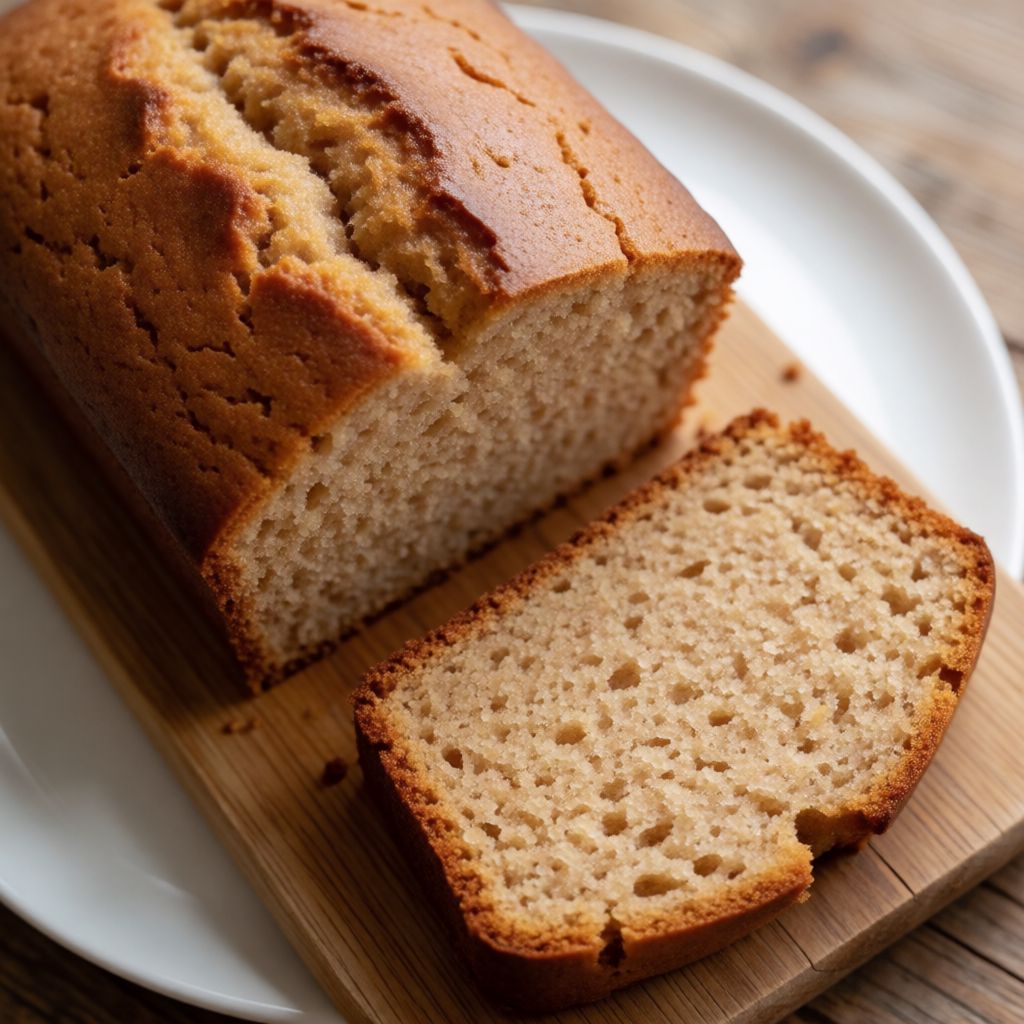
 AI photo
Wholemeal Lemon Cake
A simple, fluffy wholemeal flour cake flavoured with lemon or orange zest.
Labels are worked out automatically from the ingredients and can be wrong. Check the packaging if it matters to you.
Ingredients
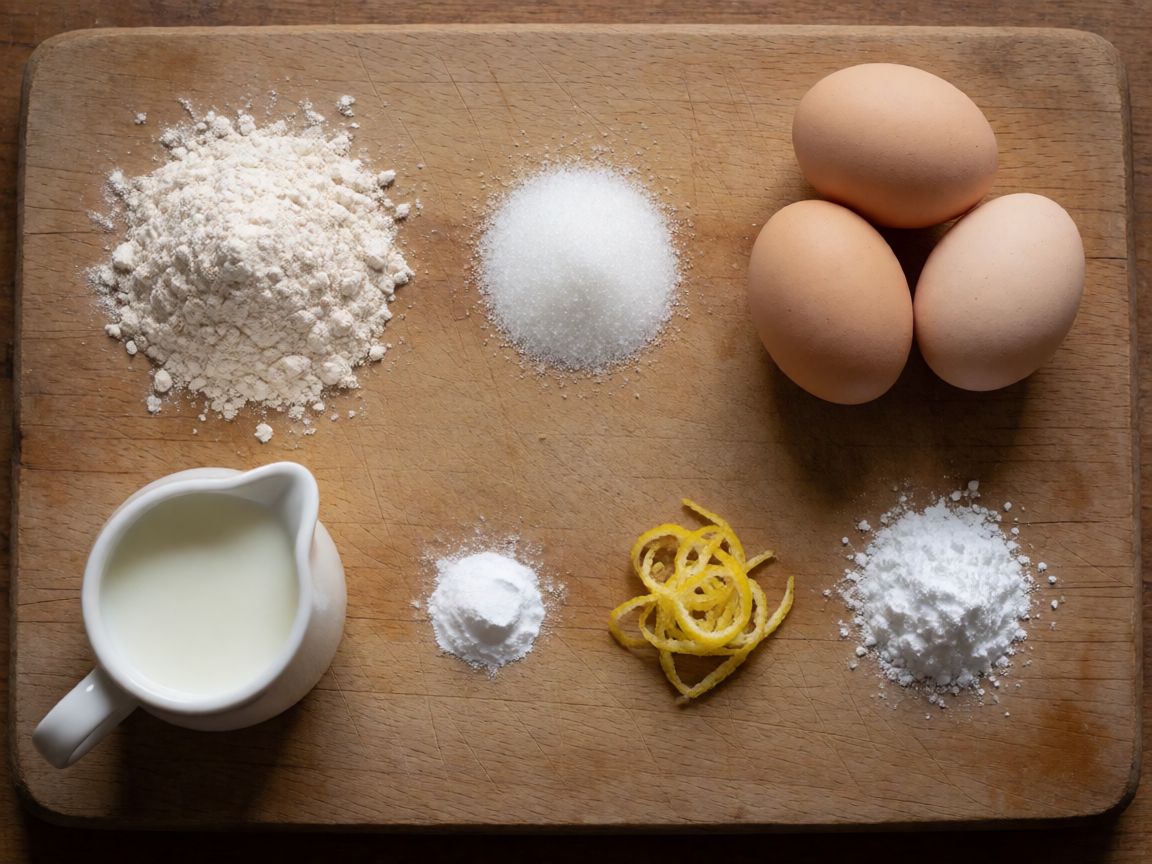
- 400 g Wholemeal flour
- 280 g Sugar
- 3 pcs Eggs
- 150 g Sunflower oil
- 100 g Milk at room temperature
- 16 g Baking powder
- 1 pcs lemon or orange zest
- Icing sugar vanilla, to taste, for serving







Steps
Pour the sugar into a bowl, add the eggs and whisk for a few minutes until light and fluffy.
Still whisking, slowly drizzle in the sunflower oil.
Add the flour together with the baking powder in a few batches and mix well.
Pour in the room-temperature milk and add the lemon or orange zest for aroma.
Whisk until you get a smooth, even batter.
Preheat the oven to 180°C.
Pour the batter into a tin about 24 cm in diameter and smooth the surface with a spatula.
Bake the cake for about 1 hour, checking it is done with a wooden skewer.
60 minLet the cake cool completely before removing it from the tin.
Serve, generously dusted with vanilla icing sugar.
This is a plain man's cake — no layers, no cream, no fuss — built on an engineering trick: whole eggs and sugar whisked until they hold air, and that air is the only raising agent you can see with your own eyes before the baking powder even wakes up. Wholemeal flour makes it heavier and nuttier than the white-flour version you might know from a church fete table, and the zest is there to cut through that heaviness, not to decorate it.
What decides whether it works is the egg-and-sugar stage at the start and the skewer test at the end — everything in between is just assembly. If you rush the whisking, the cake sits dense and a bit wet in the middle no matter how long you bake it, because you never built the scaffolding of tiny bubbles that the baking powder is meant to expand. If you pull it from the oven on a guess rather than a check, you get a cake that collapses as it cools, because the inside wasn't set, only the crust was.
Some say wholemeal cakes are always dry — no, because the amount of oil here is generous precisely to compensate for the bran, which is thirstier and coarser than white flour's starch. The oil carries moisture through the crumb the way butter would in a Victoria sponge, just without butter's smell getting in the way of the lemon.
It feeds six, modestly — a Sunday-afternoon cake with tea, not a birthday centrepiece, and that's fine. It isn't trying to be more than that.
Start with the eggs and sugar. Whisking "until light and fluffy" isn't decoration talk — it means the mixture visibly pales, thickens, and when you lift the whisk it leaves a ribbon on the surface that sits there a second before sinking back in. That ribbon is your proof that air is trapped in a lattice of beaten egg protein. Skip that and your cake relies entirely on 16 g of baking powder to do a job that's really shared between chemistry and mechanics — and baking powder alone, in a batter this dense with wholemeal flour, won't lift it evenly. You'll get domes in the middle and a gummy ring near the base.
The oil goes in slowly, while you keep whisking, for the same reason you drip oil into mayonnaise slowly — so it emulsifies into the egg mixture instead of pooling and breaking the air bubbles you just built. Use sunflower oil because it has no voice of its own; any neutral oil with no smell — rapeseed, grapeseed, a light vegetable oil — does the same job. Olive oil would argue with the lemon. Melted butter would work differently again, giving a tighter, more biscuity crumb, because butter sets solid as it cools and oil never does — that's actually why oil-based cakes like this one stay moist for days afterwards, a real practical reason British home bakers in the 70s and 80s leaned on oil cakes for things that needed to survive a tin on the counter till Wednesday.
Wholemeal flour is the whole point here, not a health-food substitution. It's coarser, it carries bran and germ that soak up liquid more aggressively than white flour, and it brings a nutty, almost toasted flavour that plain sponge doesn't have. Fold it in gradually — in batches — not because of tradition but because dumping 400 g into a light, aerated batter in one go collapses the air you built in step one; it needs to be absorbed gently, a bit at a time, folding rather than beating hard.
The milk, at room temperature, is a small but real detail: cold milk hitting an aerated batter can seize the emulsion slightly, making it look split or grainy for a moment, and while it usually recovers with mixing, there's no reason to fight it when leaving the milk out of the fridge for twenty minutes avoids the problem entirely.
Zest — lemon or orange, your call — goes in raw and finely grated, never the white pith underneath, because that's what's bitter, not the coloured skin. If you've no fresh citrus, a few drops of real extract will carry the aroma, though it's thinner and more one-note than real zest, which releases its oils slowly as it bakes rather than all at once.
The oven at 180°C is where genuine chemical leavening — the baking powder — does its work, releasing gas as it heats, which is why the whisking and the oven are not competing methods but sequential ones: air first, gas second. An hour is a lower bound, not a deadline — ovens vary, tins vary, and a 24 cm tin baked in a British fan oven might be done in fifty minutes while a conventional one needs the full hour and then some. The skewer coming out clean, or with just a few moist crumbs, is the real signal; a wet smear means wait.
And then — patience, because it's an ingredient here as much as the flour is. Cutting into a warm cake looks tempting and ruins the texture: the crumb is still setting as it cools, and slicing early collapses it into something gluey round the centre. Let it sit in the tin till it's fully cool, then turn it out. The icing sugar on top is the only cosmetic step in the whole recipe — sift it on at the last minute, because it dissolves into the cake's surface moisture within the hour and disappears if you do it too early.
·