
Grains & legumes
Phyllo Dough
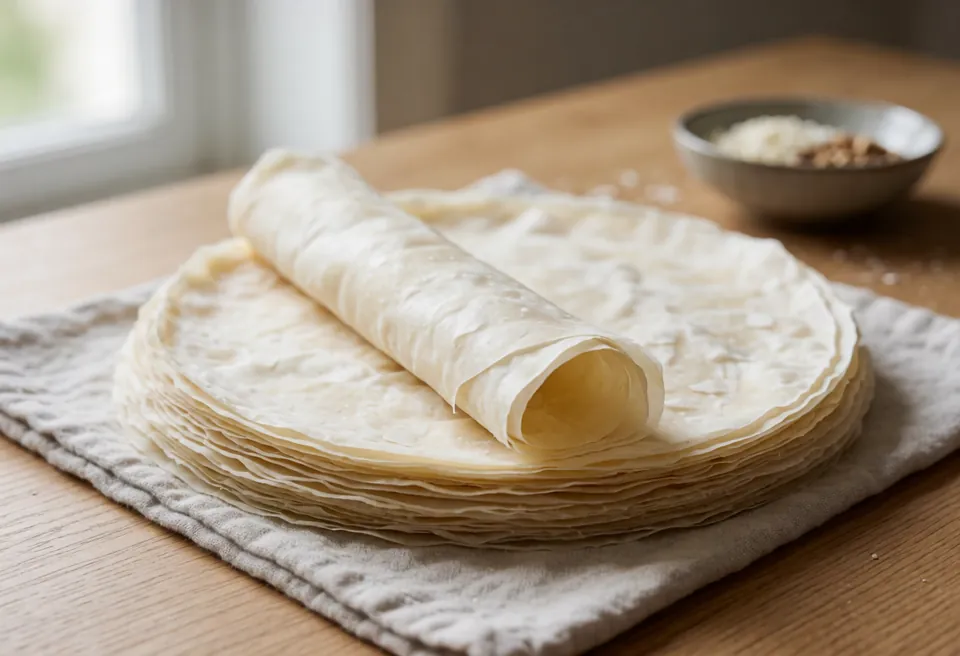
Phyllo dough is very thin sheets of unleavened dough common in Greek and Balkan cooking. It's used for crispy pies, strudel and both sweet and savory pastries.
299 kcal per 100 g
Nutrition per 100 g
299 kcal
| Protein | 7.1 g |
|---|---|
| Fat | 6 g |
| Carbs | 52.6 g |
| Fiber | 1.9 g |
Source: USDA FoodData Central, 2026-09-21. Per 100 g of product.
Good to know: Phyllo Dough
Let's talk about phyllo, because everybody is afraid of it, and nobody should be.
Phyllo is wheat dough stretched paper-thin, layer after layer, with nothing but a brush of fat between the sheets. No leavening, no trick. It shatters when it bakes because fat keeps the layers from fusing, so each sheet dries and crisps on its own instead of welding into a single crust. Thin, dry, separated. That is why it crackles under your fork instead of bending.
Choosing it is simple: look at the sheets before you buy. They should be pale ivory, almost translucent, supple enough to bend without breaking, not wet and clumped together, not crumbly at the edges. If it smells sour or feels slimy, put it back; a sheet that is drying out will crack before you even unroll it.
Some people say phyllo is fragile and hard to work with, so they slather it in oil to "protect" it. No! Too much fat just weighs the pastry down — you get something heavy and greasy, not crisp. Brush lightly, work quickly, keep it covered so it does not dry out midway, and it will reward you with real, honest crunch.
A hundred grams of raw phyllo gives you 299 kilocalories, 7.1 grams of protein, 6 grams of fat, and 52.6 grams of carbs. Respect that, and cook accordingly.