
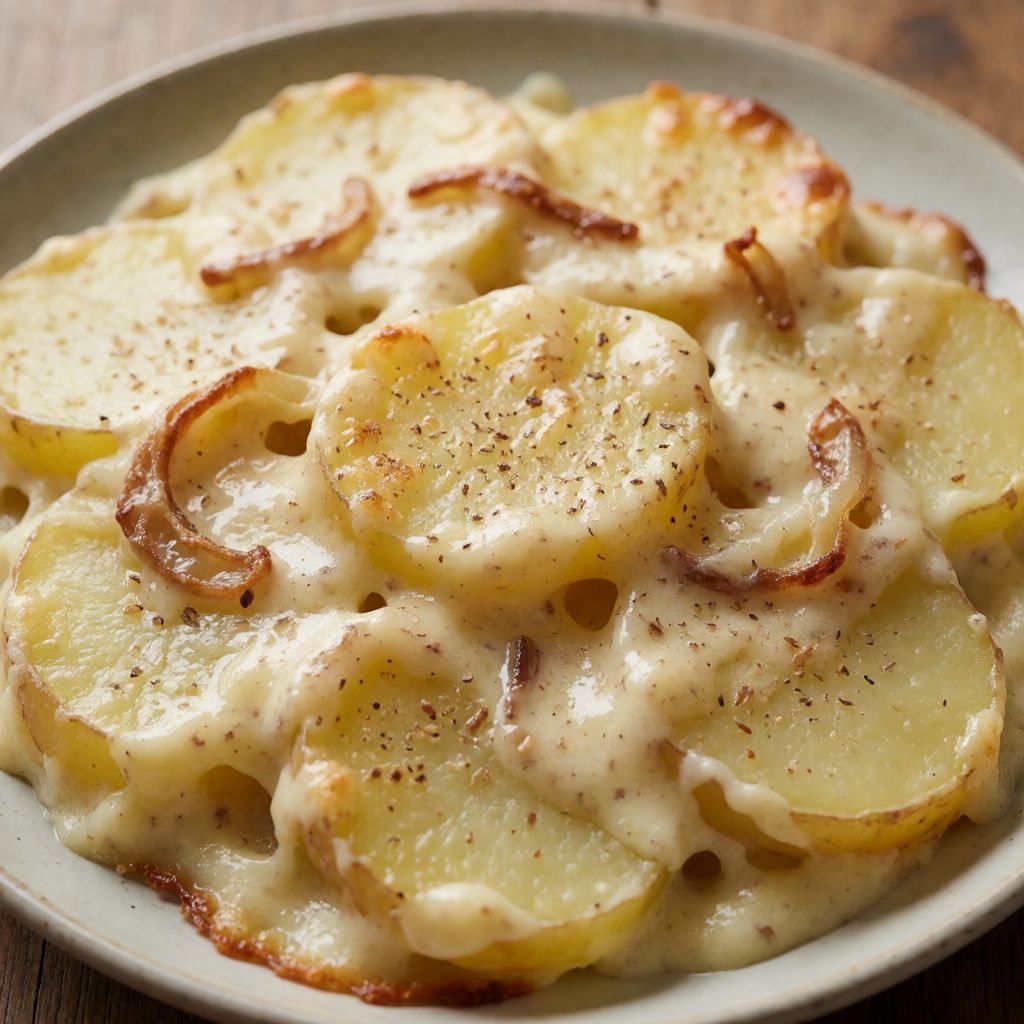
 AI photo
Baked Potatoes in Cream
Thinly sliced potatoes and onion baked under a creamy, garlicky egg mixture until tender.
Labels are worked out automatically from the ingredients and can be wrong. Check the packaging if it matters to you.
Ingredients











Steps
Peel the potatoes and cut into thin slices; place them together with the onion in a baking dish greased with butter.
Beat the egg well and mix with the double cream until smooth.
Add the crushed garlic and spices, and stir.
Spread the mixture evenly over the potatoes.
Place the dish in an oven preheated to 190°C (fan) and bake for 60-70 minutes, or until the potatoes are tender.
70 minIf you like, cover the dish with a lid or an upturned ovenproof plate so the top does not brown too much.
In that case, allow an extra 10 minutes of baking time.
10 min
What was changed
Whipping cream was swapped for Double cream, the type British shoppers normally buy.
This is the dish people mean when they say "potato gratin" and then argue about whether it's Dauphinoise or something humbler. It doesn't matter what you call it — what decides whether it works is how thin you slice the potato and whether the cream actually gets where it needs to go. Thin slices, packed tight, give the cream channels to climb through by capillary action; thick slices just float in a puddle and the middle layer stays raw while the edges turn to mush. A mandoline or the slicing attachment on a box grater earns its keep here — by hand, aim for coin-thickness, and if your slices vary, so will your cooking.
The egg is doing real work, not padding. Cream alone, baked long enough to cook potato through, will separate and split, leaving you with curds floating in butterfat — not what you want under your Sunday roast. The beaten egg binds the cream into something closer to a custard, so it sets instead of breaking. That's also why you stir it smooth before it ever meets the potato: lumps of unbeaten egg white turn into little cooked threads once they hit a hot dish, and no amount of nutmeg disguises that.
Some say you must soak the potato slices in water first to stop browning. Don't, here — you want the starch. It's what thickens the cream into something that coats a spoon rather than pools like soup. Rinse starch away and you get thin cream over slippery potato, technically cooked but structurally pointless.
Potatoes: go for a variety that holds its shape but still softens — a floury, mealy one (the kind sold for baking whole) will collapse into the cream and thicken it unevenly; a very waxy new potato will stay too firm even after 70 minutes. Something in between, a general all-rounder, slices clean and takes the cream without falling apart.
Double cream is not a flex, it's structural. Its higher fat content means it won't curdle under sustained oven heat the way single cream or half-fat alternatives will — they split, releasing watery whey and leaving the dish greasy rather than silky. If you must use something lighter, add a spoon of flour or cornflour whisked into the egg first, so you've got a backup thickener when the fat isn't enough.
Garlic: crushed, not sliced, because you want it dispersed through half a litre of liquid, not sitting in isolated bites where one person gets a mouthful of raw garlic and the next gets none. A clove that's starting to sprout green in the middle has gone bitter — cut that bit out or use a fresh one.
Nutmeg and thyme are there for the same reason they turn up in so many cream-and-potato dishes across Europe — dairy on its own is flat, and these two cut through the richness without fighting the potato. Fresh thyme gives you oils that dried thyme has mostly lost to the drying process; if you only have dried, use less, since it's more concentrated in flavour but duller in aroma. Freshly grated nutmeg matters more than people think — pre-ground nutmeg loses its volatile oils within weeks of grinding, so what you're tasting from a jar that's been in the cupboard a year is mostly just "brown powder, vaguely spicy."
Paprika here is colour and a faint smoky-sweet note, not heat — don't reach for hot paprika or cayenne unless you want a genuinely different dish. Butter for the dish is just to stop the bottom layer sticking and tearing when you serve; any fat with no strong flavour of its own does the job, though butter also helps that bottom layer caramelise slightly rather than just steam.
This isn't a fast dish, and there's no shortcut through the middle of it. An hour-plus in the oven is the time it takes cream to reduce, thicken, and actually penetrate a stack of potato slices — rushing the oven temperature up to compensate just burns the top before the centre's done. Patience is the ingredient you can't substitute out.