
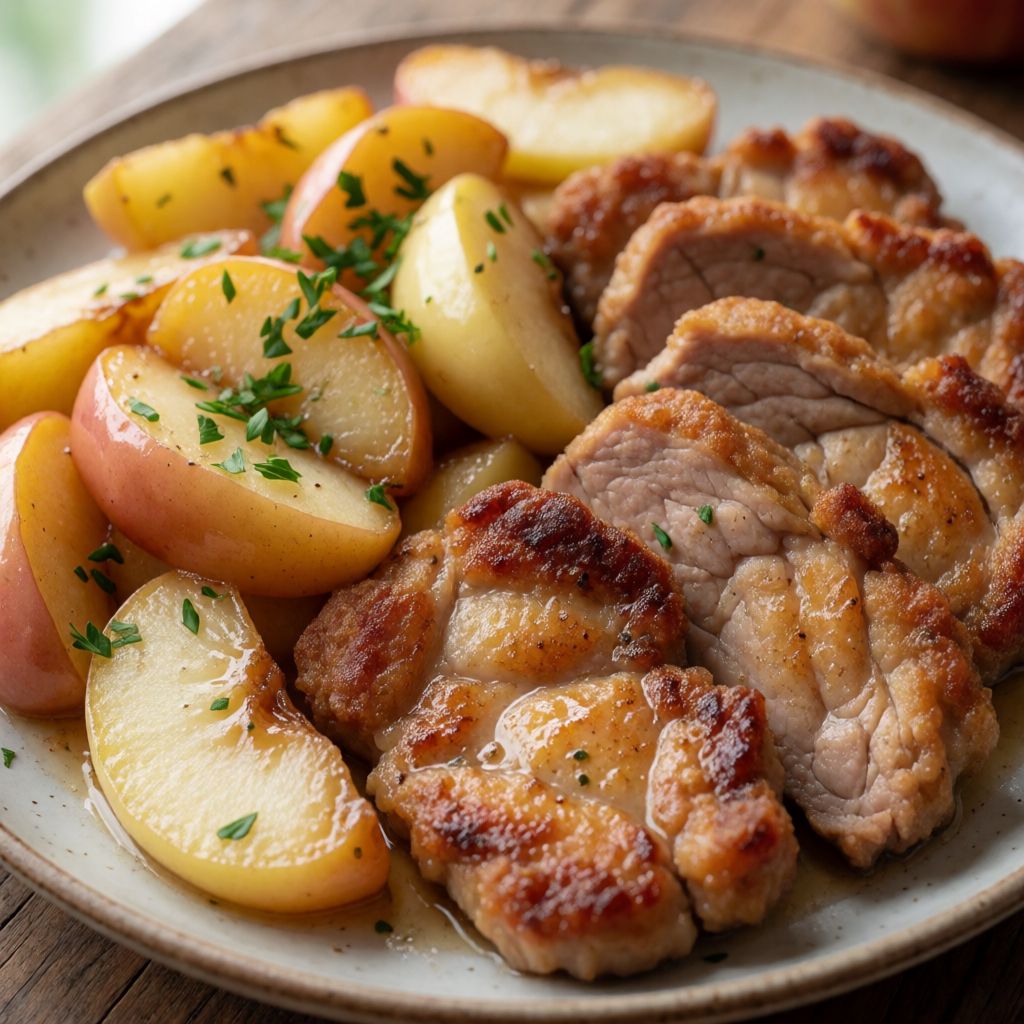
 AI photo
Roast Pork with Apples
A classic dish of pork slices roasted until crisp, served with soft pan-fried apples and rye bread.
Labels are worked out automatically from the ingredients and can be wrong. Check the packaging if it matters to you.
Ingredients







Steps
Sprinkle the pork with salt and pepper on both sides and place it on a rack. Set the rack in the oven with a tray underneath. Line the bottom of the tray with baking paper to make it easier to clean.
5 minRoast the pork in a preheated fan oven at 175°C for about 45 minutes. If you like, raise the temperature to 220°C at the end for extra crispness.
45 minPlace the pork slices on a paper towel. Pour the fat from the tray into a pan and heat over medium heat. Fry the apple pieces in the fat, turning them gently a few times so they don't break apart. They should soften slightly and warm through.
5 minTransfer the apples to a sieve and let them drain well.
2 minServe on a platter together with the roast pork.
1 minSprinkle with parsley and eat with rye bread.
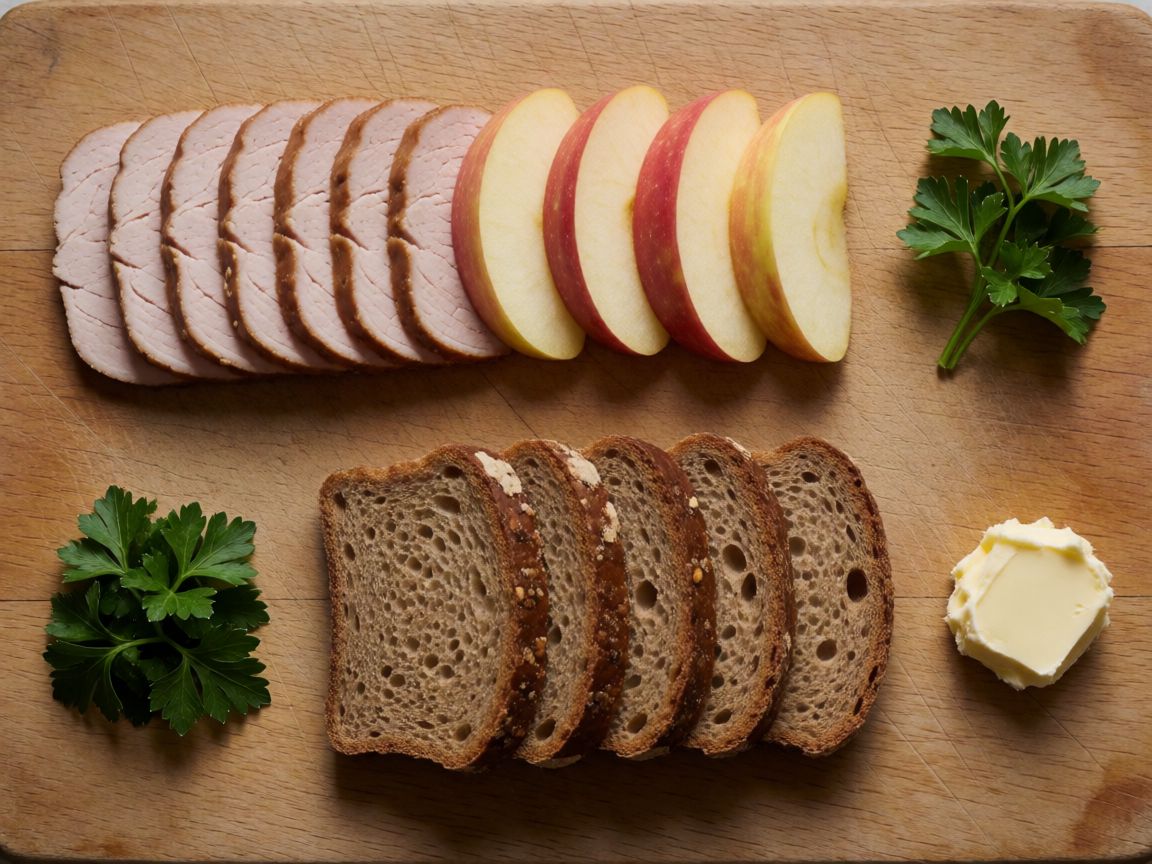
This is pork roasted dry in its own fat, with apples fried in that same fat afterwards — nothing wasted, nothing added. Ten slices of pork sit on a rack over a tray, so the fat renders down and drips away instead of the meat sitting in it. That's the whole mechanism: a rack is not a fussy extra, it's what stops you boiling the pork in its own grease, which is how you end up with meat that tastes steamed rather than roasted.
What decides whether it works is the fat, not the meat. Pork slices on a rack at 175°C in a fan oven render slowly — the fat liquefies, drips into the tray, and that tray-fat becomes the cooking medium for the apples. If you pull the pork out and there's barely a spoonful of fat in the tray, your oven ran hotter than it thinks it did, or your pork was cut too lean for this method — streaky, fatty slices are what makes the whole dish function, not a lean loin chop.
Some say pork always needs a hot oven to crisp up. No — crisping is a surface-moisture problem, not a temperature problem. 175°C for 45 minutes renders the fat and cooks the meat through gently; the optional jump to 220°C at the end is there purely to flash off surface moisture fast, for skin or crackling-style crisping, after the inside is already done. Do both jobs at 220°C from the start and you crisp the outside while the inside is still cold and the fat hasn't had time to render — exactly the "roast tastes good outside, raw-ish and greasy inside" failure people blame on the oven when it's really the order of operations.
Pork: ten slices, not a joint. This matters because a joint roasts by a different logic — slow heat creeping to the centre over hours. Slices are thin enough that 175°C reaches the middle in well under 45 minutes; the 45 minutes here is mostly about rendering the fat, which is slower than cooking the meat. Buy with visible fat seams — shoulder or belly slices, cut about a centimetre or so thick, the kind sold for a Sunday roast but sliced rather than left whole. A trimmed, lean loin chop will cook fine and give you almost no fat for the apples, which breaks step 3 entirely; you'd be frying in nothing.
Apples: four, cut into wedges, not slices — wedges hold their shape under heat because they keep more of the core-to-skin fibre running through them; thin slices collapse. Use a firm variety that holds structure when warmed — a Bramley will go to mush, a Braeburn or Cox won't. You're not baking them soft, you're warming them through in hot fat for a few minutes, so "slightly softened, still a wedge" is the target, not "falling apart."
Rye bread and butter: this is the plate's starch and its sponge. Rye holds up to being dragged through meat juice and apple fat without disintegrating the way a soft white sandwich loaf would — any dense, closed-crumb bread does the same job; a seeded wholemeal from a British supermarket will substitute fine. The butter on it is there so the bread isn't dry against a dish that's already rich with pork fat — a thin layer, not a thick one, since you've got plenty of fat elsewhere on the plate already.
Parsley: the only green thing in the dish, and its job is cutting through fat with freshness, not flavouring the meat. Flat-leaf or curly both work; what matters is that it goes on at the end, raw, uncooked, so it still smells of itself.
Salt and pepper go on before roasting, not after, for a reason worth saying plainly: salt on the surface before heat draws moisture out early, which helps the surface dry and firm rather than steam under its own sweat — part of what makes crisping at the end actually work rather than fighting a wet surface.
On patience: the one place to not rush is pulling the pork too early. Forty-five minutes is a lower bound, not a target — if your oven runs cool, or your slices are thicker than average, the fat in the tray tells you more than the clock does. Thin fat still sitting white and solid-ish, not pooled and clear, means give it longer. You're not watching the pork; you're watching what drips off it.