Oils & fats
Suet
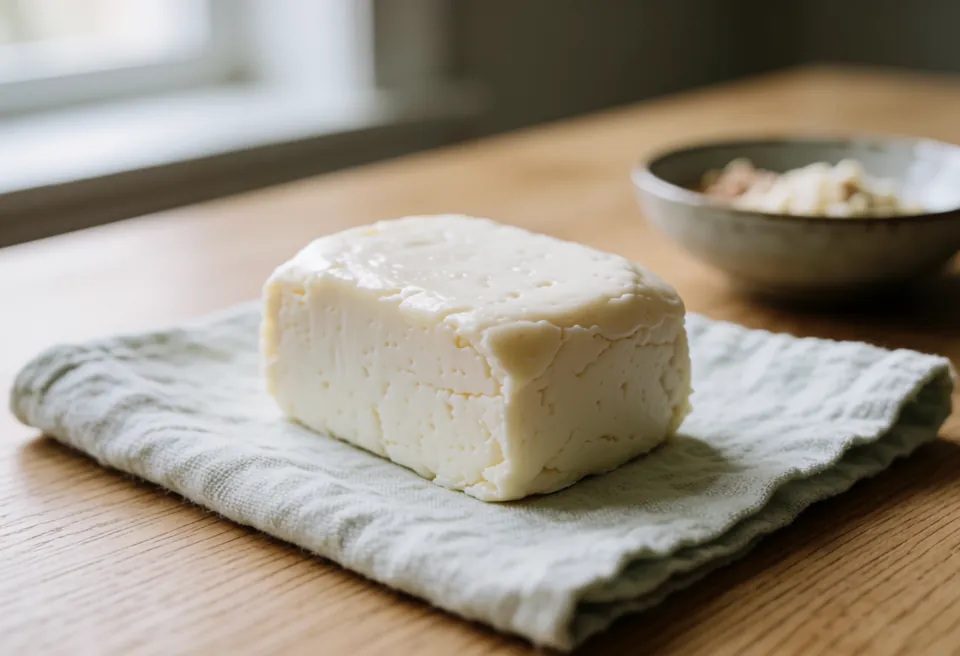
A firm fat surrounding the kidneys and loin of beef or lamb, rendered for frying or used in traditional pudding baking.
854 kcal per 100 g
Nutrition per 100 g
854 kcal
| Protein | 1.5 g |
|---|---|
| Fat | 94 g |
| Carbs | 0 g |
| Fiber | 0 g |
Source: USDA FoodData Central, 2026-09-21. Per 100 g raw (per USDA FDC).
Good to know: Suet
Let me tell you about suet, and why it is not like the fat you trim off a steak.
Suet sits deep inside the animal, around the kidneys and the loin. It is a hard, dry, crumbly fat, not the soft, greasy fat you find under the skin. Rub a little between your fingers and you will feel the difference at once — suet stays dry and breaks into crumbs, while most other fats go soft and smear. That is the fat you want for a proper pudding, light and crumbly rather than heavy.
Choose suet by touch and smell rather than colour, since colour can vary with the animal. It should feel dry and brittle, almost like chalk, and snap rather than smear when you press it. Fresh suet smells clean, almost nothing at all. If it feels soft and greasy instead of crumbly, or smells sour or rancid, leave it where it is.
Some people say all animal fat is the same, so you can swap suet for dripping or butter in a pudding. Not quite! Rub dripping or butter between your fingers and you will feel it behave differently from suet straight away, and the pudding you get will feel and taste different too — fine if that is what you want, but not the pudding your grandmother made.