
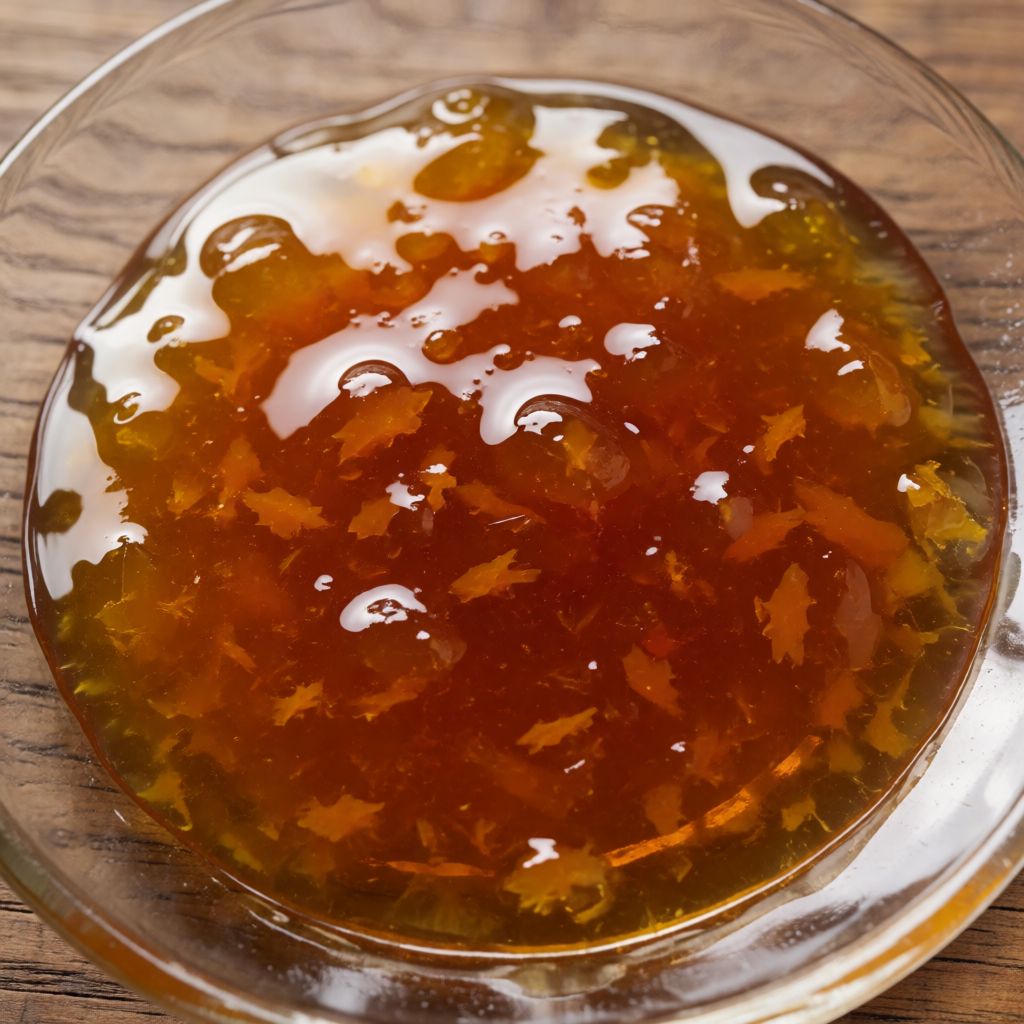
 AI photo
Clementine Marmalade
A simple homemade marmalade made from tangerines, lemon, sugar and warm spices.
Labels are worked out automatically from the ingredients and can be wrong. Check the packaging if it matters to you.
Ingredients
- 500 g Tangerine
- 1 pcs Lemon juice and finely grated zest
- 400 g Sugar
- 1 pinch Cloves
- 1 pinch Allspice





Steps
Peel the tangerines, remove all the pips, and cut into cubes.
10 minPut the tangerines into a saucepan with the lemon zest, lemon juice, sugar, cloves and allspice.
5 minBring to the boil and simmer, covered, over medium heat for 30 minutes.
30 minBlend the marmalade with a stick blender to the desired consistency.
2 minSpoon the hot marmalade into clean, scalded jars; if you like, add a splash of brandy or another strong spirit.
3 min
Marmalade, before it was marmalade, was a way of not throwing out bitter, half-rotten citrus that had survived a sea voyage and wasn't going to survive much longer. Clementines here are the gentle, modern version of that problem — fruit that's perfectly good but needs preserving anyway, because you bought a 500g net bag and you're not going to eat your way through it before it turns. The sugar isn't there for sweetness alone; it's there to tie up the water in the fruit so nothing can grow in it. That's the whole mechanism of preserving, and everything else is detail.
What decides whether this works is pectin and set, not flavour, because the flavour mostly looks after itself. Citrus pith and pips carry pectin — the stuff that makes jam gel instead of staying soup. You've removed the pips here (good, they're bitter and you don't want them in the jar), but you're relying on the fruit's own pith and the lemon to do the gelling work, plus a long-enough simmer to drive off water and concentrate everything. If it stays thin after thirty minutes of gentle bubbling, the fix isn't more time blindly — it's checking what it's actually doing in the pan.
Tangerines (or clementines, same job — the easy-peel small citrus family) are the body of the thing. Choose ones that feel heavy for their size; a light, spongy tangerine has already lost water and will give you less juice and less set. You want the pith left on when you cut them into cubes — don't go peeling it away in the name of neatness, because that pith is doing real pectin work later, invisible but necessary.
The lemon does two separate jobs and people conflate them. The zest brings aromatic oil — that sharp, slightly perfumed citrus smell that plain tangerine doesn't have enough of on its own. The juice brings acid, and acid matters chemically here, not just for taste: pectin needs an acidic environment to set properly. Skip the lemon and you get a sweeter, flatter, looser marmalade — fine to eat, harder to set. If you've no lemon, any other sharp citrus juice will do the acid job; it just won't give you quite the same perfume from the zest, so an orange won't substitute cleanly — it's too close in flavour to the tangerine to add anything, and not acidic enough either.
Sugar at 400g against 500g of fruit is a working ratio, not a decoration — it's close to the classic jam-making rule of near-equal parts fruit and sugar, which is itself an old preservation threshold: enough sugar and the water activity in the jar drops low enough that mould and bacteria can't get a foothold without refrigeration. Cut the sugar down because you're worried about "too sweet" and you're also cutting down its preserving power — fine if you're eating the jar within the week, risky if you're planning to leave it in the cupboard.
Cloves and allspice are a pinch each for a reason — they're there to perfume, not to announce themselves. This is where the "Christmas pudding spice" habit of British kitchens can run away with people: it's tempting to tip in more because you like mulled wine and think more is more festive. Resist it. A pinch means you should taste clove as a shadow behind the citrus, not as the dominant note — oversdo it and you've made spiced fruit paste, not citrus marmalade.
The stick blender step is the one place this recipe parts company from classical marmalade-making, where shreds of peel suspended in clear jelly are the whole point of texture and status — thin, even shreds historically signalled a careful, skilled cook, going back to when marmalade was a mark of a well-run kitchen rather than a jam for toast. Blitzing it smooth throws that away deliberately, in exchange for something easier to manage on a domestic hob without a thermometer or years of shred-cutting practice. No shame in that trade.
Scalding the jars before filling isn't ritual, it's sterilising — hot marmalade into a cold jar can crack glass from thermal shock, and a jar that hasn't been properly hot-washed can carry bacteria that outlast even a decent sugar concentration. Fill while the marmalade is still hot, lid on while it's hot, and you're using heat twice: once to cook the fruit, once to seal the jar against what's trying to get back in. The splash of brandy at the end is pure bonus — extra preservation if you like, extra adult-Sunday-afternoon flavour if you don't care about the preservation at all.