
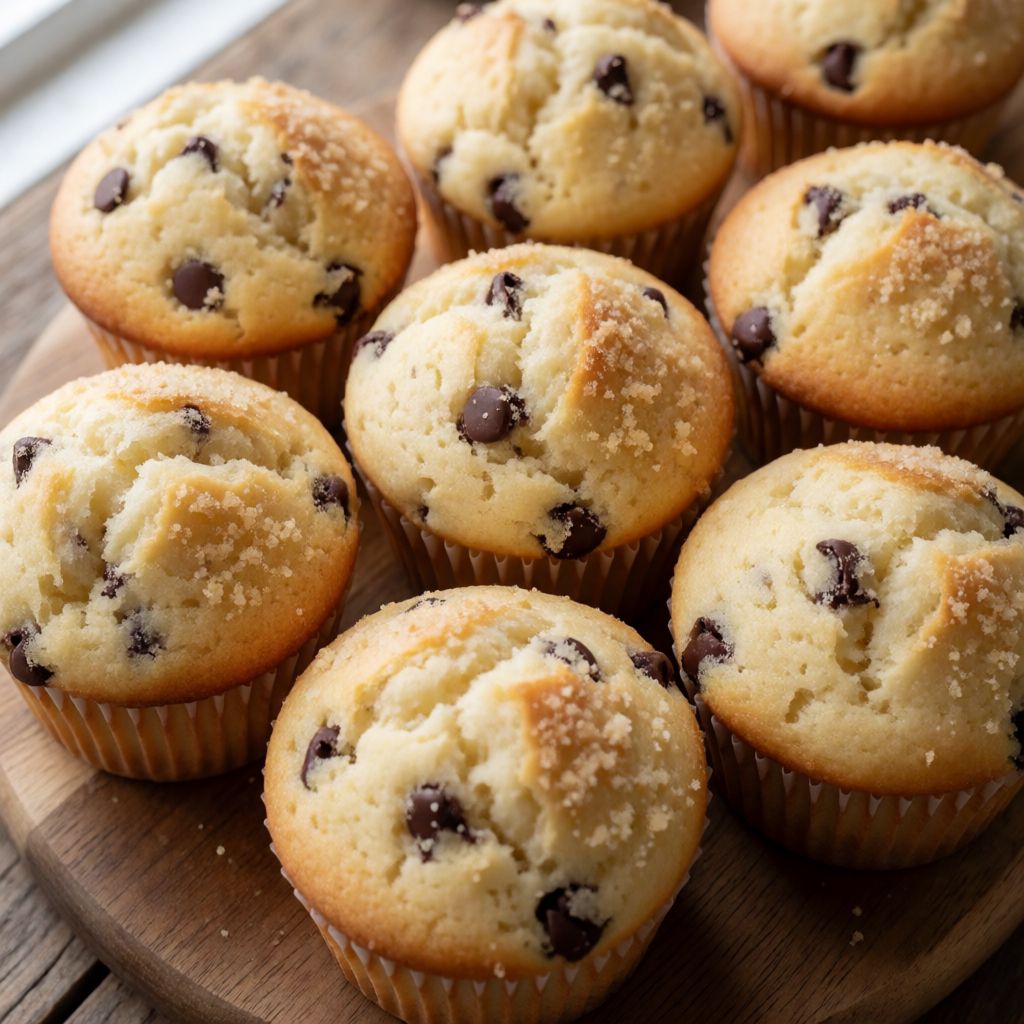
 AI photo
Eggless Ricotta Muffins
Soft, eggless muffins made with ricotta and chocolate chips - a quick bake for when you're out of eggs.
Labels are worked out automatically from the ingredients and can be wrong. Check the packaging if it matters to you.
Ingredients
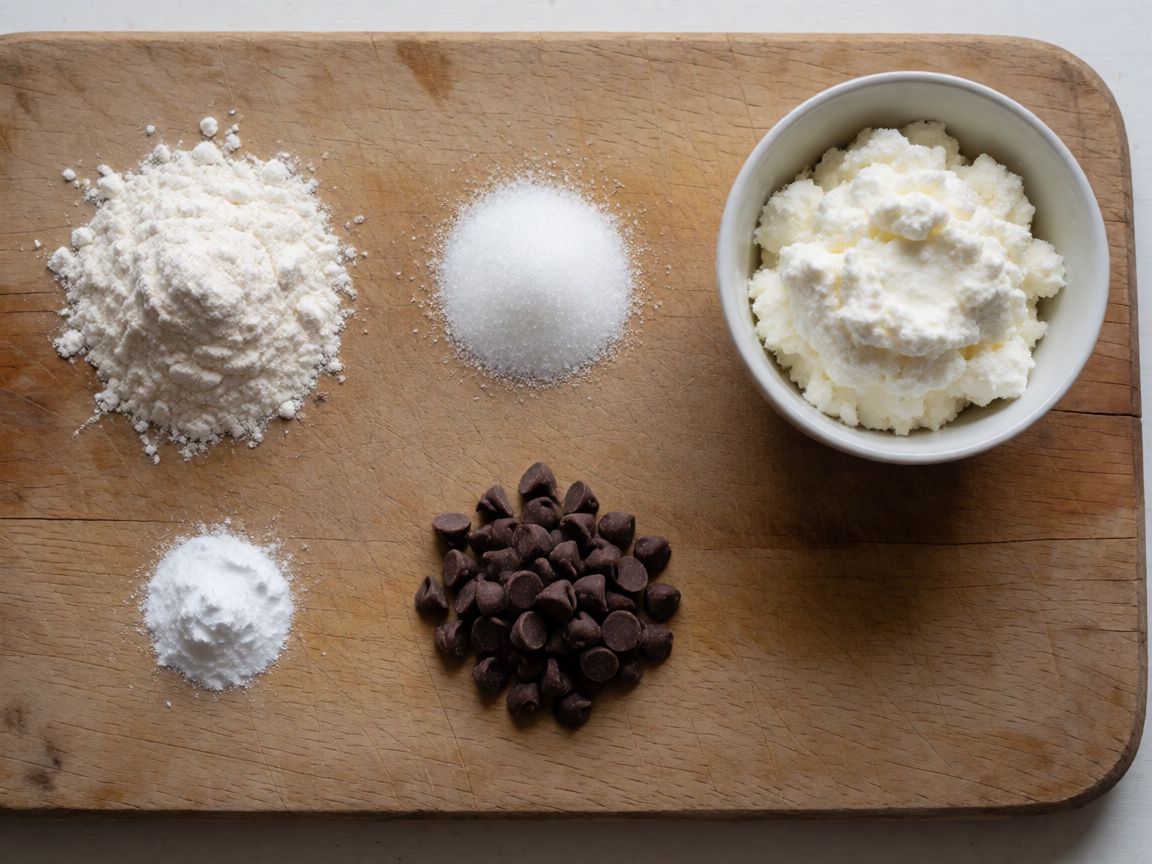
- 150 g Plain Flour
- 150 g Caster Sugar
- 150 g Ricotta
- 8 g Baking Powder
- 120 ml Vegetable Oil
- 100 g Chocolate Chips to taste






Steps
Mix the sugar with the vegetable oil, add the ricotta and beat with a mixer until you get a thick, smooth, creamy mixture.
Sift the flour with the baking powder and gradually fold it into the mixture, stirring constantly.
Once the batter is ready, add the chocolate chips and mix well.
Divide the batter among the muffin cases, filling them about two-thirds full.
Bake in an oven preheated to 180°C.
18 minCheck if they're done with a wooden skewer: if it comes out clean, switch off the oven.
Leave the muffins to rest for a further 5 minutes.
5 minLet them cool and serve.
These are muffins built on a trick: no egg, and nobody doing the eating will notice. The ricotta does the job eggs usually do — it binds, it carries fat, it keeps the crumb from drying out — and it does it with less fuss and a softer result. What decides whether this works isn't the oven, it's the mixing. Beat the oil, sugar and ricotta properly first, until it's thick and uniform, because that's where the air and the moisture get locked in. Everything after that is just making sure you don't knock it back out.
The baking powder is the only thing doing the rising here — there's no egg to trap air through whisking, no yeast to wait on. That's why you fold the flour in gently once it's sifted with the baking powder, stirring just enough to combine. Beat it hard at this stage and you develop gluten strands that fight the rise; you'll get a tight, rubbery top instead of a dome. Some say you have to fold flour into any batter gently or it "won't rise" — no, the real reason is gluten, not air. Overwork a batter with no egg structure to fall back on, and it can't recover.
Filling the cases two-thirds full isn't caution, it's arithmetic: baking powder needs room to push the batter up without spilling over the rim and burning on the tray. Go higher and you get muffins with scorched, bitter edges and a sunken middle, because the top sets and crusts before the inside's cooked through.
The resting five minutes after the oven switches off is not laziness, it's physics: a muffin straight out of a hot oven is still cooking on residual heat and still setting its structure. Pull it from the tin too soon and it can collapse in on itself, especially one without egg to hold the walls firm. Let it sit, let the steam inside redistribute, then turn it out.
Ricotta: this is the ingredient the whole recipe hangs on. You want one that's wet-ish and mild, not the dry, grainy kind sold for stuffing pasta — that one won't beat into a smooth cream, it'll leave lumps that show up as dense pockets in the finished muffin. If you can't get ricotta, use a soft curd cheese with a similar moisture content — mascarpone works but is richer, so cut the oil back slightly or it goes greasy.
Vegetable oil, not butter, and that's deliberate, not a shortcut. Oil stays liquid at room temperature; butter solidifies and stiffens the crumb once cooled, which is exactly why cake recipes built on oil keep their softness a day later while butter ones firm up. Any neutral oil with no smell of its own works — sunflower, rapeseed, the own-brand stuff from the Sunday roast cupboard is fine. Don't reach for olive oil unless you like a faint savoury note running through your chocolate chips, because olive oil is the one oil that insists on being tasted.
Caster sugar, not granulated, because the finer grain dissolves into the oil and ricotta during beating rather than sitting there as grit — this is a batter with no egg whites to dissolve sugar into later, so it has to happen now, in the first mix.
Baking powder, 8g for 150g flour, is a fairly generous lift for a cup-measure kitchen, but weigh it — don't eyeball it from a teaspoon, because too little and the muffins stay flat and heavy without egg to help them along, too much and you get a soapy, metallic aftertaste along with a dome that cracks and collapses. If yours has been open in the cupboard since last Christmas's baking, test it in a cup of warm water first — it should fizz hard. Baking powder that's gone tired is the quiet reason a lot of "failed" eggless bakes get blamed on the recipe instead of the tin.
Chocolate chips are "to taste" because they're not structural — add less for something closer to a plain teacake to go with your tea with milk, add more if that's the point of the exercise for you. Dark chocolate chopped off a bar works just as well and won't bleed through the batter the way cheap chips sometimes do when they're more cocoa-butter substitute than chocolate.