
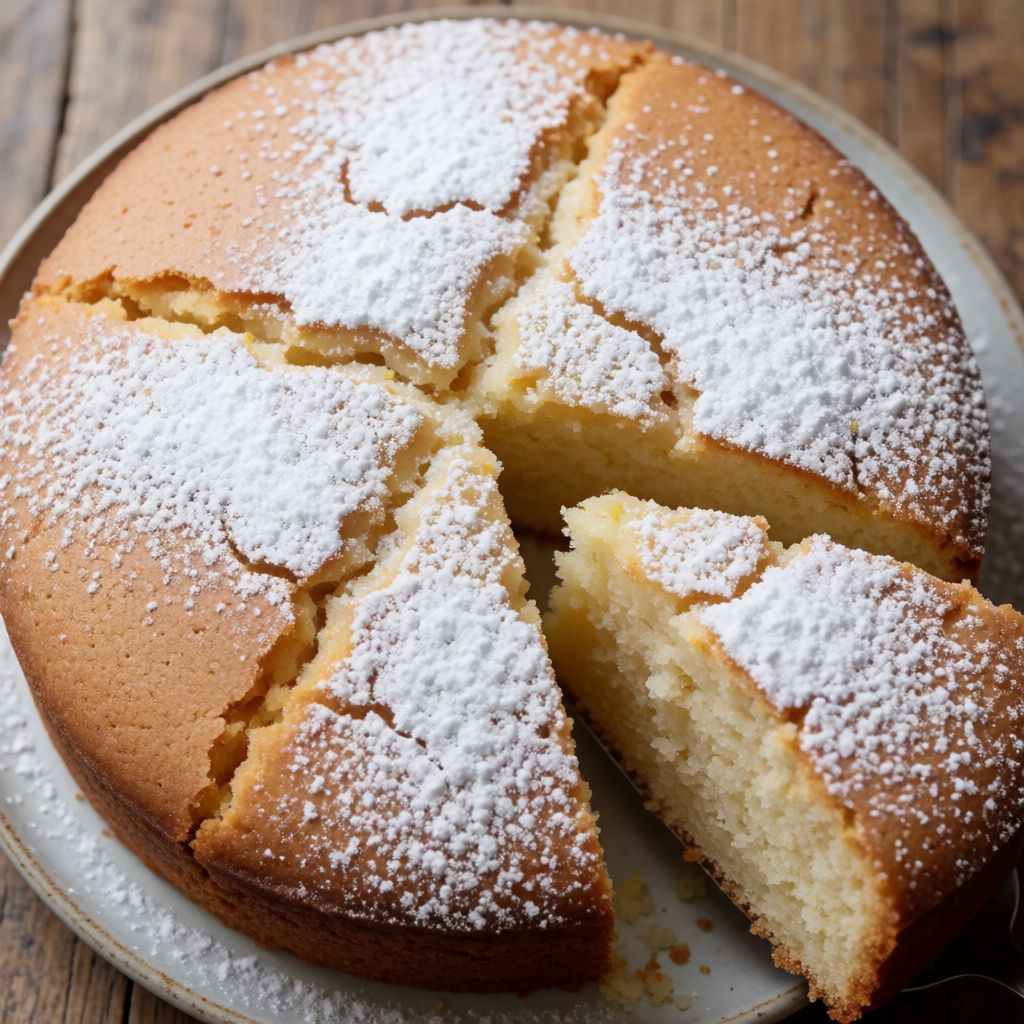
 AI photo
Santiago Cake — gluten-free Spanish almond dessert
A gluten-free Spanish almond cake, topped with the cross of St James drawn in icing sugar.
Labels are worked out automatically from the ingredients and can be wrong. Check the packaging if it matters to you.
Ingredients
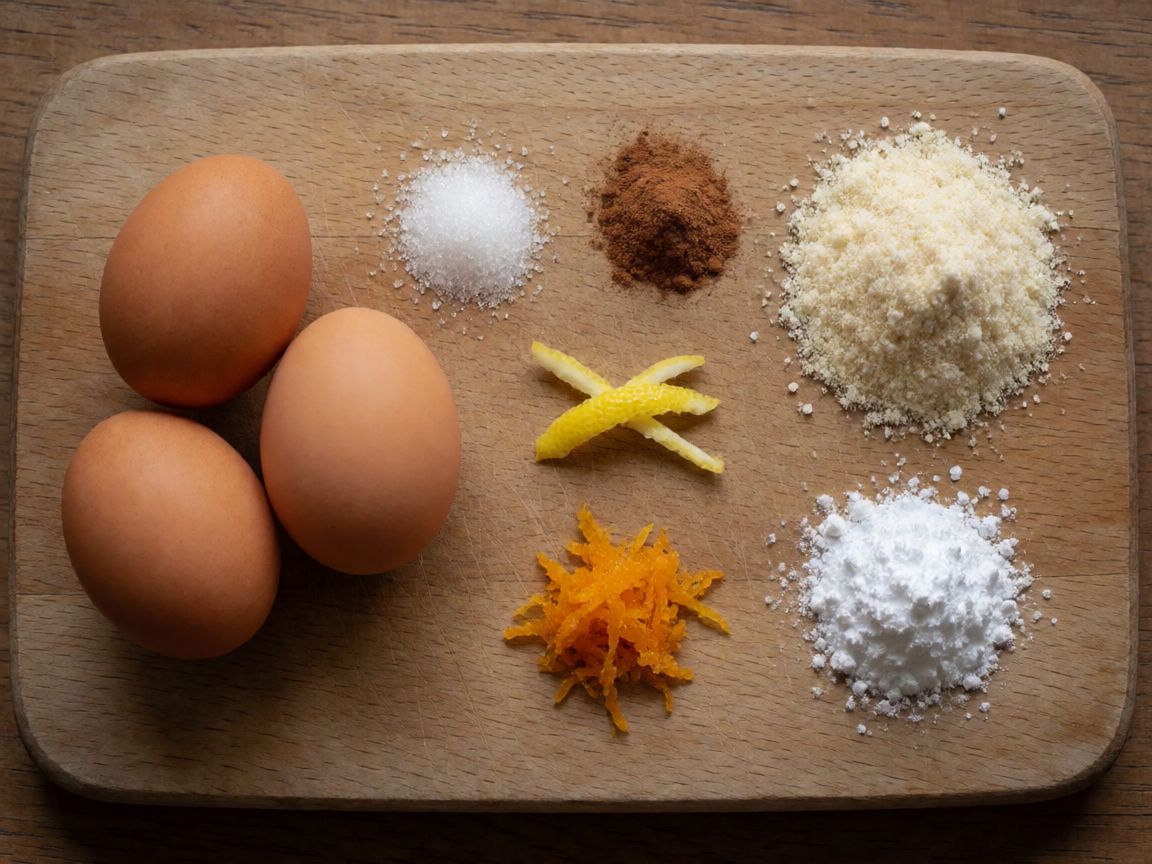
- 3 pcs Eggs
- 50 g Sugar
- 1 pinch Salt
- 1 tsp Cinnamon
- 1 pcs Lemon zest
- 1 pcs Orange zest
- 125 g Almond flour or finely ground almonds
- pinch Icing sugar for dusting






Steps
Crack the eggs into a large bowl, add the sugar and whisk with a mixer until pale and fluffy.
Add a pinch of salt, the cinnamon, lemon zest and orange zest, and mix.
Add the almond flour and gently fold in with a spatula until smooth.
Transfer the batter into a buttered 20 cm baking tin dusted with flour.
Bake in a preheated fan oven at 160°C.
28 minLet the finished cake cool.
Draw the St James's cross symbol on paper, cut it out and place it in the centre of the cake.
Dust with icing sugar and remove the stencil.
This is a cake with no flour in it at all — the almonds do the whole job, both the structure and the flavour. That's not a modern gluten-free trick, it's just what Galicia had: wheat flour was scarce and expensive in the northwest of Spain for most of its history, almonds from further south were traded in, and a cake built on egg and ground nut didn't need an oven tradition of bread at all. The cross on top isn't decoration either — it's the Cross of Saint James, stencilled in icing sugar, and it tells you this cake has a pilgrimage behind it rather than a bakery.
What decides whether it works is the egg foam, full stop. You whisk whole eggs with sugar until the mixture is pale and holds its own weight for a second when you lift the beater — that's the only rise this cake gets, since there's no flour to build gluten structure and only a trace of butter for the tin. Skip that stage or rush it, thinking "it's just going in the oven anyway", and you get a flat, dense disc that tastes fine but sits like a biscuit. Some say almond cakes are always dense by nature — no, they're dense when the eggs were never properly beaten.
The fold-in matters just as much, in the opposite direction. Once you've got air in the eggs, a spatula and a light hand keep it there; a mixer at this stage, or vigorous stirring, knocks the air straight back out, and then all that whisking was wasted effort. Fold almond flour in the way you'd fold a duvet, not beat a carpet.
On the heat: 160°C in a fan oven is a gentle bake, not a hot one, and that's deliberate — almond flour has a lot of natural oil in it, and oil scorches and turns bitter well before 200°C territory. You're not looking for colour so much as a change in resistance: the top should feel set and spring back slightly when you press it, not wobble like a half-set custard. Twenty-eight minutes is where to start checking, not where to stop and pull it — ovens lie about their own temperature more than people admit, especially small domestic ones, so trust the spring-back over the clock. If the top's colouring fast but the middle still gives, that's a sign your oven runs hot at the top; drop it a shelf or lay foil loosely over it rather than turning the dial down mid-bake, which does nothing useful once the oven's already overshot.
Eggs: three whole eggs, no separating. This isn't a sponge where you whip whites alone for lift — the yolks' fat helps bind the almond flour into something that holds a slice shape rather than crumbling off the fork. Use eggs at room temperature if you can; cold eggs foam more slowly and you'll be standing there with the mixer longer for the same result. Nothing really substitutes for egg here — it's doing structural work, not just flavour, so this isn't a recipe to improvise eggless.
Almond flour: this is the cake, not an addition to it, so buy the finest grind you can and don't confuse it with almond meal that still has bits of skin in — those bits interrupt the crumb and make it grainy rather than close-textured. If all you've got is whole almonds, blitz them in a food processor until they're sand-fine, but stop before the oil starts coming out and they clump — that's ground almonds turning into almond butter, a different ingredient entirely. 125g for a 20cm tin is a deliberately modest cake; this isn't meant to be a towering centrepiece, it's a thin, dense, fragrant round, the kind that's good with tea rather than needing a fork-battle.
Sugar and spice: 50g of sugar is on the restrained side, because the cake isn't meant to be sweet so much as fragrant — the lemon and orange zest are doing real work here, not just garnish, cutting through the richness of the almond oil so it doesn't sit heavy. Zest only the coloured skin, not the white pith underneath, which is bitter and will fight the citrus note rather than add to it. Cinnamon in small amount rounds the zest off rather than dominating — a pinch too much and you've made a spiced cake instead of an almond one.
The stencil: cut your cross from a piece of paper or thin card before the cake's even cooled completely — trying to position it on a warm, still-settling cake risks it slipping, and on a cold one the icing sugar can sit too long and start dissolving into any residual moisture on the surface. Lift the stencil straight up, don't drag it sideways, or you'll smear the clean edge you worked for. No stencil to hand — any shape cut from paper does the same job; the cross is tradition, not mechanism, so a star or your initial changes nothing about how the cake tastes or bakes.
A flat tin and a 20cm size matter more than the brand of tin you use, because a wider, shallower tin spreads this batter thin and it bakes through evenly before the edges dry out; go much smaller and deeper and you risk a gummy centre under a browned top, since almond flour doesn't set the way a floured sponge does. And give it proper time to cool before you cut it — warm almond cake is loose and falls apart under a knife; patience here is not an afterthought, it's the last ingredient that turns a good bake into a clean slice.