
Meat & fish
Monkfish
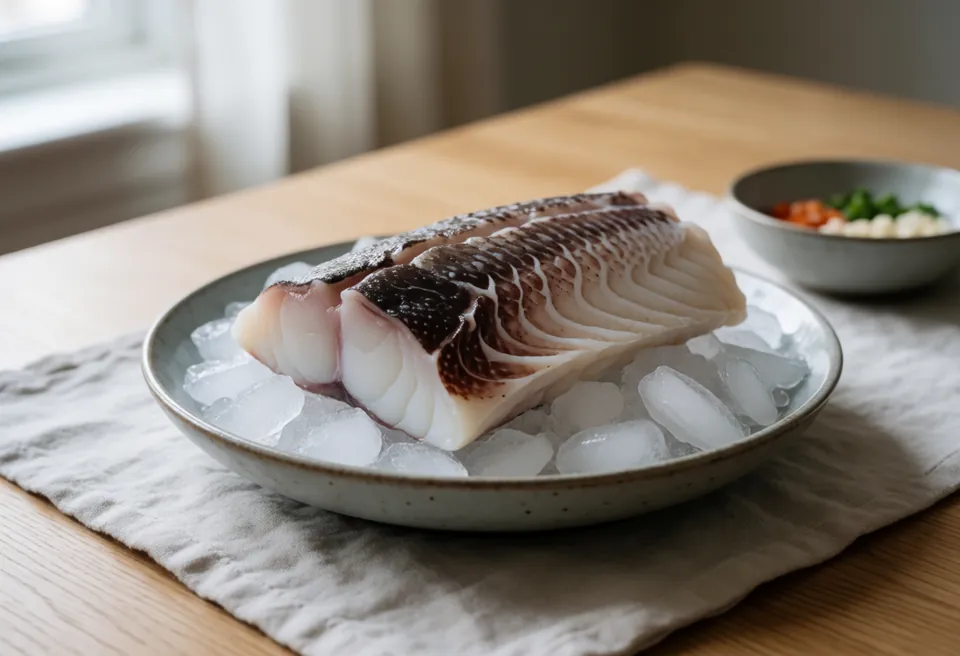
Monkfish is the raw tail of the anglerfish, with firm white flesh and almost no bones. It is usually pan-fried, roasted, or added to soups and stews.
76 kcal per 100 g
Nutrition per 100 g
76 kcal
| Protein | 14.5 g |
|---|---|
| Fat | 1.5 g |
| Carbs | 0 g |
| Fiber | 0 g |
Source: USDA FoodData Central, 2026-11-06. Per 100 g raw (per USDA FDC).
Good to know: Monkfish
Let me tell you about monkfish, and why it behaves nothing like the fish you're used to.
Look at the tail you're holding. White, dense, almost no bones running through it. Press the raw flesh and feel how firm and springy it is, almost like meat, not like the soft fillets you're used to. That firmness is why it takes to roasting and searing, and why it holds together when you drop it into a stew instead of falling apart.
How do you choose good monkfish? Trust your nose and your eyes. The flesh should be bright white, maybe with a faint pink tinge, never grey or yellowing. It should smell of the sea, clean and mild — nothing sharp, nothing like ammonia. Press it: it should spring back, not leave a dent.
Now, the misconception. Some people see how lean this fish is and assume it needs long, gentle stewing, the way you'd coax a tough cut of meat. No! Cook monkfish that long and it tightens up and turns rubbery under your fork. The mistake: people keep it on the heat "to be safe" long after it's already gone opaque and firm. Watch it instead — the moment it turns from translucent to milky white and springs back under your finger, it's done. Pull it off then.