
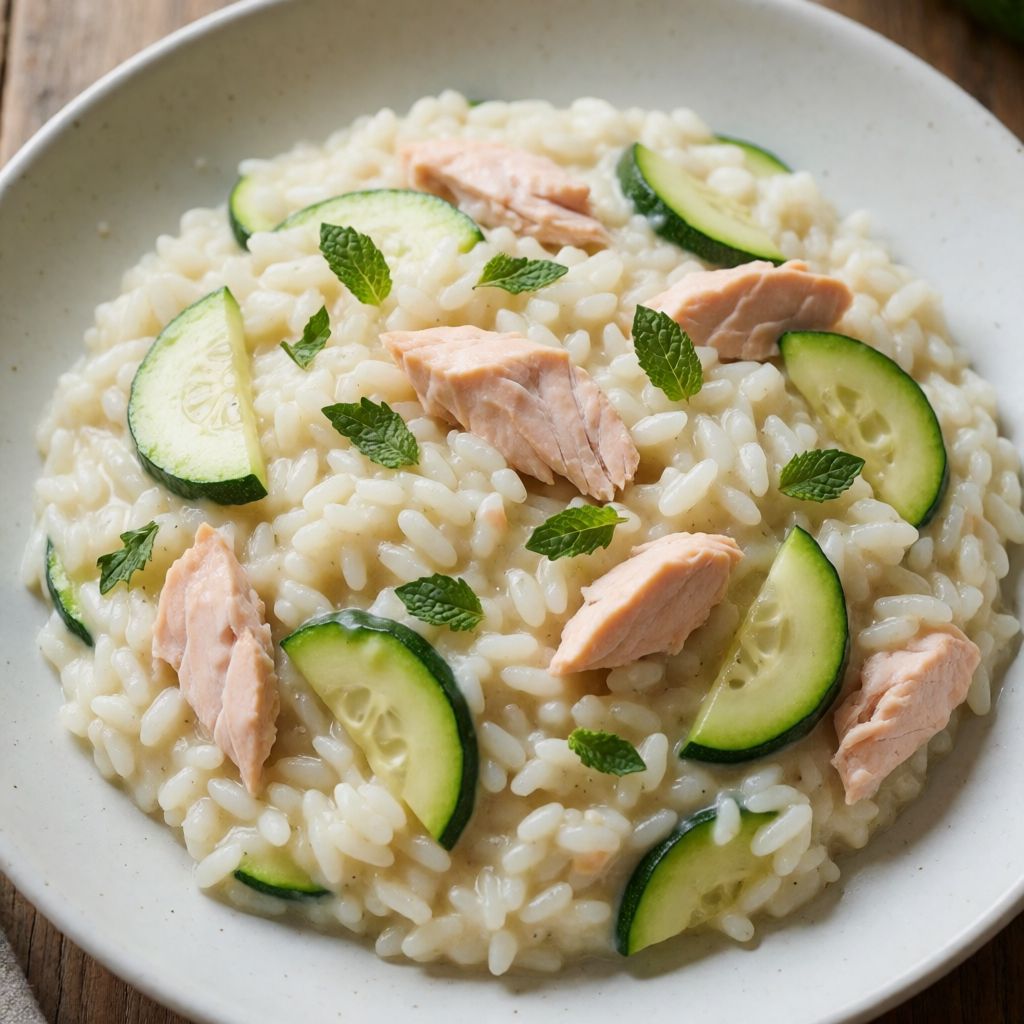
 AI photo
Salmon, Courgette and Mint Risotto
A creamy risotto with salmon, courgette and fresh mint.
Labels are worked out automatically from the ingredients and can be wrong. Check the packaging if it matters to you.
Ingredients
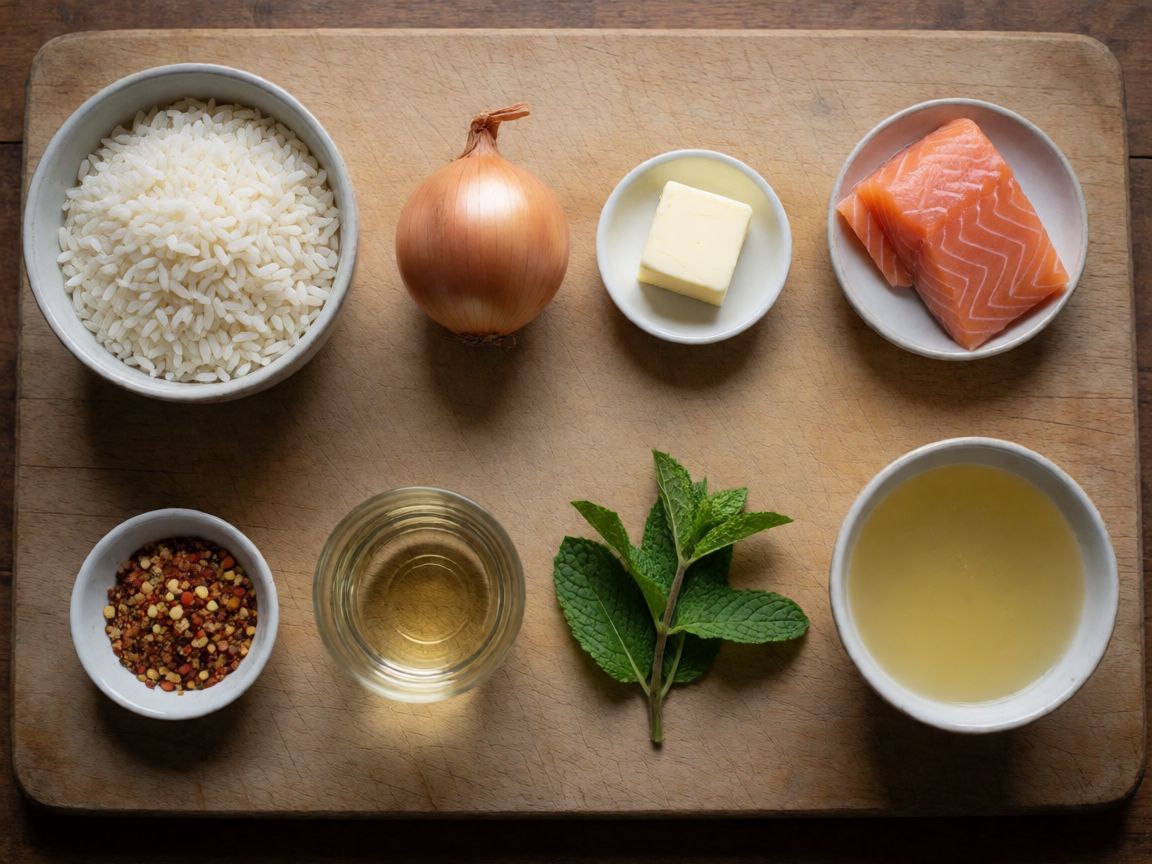
- 350 g Carnaroli rice
- 1 pcs Onion
- 2 tbsp Olive oil
- 20 g Butter
- 150 g Salmon
- Salt to taste
- Creole pepper mix to taste
- 125 ml White wine
- Vegetable stock to taste
- 1 bunch Mint
- 2 pcs Courgette









Steps
In a pan, sauté the chopped onion until translucent, add the courgette cut into very small cubes, and cook for a few minutes.
Add the rice, toast it, then pour in the wine and let it evaporate.
Add the salmon, cut into strips.
Finish cooking the risotto, gradually adding vegetable stock, until the salmon is cooked through (63 °C).
Season with salt to taste, sprinkle with freshly ground pepper, stir in the butter and add the chopped mint.
Serve immediately.
Risotto isn't a rice dish — it's a starch-release dish, and the rice is just the delivery mechanism. Carnaroli has a hard outer shell and a soft, amylose-rich core. The toasting, the constant small additions of liquid, the near-constant stirring — all of that is designed to scrape starch off the grains into the surrounding liquid without letting the core turn to mush. That starchy liquid is the sauce. You're not making "rice with stock poured over it." You're making a sauce that happens to have rice suspended in it.
This version swaps the usual cheese-and-butter heaviness for something lighter: courgette for bulk and a faint vegetal sweetness, salmon for protein and fat, mint to cut through both. Mint with fish isn't a novelty — it's the same logic as mint with lamb, cutting fat with a cold, sharp green note. Salmon brings its own oil, so this risotto needs less butter at the end than a classic one would, which is why there's only 20g here instead of the usual fistful.
What decides whether this works is two separate temperature jobs happening in the same pan: the rice needs sustained near-boiling liquid to gelatinise slowly, and the salmon needs to go from raw to just-cooked (63°C at the centre) without turning into fish-flavoured cardboard. Added too early, it overcooks while the rice finishes. Added too late, the rice is done and sitting around going gluey while you wait for fish that's still translucent in the middle. The timing of step 3 is the whole dish.
Carnaroli, not Arborio, because Carnaroli holds its shape longer under all that stirring — it has more of the right structural starch and less tendency to disintegrate into porridge. If you can't get it, Arborio will do, but watch it like a hawk near the end; it goes from al dente to mush faster. The criterion, if you're substituting: a short-to-medium grain rice bred specifically to release starch while keeping a bite at the centre — "risotto rice," basically, whatever the bag says.
The onion goes in first and slow, because onion cooked fast just burns at the edges while staying raw in the middle — you want translucent, sweet, no colour. This is the base flavour the whole dish sits on, and rushing it means a flat-tasting risotto no amount of stock will fix later. Cut the courgette into very small cubes deliberately — not for looks, but because large chunks won't cook through in the few minutes allotted and you'll get crunchy courgette islands in a creamy rice sea. Small dice cooks at the same rate as everything happening around it.
Toasting the rice before any liquid touches it does a real job: it seals the outside of the grain slightly, which — combined with the gentle starch-release process that follows — is part of what keeps the grains distinct rather than collapsing. The wine that follows isn't for flavour alone; the alcohol needs to cook off, and if you pour stock in while the pan still smells sharply of raw wine, you'll taste it in the finished dish — give it a minute to lose that edge before stock goes in.
On the stock: "vegetable stock to taste" means add it gradually, a ladle at a time, letting each addition nearly disappear before the next. This is the actual mechanism of risotto — you're not boiling rice in a big pool of liquid, you're coaxing it to drink and release in cycles. Any neutral stock works; use a cube if that's what's in the cupboard, nobody's checking your credentials. What matters is temperature — keep it warm on a side burner if you have one, because cold stock shocks the rice and stalls the cooking, forcing you to add far more liquid than you need just to get the temperature back up.
The salmon: fresh fillet, skin and any stray bones removed, cut into strips not cubes — strips cook more evenly and you can see the colour change travel through them, which is your doneness cue far more reliably than a clock. Some say fish in risotto always ends up overcooked grey sludge. No — that happens when it's added at the start with everything else; here it goes in deliberately late, so it only has the remaining cooking time to firm up and turn from translucent coral to opaque pale pink. 63°C at the centre is the useful number, but if you don't own a thermometer, trust the colour and the way it flakes slightly when pressed — that's the same information, just read by eye instead of by probe. If salmon's not to hand or budget, trout works on the same logic — oily, quick-cooking fish that won't dry out in minutes.
Butter and mint go in off the heat, right at the end, and that order matters too. Butter stirred in while the pan's still roaring hot can split and go oily rather than binding into the starchy liquid — you want it melting into warmth, not frying. The mint, chopped and added last, stays bright and sharp instead of wilting into a dull green smear, which is what happens if you throw it in early and let it simmer. Any soft herb with a clean, cold edge — basil at a push — could stand in, but mint's particular coolness against the fat of the salmon is the whole point of this dish, so don't swap it out lightly.
And serve it immediately, because risotto keeps cooking in its own residual heat and tightens up as it sits — wait ten minutes and you'll be eating something stodgier than what left the pan. Patience goes into the stirring, not the plating.