
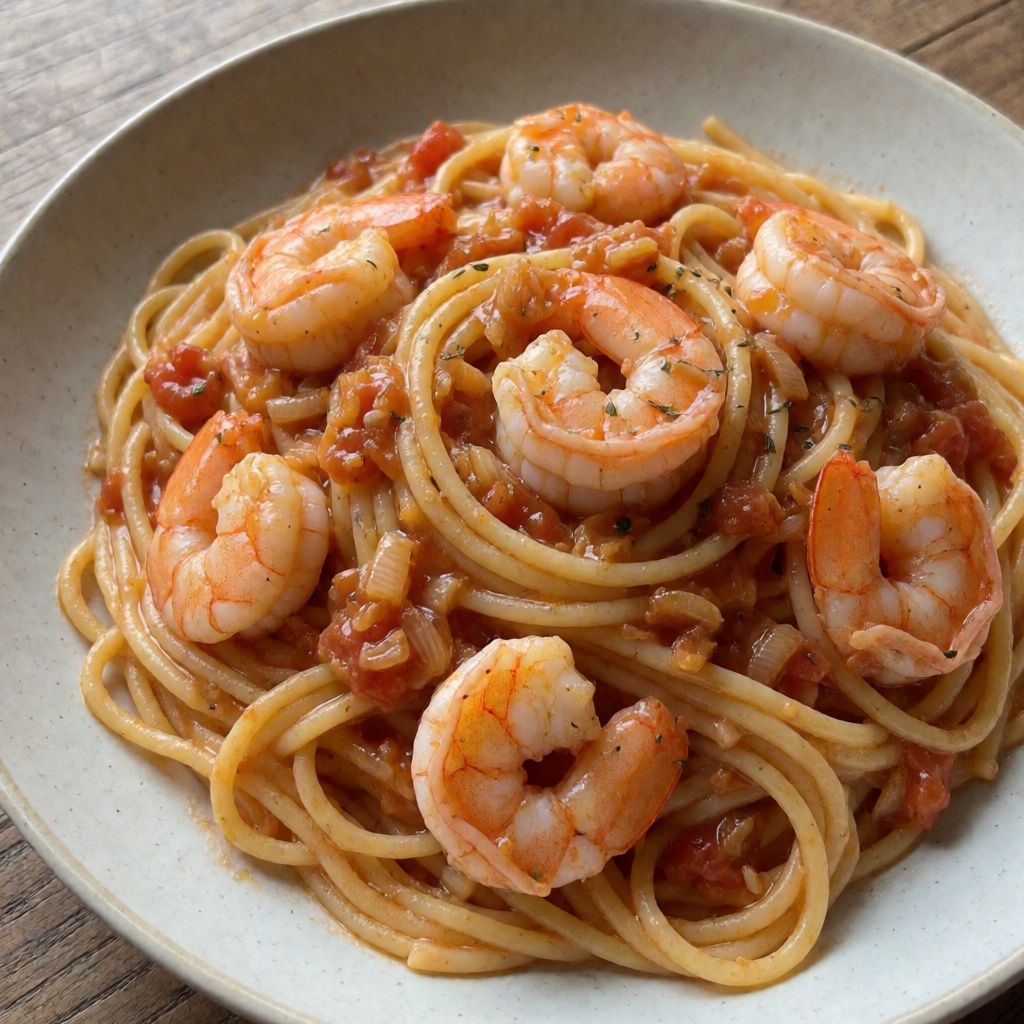
 AI photo
Prawn Pasta
A simple pasta with prawns, cherry tomatoes and a touch of white wine.
Labels are worked out automatically from the ingredients and can be wrong. Check the packaging if it matters to you.
Ingredients
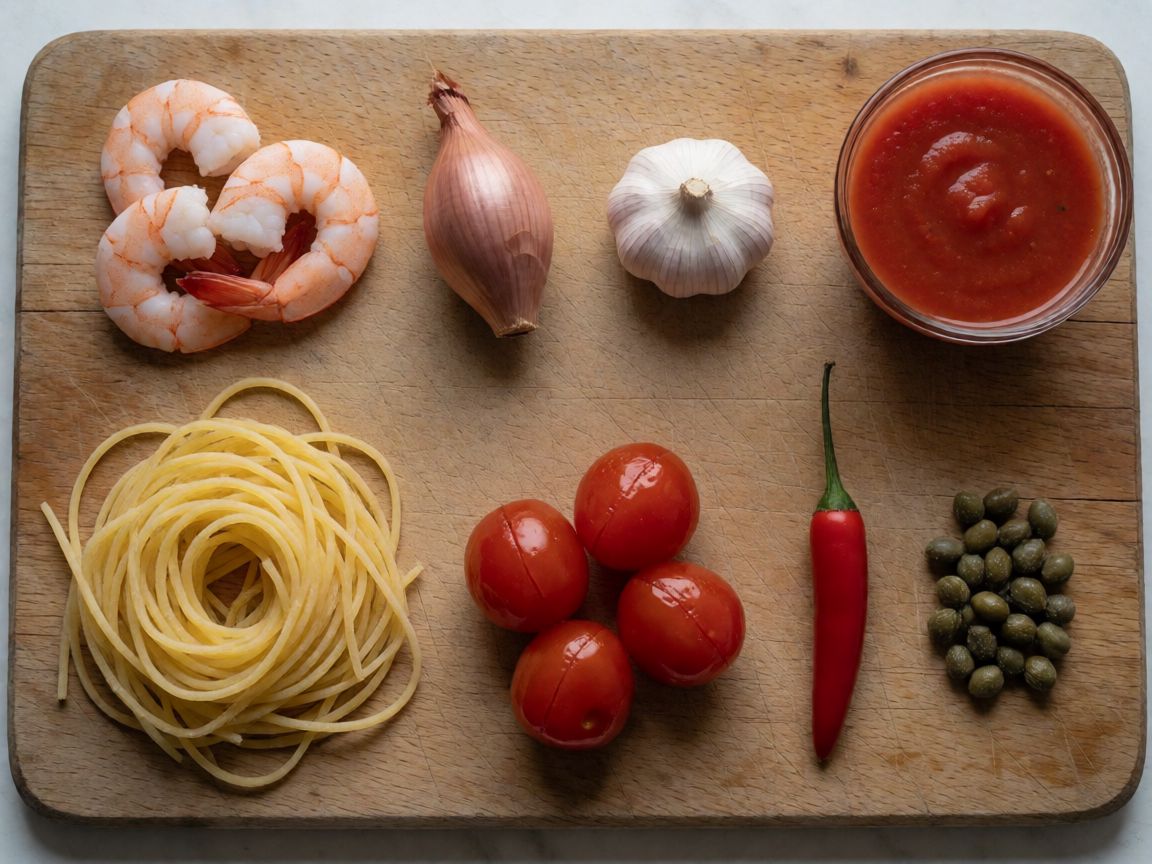
- 350 g Spaghetti
- 400 g Prawns
- 1 pcs Shallot
- 1 clove Garlic
- 2 tbsp Olive oil
- 200 g Tomato passata
- 100 g Cherry tomatoes
- Salt to taste
- Chilli pepper to taste
- Capers to taste
- Parsley to taste
- 120 ml White wine
- 2 pcs Anchovies in oil










Steps
In a pan, fry finely chopped garlic and shallot in olive oil.
Add chopped anchovies and crushed chilli pepper.
Add the prawns, let them brown slightly, then pour in the white wine.
Let the white wine evaporate.
Add the chopped cherry tomatoes and cook until softened.
Pour in the tomato passata and continue simmering the sauce, season with salt. Doneness: 63°C at the thickest point.
Add the capers and sprinkle the sauce with parsley.
Cook the spaghetti until al dente in plenty of salted water.
Drain the spaghetti.
Transfer the pasta to the pan with the sauce, add a little more parsley and toss together over heat.
This is a sauce built on a trick as old as poverty itself: anchovies melting into oil so that nobody ever tastes "anchovy" — they taste "the sea", "something savoury I can't name". That's the whole southern Italian economy of flavour in one step. Two fillets dissolved in hot oil give you a backbone of umami that would otherwise need a stockpot and a day you don't have.
What decides whether this works isn't the prawns, it's restraint in three places: don't let the garlic go past pale gold (bitter past that, no rescue), don't let the wine sit in the pan as liquid once it's done its job — it has to vanish, leaving only its acidity behind, not its alcohol — and don't let the prawns cook twice. They go in briefly to catch colour and flavour the fat, then effectively finish later in the sauce. Prawns have one failure mode: rubber. It happens the moment you leave them in heat after they've gone from translucent to opaque. There's no clock that saves you here — only watching the colour turn and pulling back the second it does.
Some say you need a kazan-deep pan and a flame that roars for this kind of fry. No — you need a wide pan, because wide means the liquid from the tomatoes evaporates instead of stewing, and stewing is how you end up with a sauce that tastes boiled rather than cooked down. A domestic hob won't give you the big licking flame of a restaurant burner, and that's fine; it just means things take a breath longer to reduce, and you let them.
Shallot instead of plain onion because shallot is sweeter and finer-grained — it melts rather than crunches, and in a sauce this quick there's no long braise to soften a tougher onion down. If all you have is a regular onion, fine, just chop it smaller than you think you need to, and give it longer in the pan before the garlic goes in, so it's turning translucent-gold rather than staying raw-white and sharp.
The anchovies are not a seafood garnish, they're a seasoning, like the fish sauce in a Thai curry or the Marmite some people secretly stir into gravy on a Sunday — something British kitchens already understand even if they don't call it by that name. Any small oily fish cured in salt and packed in oil does the same job; if you genuinely can't stomach anchovies, a good glug of Worcestershire sauce (itself originally an anchovy ferment) gets you most of the way there, though you lose some of the silkiness.
Capers are there for acid and a little salt-brine sharpness cutting through the richness of the oil and tomato — don't rinse all the brine off them, that brine is doing work. If you've none, a squeeze of lemon at the end does a different but related job: it wakes the sauce up rather than lets it sit flat and sweet.
White wine's purpose is almost entirely about cutting through the fat from the oil and anchovies with acidity, and lifting the pan — any sticky brown bits the prawns left behind get dissolved back into the sauce instead of staying stuck and eventually burning. Any dry white does it; don't reach for something sweet, sugar has no business here. No wine in the house — a splash of water with a dash of vinegar or lemon juice gets you the acidity, just none of the aromatic lift, and that's an honest trade, not a disaster.
Olive oil should taste of itself here, actually — this isn't a case for a neutral oil, since the olive flavour is part of the dish's identity, not something to hide. Where the "neutral oil" rule does apply is if you're substituting for frying later on: anything flavour-light works, sunflower, vegetable, rapeseed — just not something with its own strong personality like sesame or coconut, which would fight the anchovy and tomato.
Tomato passata plus fresh cherry tomatoes is a belt-and-braces move: the passata gives body and a cooked-down sweetness instantly, no waiting for raw tomatoes to break down over twenty minutes; the cherries added separately keep some brightness and a bit of bite so the sauce doesn't taste uniformly stewed. If cherry tomatoes are watery and flavourless — as British supermarket ones often are out of season — a pinch of sugar in the pan corrects more than people expect, and nobody will know.
Patience here is mostly about the wine evaporating and the tomato reducing — rushing either leaves you with a thin, winey, slightly bitter sauce that coats nothing. Let it sit and bubble, let the surface go from watery-loose to slightly jammy and clinging to a spoon, and only then put your pasta water on if you haven't already. Four people, one pan, no kazan required — just patience and a hob that's hot enough to let liquid actually leave the pan rather than merely simmer in it forever.