
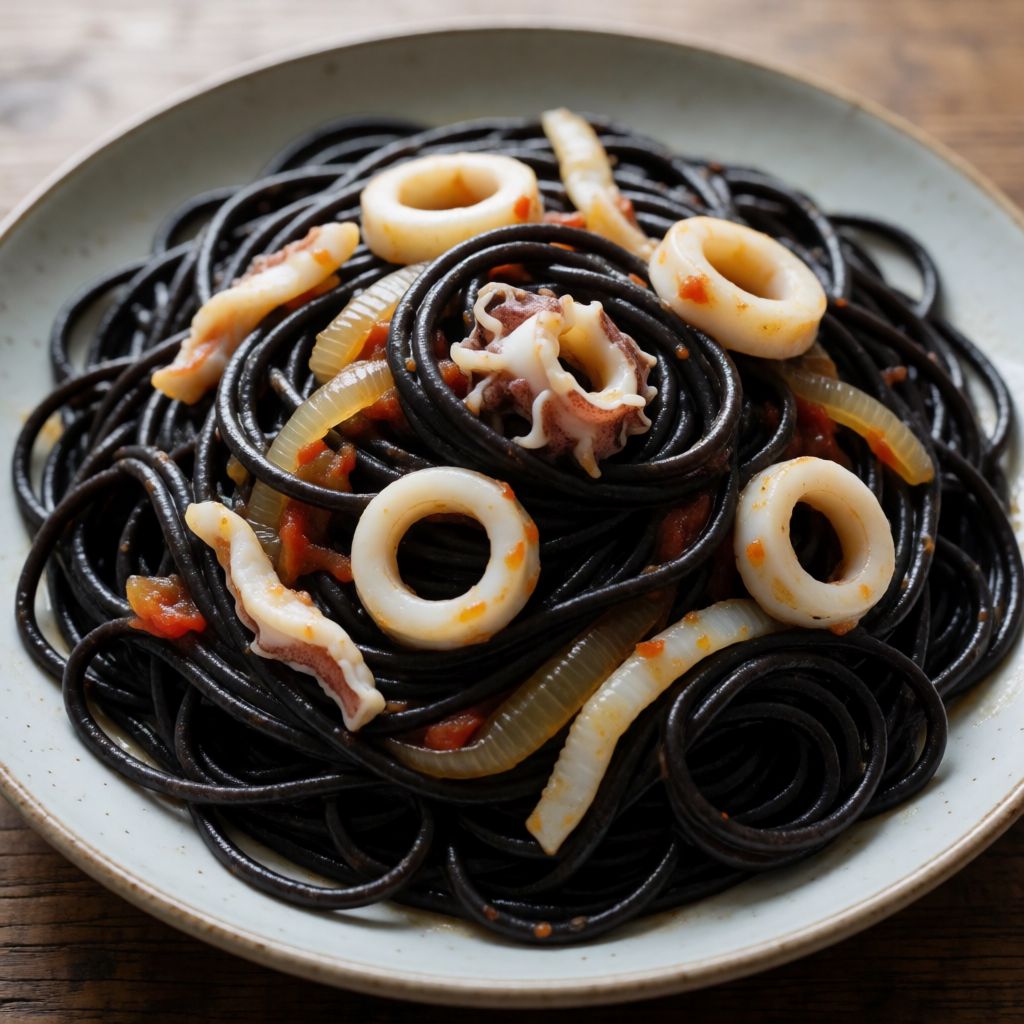
 AI photo
Spaghetti with Cuttlefish Ink
A rich pasta dish in a dark sauce made with cuttlefish and its own ink.
Labels are worked out automatically from the ingredients and can be wrong. Check the packaging if it matters to you.
Ingredients
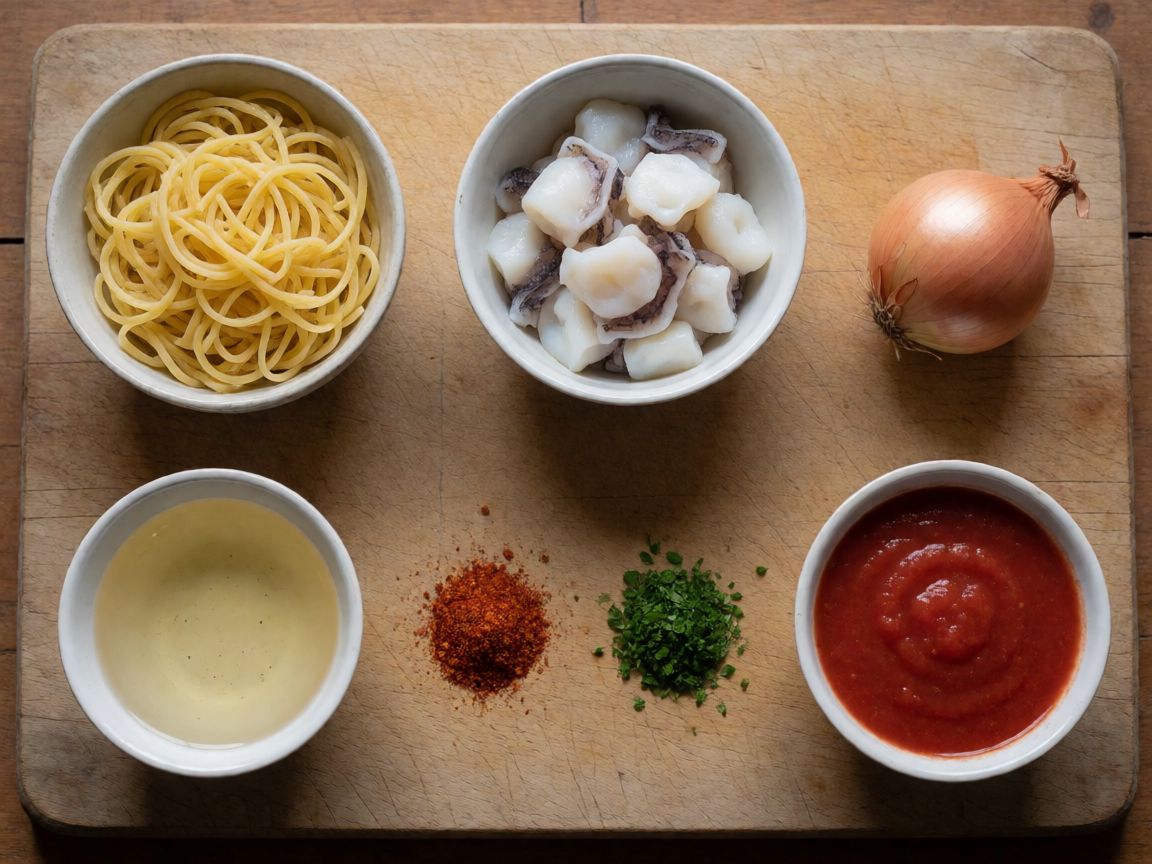
- 500 g Spaghetti
- 1 kg Cuttlefish
- 250 ml White wine
- 400 ml Tomato passata
- 1 pcs Onion
- Olive oil to taste
- Salt to taste
- Black pepper to taste
- Chilli powder to taste, optional
- Parsley to taste










Steps
Clean the cuttlefish, removing the skin, the backbone, the eyes and the beak. Take out the ink sac.
Rinse the cuttlefish under running water, pat dry with paper towel and slice into strips along with the tentacles.
Make a base with finely chopped onion and olive oil.
Add the cuttlefish and cook until lightly browned.
Pour in the white wine, add salt, black pepper and chilli powder to taste.
Pour in a cup of hot water and the tomato passata, simmer gently covered until the sauce is ready. Doneness: 63°C at the thickest point.
Add the ink sacs, crushing them in the pan, and let it rest.
Sprinkle with chopped parsley.
Bring water for the pasta to the boil, cook the spaghetti until al dente.
Drain the spaghetti and transfer to the pan with the sauce, mixing thoroughly.
Garnish with fresh parsley and serve.
Black spaghetti is a dish built on a lie people tell themselves about seafood pasta — that it has to be delicate, five minutes and done. It doesn't. Cuttlefish is muscle, closer in texture to squid's tougher cousin, and muscle needs the slow route: brown it, drown it in wine, then let it sit in tomato until it gives up and goes tender. The ink at the end isn't decoration — it's the whole point of the name, and it goes in last because heat kills its smell and turns it bitter and flat.
What decides whether this works is patience with the cuttlefish, not with the spaghetti. The spaghetti is five minutes of your life. The cuttlefish is thirty, and if you rush it you get rubber bands in tomato sauce, which is a different, worse dish. You're looking for a texture change you can feel with a fork, not a clock reading: the flesh stops resisting and starts yielding. The step note about 63°C at the thickest point is a floor, not a finish line — that's the point where the proteins have relaxed enough not to be raw-chewy, but "simmer gently until the sauce is ready" is doing the real work, because cuttlefish like this wants low heat for a stretch, not high heat for a sprint.
The onion base matters more than it looks. It's not flavouring — it's the fat-and-sugar foundation that stops the cuttlefish from just steaming in its own liquid and seizing up. Cook the onion until it's gone soft and sweet-smelling, not browned hard, because bitter onion under seafood is a flavour you can't fix later.
Cuttlefish itself is the ingredient to get right before anything else. A kilo whole, with ink intact, means you're buying it fresh or frozen-whole rather than pre-cleaned tubes — pre-cleaned is fine for speed, but you lose the ink sac, which is the entire reason this dish has its name and its colour. If your fishmonger (or supermarket counter, since most UK supermarkets now do fresh fish well) sells it ungutted, ask them to save the ink sacs separately if they clean it for you — otherwise you're doing the knife work yourself: skin off, backbone (the plastic-feeling quill) out, beak and eyes gone, ink sac set aside whole and unburst until you need it. If you genuinely can't get ink — some shops only stock squid ink sachets, which work as a substitute, any cephalopod ink with no added salt or thickener will do the same job.
The white wine isn't there to get boozy with the sauce — it's there to deglaze whatever has caught and browned on the pan floor after the cuttlefish hits the heat, lifting it back into the sauce instead of leaving it to burn. Any dry white without a sweet or oaky character works; a dry English or a basic Italian white is fine, and if you don't drink wine, a splash of dry vermouth or even water with a spoon of vinegar does the deglazing job, just without the same depth.
Tomato passata rather than chopped tinned tomatoes is a texture choice, not a snobbery one — passata is already broken down, so it simmers into a sauce rather than needing to be mashed down over the thirty minutes, which matters on a domestic hob where you're working one pan, not a kazan with room to reduce three things at once. If passata isn't in the cupboard, chopped tomatoes blitzed smooth do the same thing.
Olive oil here is doing a job, not making a statement — it carries heat to the onion and cuttlefish evenly and doesn't fight the tomato. Any oil with no smell of its own works underneath this sauce; a flavourless vegetable or sunflower oil is a fair swap, you just lose the faint fruitiness olive oil adds at the edges. Save a proper extra virgin, if you have one, for drizzling at the very end over the finished plate rather than cooking with it — heat burns off what you paid for.
Chilli powder is optional and regional honesty matters here: in much of coastal Italy where this dish comes from, a pinch of dried chilli is standard because dried red chilli was cheap and kept all winter, long before anyone worried about "authenticity." Use it the same way — a pinch to lift, not to dominate — and black pepper can do the same lifting job if chilli isn't in your cupboard.
Parsley goes in twice, once stirred through and once scattered fresh on top, because cooked parsley loses its sharpness into the sauce while raw parsley on top gives you a clean green bite against all that black and red. If you're out of fresh, a pinch of dried in the sauce step only — never as the garnish, dried parsley on top looks and tastes like dust.
Serves five as written, which in practical terms on a Sunday-roast household means it's a good midweek substitute for a proper sit-down meal — one pan for the sauce, one pot for the pasta, and the patience is in the simmer, not in standing over it. You can walk away and put the kettle on for tea while the cuttlefish softens; that's not a digression, that's the correct use of thirty minutes.
·