
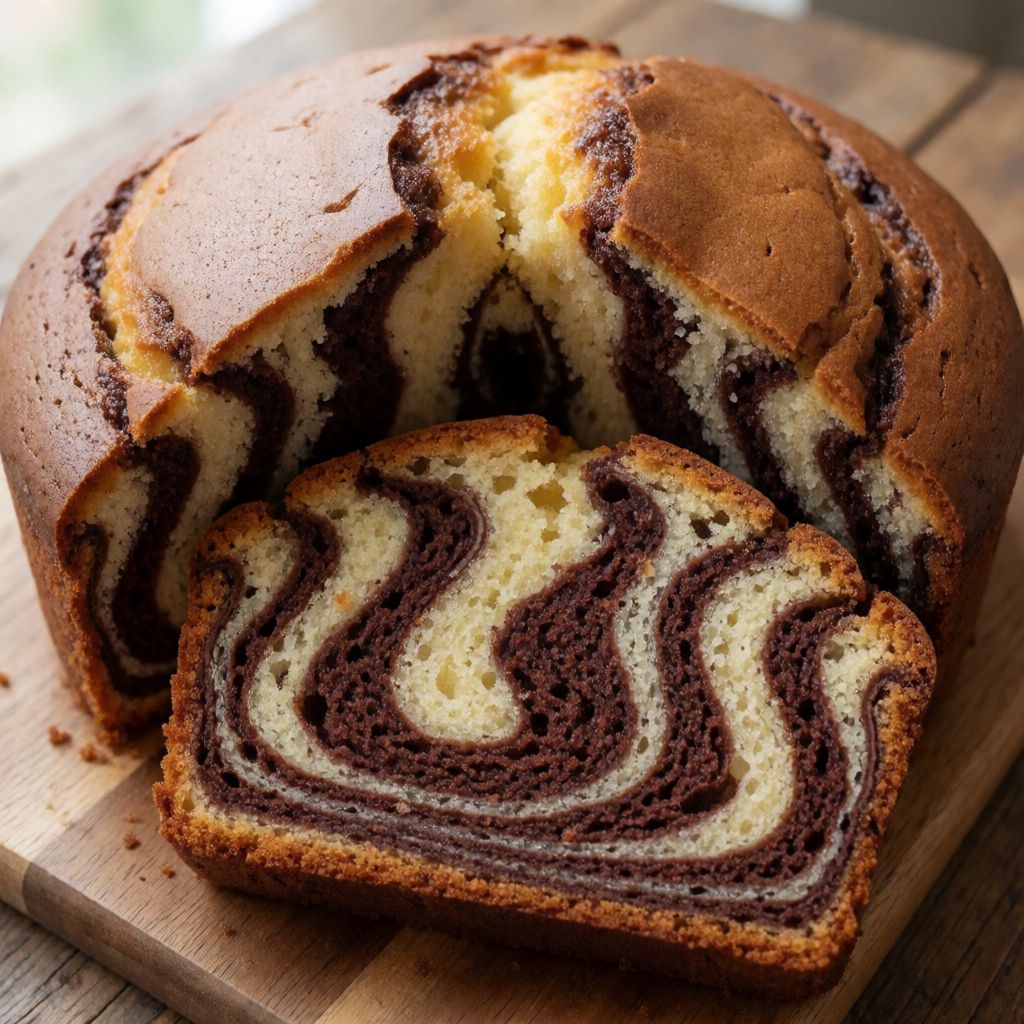
 AI photo
Zebra Cake
A marble-style sponge cake with light and chocolate layers swirled together for a striking zebra pattern.
Labels are worked out automatically from the ingredients and can be wrong. Check the packaging if it matters to you.
Ingredients
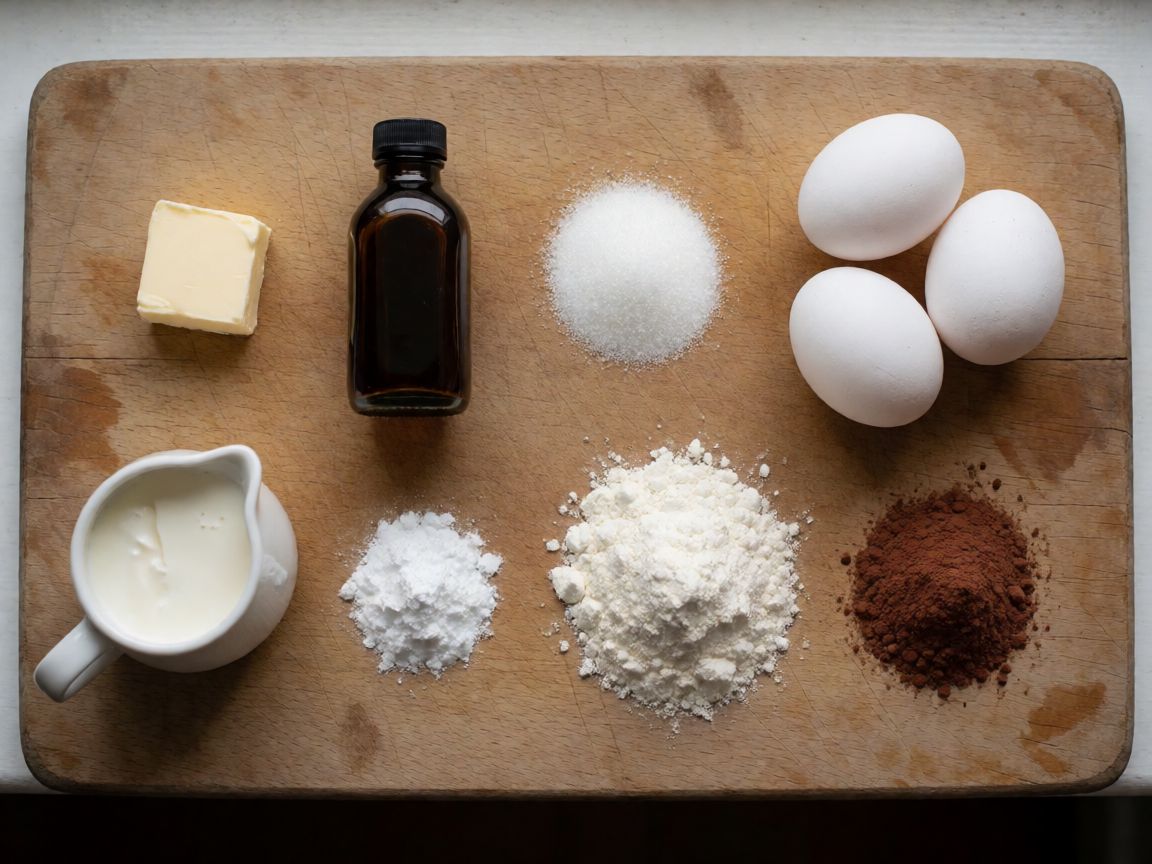
- 120 g Butter
- 1 tsp Vanilla extract
- 150 g Caster sugar
- 3 pcs Eggs
- 150 g Plain flour
- 100 g Potato starch
- 160 ml Double cream
- 20 g Cocoa powder sifted
- 16 g Baking powder






Steps
In a large bowl, mix the softened butter, caster sugar and vanilla extract, and beat with an electric mixer until light and fluffy.
Add the eggs one at a time, beating well after each addition.
Sift the flour together with the potato starch and baking powder, then gently fold into the batter.
Add 110 ml of double cream and mix until smooth.
Divide the batter into two equal parts, and stir the cocoa powder and the remaining cream into one part.
Grease a 22 cm tin with butter and dust with flour.
Spoon the light and dark batters alternately into the centre of the tin, tilting the tin gently so the batter spreads evenly.
Bake the cake at 180°C in a preheated oven for about 35 minutes.
35 minRemove the cake from the oven and let it cool completely before slicing.
A zebra cake isn't a pattern you paint — it's a pattern you provoke. You make two batters that are nearly identical in weight and thickness, and the stripes come from a trick of physics: spoon blob after blob into the dead centre of the tin, and each new blob pushes the one before it outward and downward, forcing the batter to spread in rings rather than mixing. That's the whole mechanism. No skewer-swirling, no piping bags, no steady hand — just gravity and the fact that thick batter doesn't like to mix with itself.
What decides whether it works is the batter's thickness, not your patience with a spoon. Too thin, and the blobs merge into the batter already in the tin — you get a marbled mess, not stripes. Too thick, and they just sit in a lump, refusing to spread, giving you a cake with a bullseye instead of rings. The potato starch here is doing real work: it's softer than flour, lower in gluten-forming proteins, and it keeps the crumb tender while letting the batter hold a shape long enough to layer — this is not a cake you want full gluten development in, or it turns chewy instead of soft.
Some say you need to swirl a skewer through the batter to get the zebra effect. No — if your batters are the right consistency, swirling only blurs what gravity already built. The swirl is a rescue move for batter that's too thick to spread on its own, and it usually over-corrects into mud-coloured marble. Trust the drop, not the stir.
Doneness here isn't really a stopwatch question, even though the recipe gives you 35 minutes — treat that as a floor, not a finish line. The cake is done when the top springs back from a light fingertip press instead of leaving a dent, and when a skewer pushed into the centre comes out clean, no wet batter clinging to it. Ovens lie about their own temperature by 10-15°C routinely, so the visual and tactile check always beats the clock.
Butter: it needs to be properly soft, not melted — melted butter can't trap air when you beat it with the sugar, and that trapped air is your only rising agent besides the baking powder. If you forget to take it out of the fridge, cut it into small cubes; it softens faster surface-first. Margarine works at a pinch but carries water differently and the crumb turns slightly gummy — fine for a Tuesday, not for showing off.
Caster sugar dissolves into the butter instead of just sitting in it, which is why it's specified rather than granulated — granulated sugar in a British kitchen is coarser and takes longer to break down, leaving a slightly gritty crumb if you don't beat long enough. If caster isn't in the cupboard, blitz ordinary sugar for a few seconds in a processor; you're not after icing sugar, just finer grains.
Potato starch does two jobs at once: it dilutes the gluten in the flour, which is what keeps a basic sponge from toughening into something closer to bread, and it also helps the batter hold its shape mid-spoon, which the zebra trick depends on. No potato starch at hand? Cornflour does almost the same job — same principle, starch with no gluten, diluting the flour's protein. Don't skip it and just use more flour; you'll get a denser, chewier cake.
Double cream replaces milk here and it's not a style choice — the extra fat keeps the crumb moist for longer, because fat doesn't evaporate in the oven the way the water in milk does. It also makes the batter heavier and slower-spreading, which, again, is exactly what you want for the stripes to survive baking. If you're out of double cream, single cream or even full-fat milk with an extra spoon of melted butter stirred in will get you close enough — thin milk alone makes a batter too loose to hold rings.
Cocoa powder, sifted, matters more than it sounds — unsifted cocoa clumps, and those clumps don't dissolve in batter the way they do in a hot liquid; they sit as bitter specks in an otherwise soft crumb. Sifting isn't ceremony, it's just making sure the particles are small enough to actually distribute.
One honest limit of an ordinary flat kitchen: you don't have a stand mixer running at kazan-strength torque sitting idle on a counter — most people beat this by hand-held mixer, and that's completely fine, just beat the butter and sugar a little longer than you think necessary, because a hand mixer moves less batter per second than a stand mixer does. And the tin — 22 cm is a specific size for a reason, it gives you a cake thick enough that the alternating layers read as proper stripes when sliced; go much wider and the batter spreads too thin before it layers, and you lose the zebra altogether, ending up with something closer to a thin marble sheet.