
 AI photo
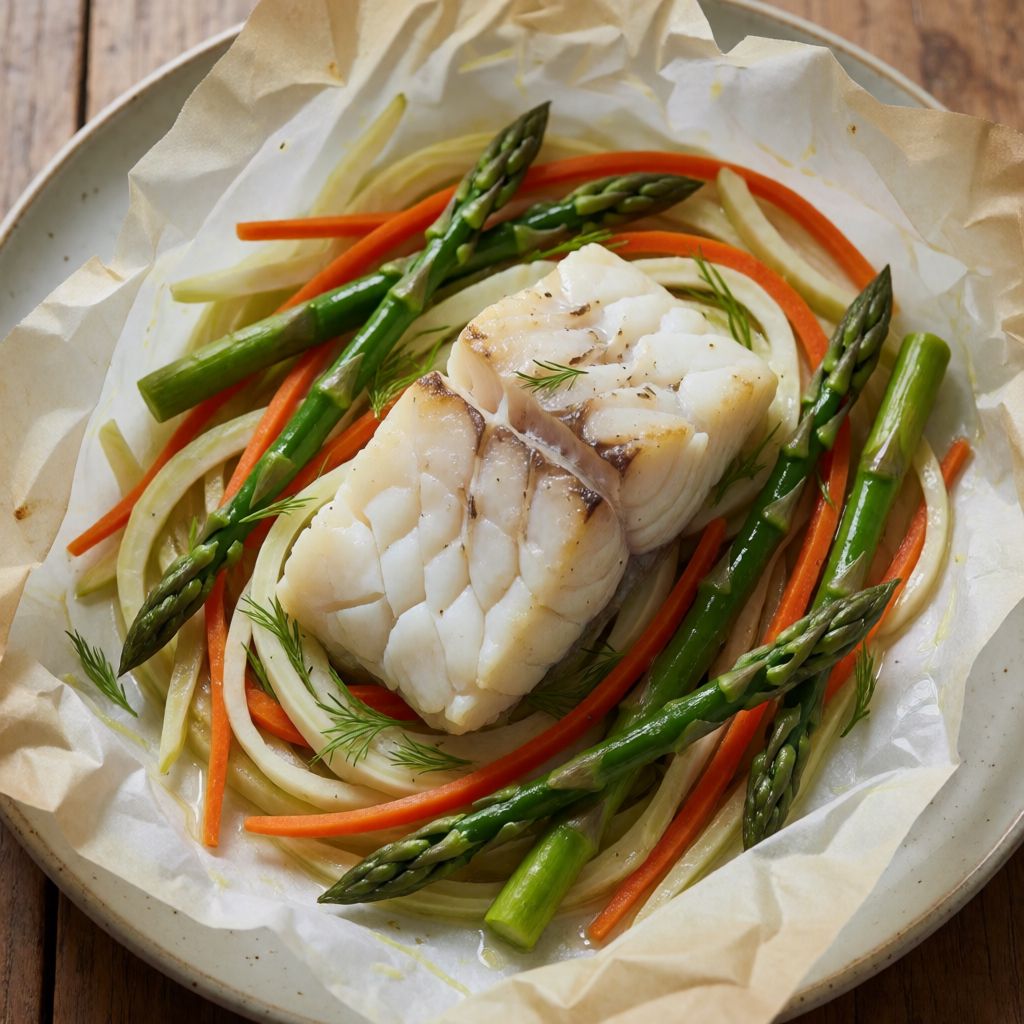
Baked Cod Parcels with Herbs
Delicate cod parcels baked with fennel, carrot and asparagus, finished with a lemon and herb butter.
Labels are worked out automatically from the ingredients and can be wrong. Check the packaging if it matters to you.
Ingredients












Steps
Wash the potatoes and put them in a pan of lightly salted water. Bring to the boil and cook for 15 minutes.
Drain the water and let the potatoes rest in the covered pan.
Make the herb butter: mash the butter with the lemon zest, dill, parsley, flaked salt and pepper.
Divide the cod into portions according to the number of people eating.
On each piece of baking paper, lay down the fennel first, then a piece of cod, and spread over half of the herb butter.
Place carrot and asparagus on each fish parcel, fold the paper around the fish and drizzle with 1-2 tbsp of white wine.
Tie each fish parcel with kitchen string.
Bake in an ovenproof dish in a preheated fan oven at 175°C for about 12-14 minutes.
Let rest for 5 minutes before serving.
Mix the potatoes with the melted herb butter and serve with extra parsley, salt and pepper.
A parcel of fish cooked in its own steam is really just a kazan reduced to the size of a paper square. You seal the cod with fennel, carrot, asparagus and a splash of wine, and the paper does what a heavy lid does over an open fire: it traps the steam that would otherwise escape into your oven and takes it nowhere but back onto the fish. That's the whole mechanism — not magic, not delicacy for its own sake, just physics in a kitchen-sized parcel.
What decides whether this works isn't the oven dial, it's the seal. A loose fold lets steam leak, the vegetables stay raw-crunchy and the cod dries at the edges reaching for heat that isn't being held against it. A tight fold — paper gathered and tied so no gap shows — and you get the opposite problem solved: fish that poaches in its own moisture and butter, vegetables that soften from the steam without ever touching direct heat.
Cod is the right choice here because it's a loose-fleshed fish — it flakes rather than resists, and it takes on butter and lemon zest without a fight. The test for doneness isn't the clock, it's the fish: press gently through the paper near the end and it should give, not spring back, and the flesh should go from translucent to opaque milk-white. Twelve to fourteen minutes is the oven's best guess, not a verdict — fillets vary in thickness, ovens vary in truth to their dial, and only the fish tells you when it's actually ready.
Some say you need parchment specifically, that foil "doesn't work" for this. Not true — foil seals just as well, sometimes better, because it holds a fold under its own strength rather than needing string. The reason recipes favour paper is presentation: you open it at the table and the steam escapes in front of the person eating, which is theatre, not chemistry. In your kitchen, with a tray and an oven door that's opened and shut a dozen times a week, foil is the forgiving option — it won't spring open on you the way a badly tied paper parcel will.
Cod: buy it thick-cut if you can, because a thin tail-end piece cooks through before the vegetables around it have softened, and you end up with an overcooked fish sitting next to a crisp carrot. Any firm white fish that flakes — haddock, pollock, hake — substitutes cleanly; the criterion is a fish with mild flavour and a flake, not a fillet that falls apart into mush the moment it's warm, like some delicate white fish do.
The vegetables are cut thin for a reason that has nothing to do with looks — a fennel sliced thick won't cook through in the time the fish needs, and you'll bite into something raw and bitter. Thin-sliced fennel and carrot in matchsticks cook at roughly the fish's pace, which is the only reason this combination of vegetables sits together in one parcel rather than being blanched separately first.
The herb butter is the substitution lesson of the dish: butter here is just a carrier for fat, lemon and herb that melts at body-adjacent temperature and bastes the fish from the inside of a sealed parcel — something oil can't do in the same way, because oil won't set soft then melt the way butter does, and oil won't carry the dairy richness that makes mash taste like something rather than like boiled starch. If you're avoiding dairy, a good olive oil mashed with the same zest and herbs will still flavour the fish, it just won't give you that velvet finish on the potato.
Dill and parsley together aren't tradition for tradition's sake — dill is the fish herb across northern Europe because it grows well in cold, damp climates where fish was the protein and lemons were imported luxuries; parsley adds green freshness without dill's aniseed edge so the butter doesn't taste of one note only. If you've only got one of the two, use more of it — don't go hunting for the other at the shop.
Wine in the parcel is there to add acid and aromatics to the steam, not to stew the fish — one to two tablespoons, no more, because this is a splash, not a poach. A squeeze of lemon juice and a tablespoon of water does the same acidic-steam job if you've no wine open, though you lose the slight sweetness wine gives.
Patience here isn't about long cooking — it's about the resting five minutes after the oven. Cut the parcel open straight away and the fish is still finishing in its own trapped heat; carve too soon and you release steam that should have kept cooking the thinnest edges. Five minutes costs you nothing and buys the fish its last bit of doneness without any flame at all.
·