
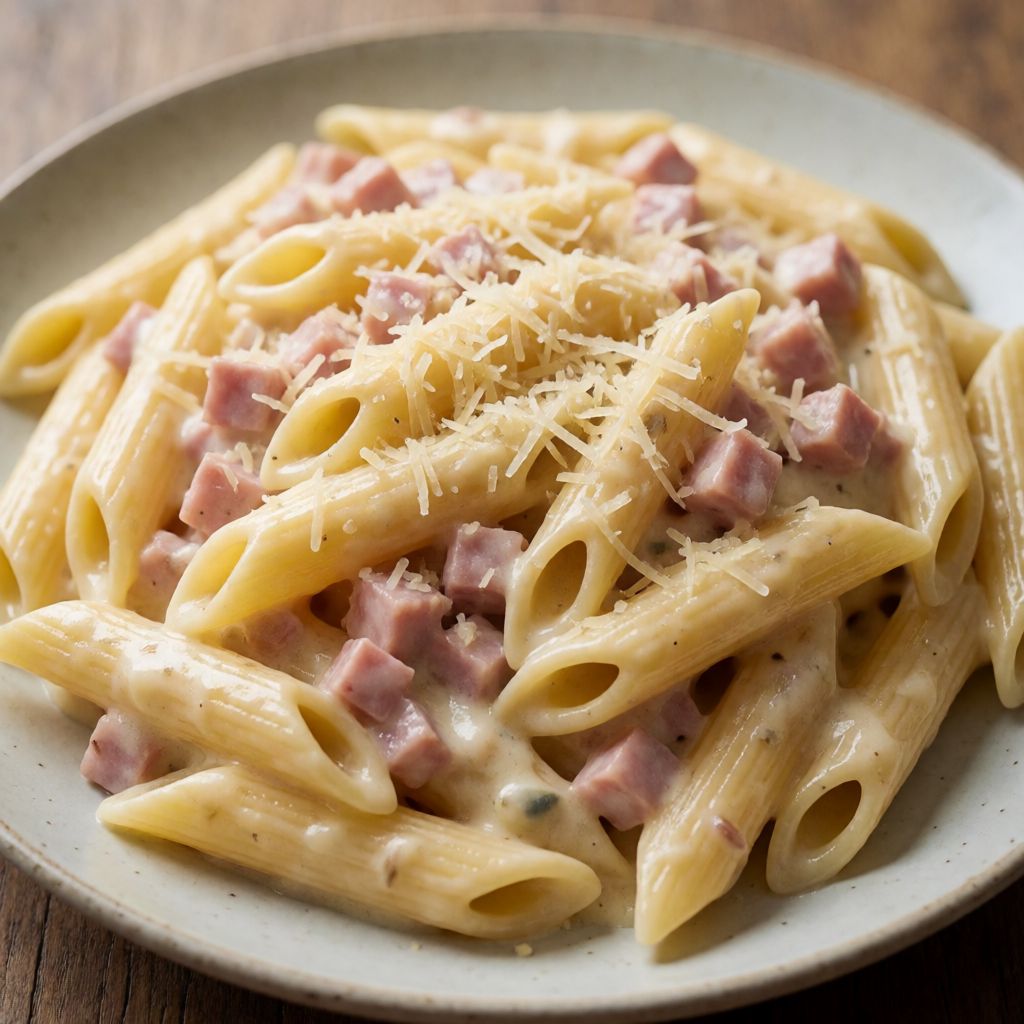
 AI photo
Pasta with Cream and Ham
A quick, comforting pasta in a creamy sauce with ham, garlic and butter, finished with Parmesan.
Labels are worked out automatically from the ingredients and can be wrong. Check the packaging if it matters to you.
Ingredients
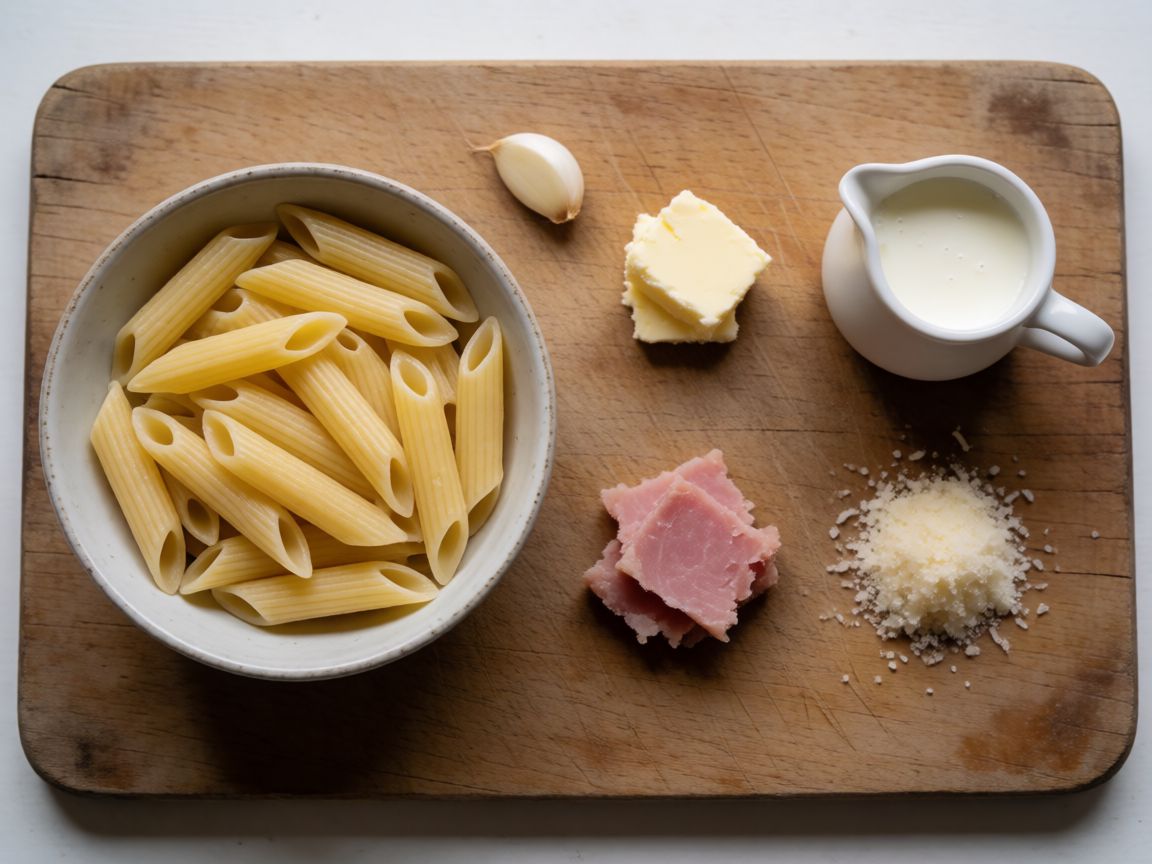
- 320 g Penne
- 1 clove Garlic
- 50 g Butter
- 250 g Ham
- 200 ml Double cream
- Parmesan
- Salt
- Black pepper







Steps
Bring a pot of water to the boil for the pasta, salting it to taste.
Melt the butter in a large frying pan and add the garlic clove, halved and with the core removed.
Once the garlic is nicely golden, add the ham cut into cubes and fry gently for about two minutes.
2 minAdd the cream, stir well and cook for a further three minutes, seasoning with salt and black pepper.
3 minCook the pasta until al dente, drain and transfer it to the pan with the sauce.
Toss the pasta with the sauce for about a minute so it is well coated.
1 minDivide the pasta between plates, generously sprinkling with Parmesan and extra black pepper.
Serve the pasta with cream and ham immediately while hot.
This is the dish you make when the fridge has a heel of cooked ham left from the Sunday roast and nothing else is happening. Penne, butter, garlic, cream, ham, Parmesan. No tomato, no stock, no onion to soften. The whole sauce is built in one pan in the time it takes the pasta to boil, and that's the point of it — it's a weeknight dish wearing a bistro coat.
What decides whether it works is restraint with the heat under the cream, and timing the pasta to finish exactly when the sauce does. Cream split into oily puddles with grainy bits floating in it is cream that got too hot for too long — it's not "gone wrong" in some mysterious way, it's just been asked to boil hard, and milk fat and water don't stay friends once you do that. Keep it at a bare simmer, the kind where the surface just trembles and throws up the occasional slow bubble, not a rolling boil. If your hob only knows "off" or "roaring," pull the pan half off the ring — that's a legitimate dial, and every cook with a domestic cooker uses it.
The garlic clove is there to lend the butter a smell, not to be eaten or to turn the dish garlicky. Halved, core out — that pale green-white sprout in old cloves is the bitter part, and taking it out stops the whole pan tasting of it later. You fry it just until it goes gold, not brown: gold means the flavour's moved into the fat, brown means it's burnt and now tastes of ash, not garlic.
Penne specifically, because its ridges and open tube catch the sauce in a way a smooth shape won't — that's not snobbery, it's surface area. Any short pasta with a groove or a hollow — fusilli, rigatoni, conchiglie — will behave the same way. A smooth shape like spaghetti just lets the cream slide off onto the plate instead of clinging to the pasta. Cook it to al dente, meaning it still resists slightly against the tooth, not mush — because it finishes its last minute in the pan with the sauce, drinking up a bit more liquid and softening further. Pull it a touch earlier than the packet says, for that reason alone, not because the packet is lying to you.
Butter here is doing two jobs: carrying the garlic's flavour and giving the sauce a glossy finish once it's off the heat. Use a butter with a mild, not browned, flavour — if it's unsalted, go easier with the salt later since the Parmesan and the ham are both already salty and three salty things stacking up is how a sauce goes from seasoned to simply salty. If you've no butter, a neutral oil with no smell of its own does the carrying job, though you lose that last silky sheen it gives the finished sauce.
Double cream, not single, because it has enough fat to survive gentle heat without curdling and still thicken slightly as it reduces. Single cream is thinner and more watery, built for pouring over a pudding, not for sitting in a hot pan for several minutes — it'll separate faster and give you a thinner, less forgiving sauce. If double cream isn't in, crème fraîche is closer than single cream in behaviour, though it brings its own tang that nudges the dish sideways a little.
Ham cubed, not sliced thin, so it holds some bite and doesn't disappear into the sauce — this is a dish about texture contrast as much as flavour, pasta soft, ham with a bit of resistance. Two minutes in the butter is enough to warm it through and let a little of its fat and saltiness bleed into the butter before the cream goes in; longer than that and you're just drying it out for no gain, since it's already cooked.
Parmesan goes on at the end, off the heat, because hard cheese grated into a hot creamy sauce while it's still bubbling tends to clump rather than melt in smoothly — better to let the residual heat of the plated pasta do the melting gently. Buy a wedge and grate it yourself if you can; the pre-grated bags dry out and lose the sharp, nutty edge that makes the whole dish taste of something rather than just cream. If Parmesan's genuinely not available, a mature hard cheese with some bite — a strong Cheddar grated fine, even — will stand in, though it won't have quite the same savoury depth.
And patience, even in a fifteen-minute dish, is still an ingredient: the two or three minutes you give the cream to come together properly is the difference between a sauce that coats the pasta and one that just sits wetly beside it on the plate. Don't rush the pan because the pasta water's already boiling — the water will wait for you.