
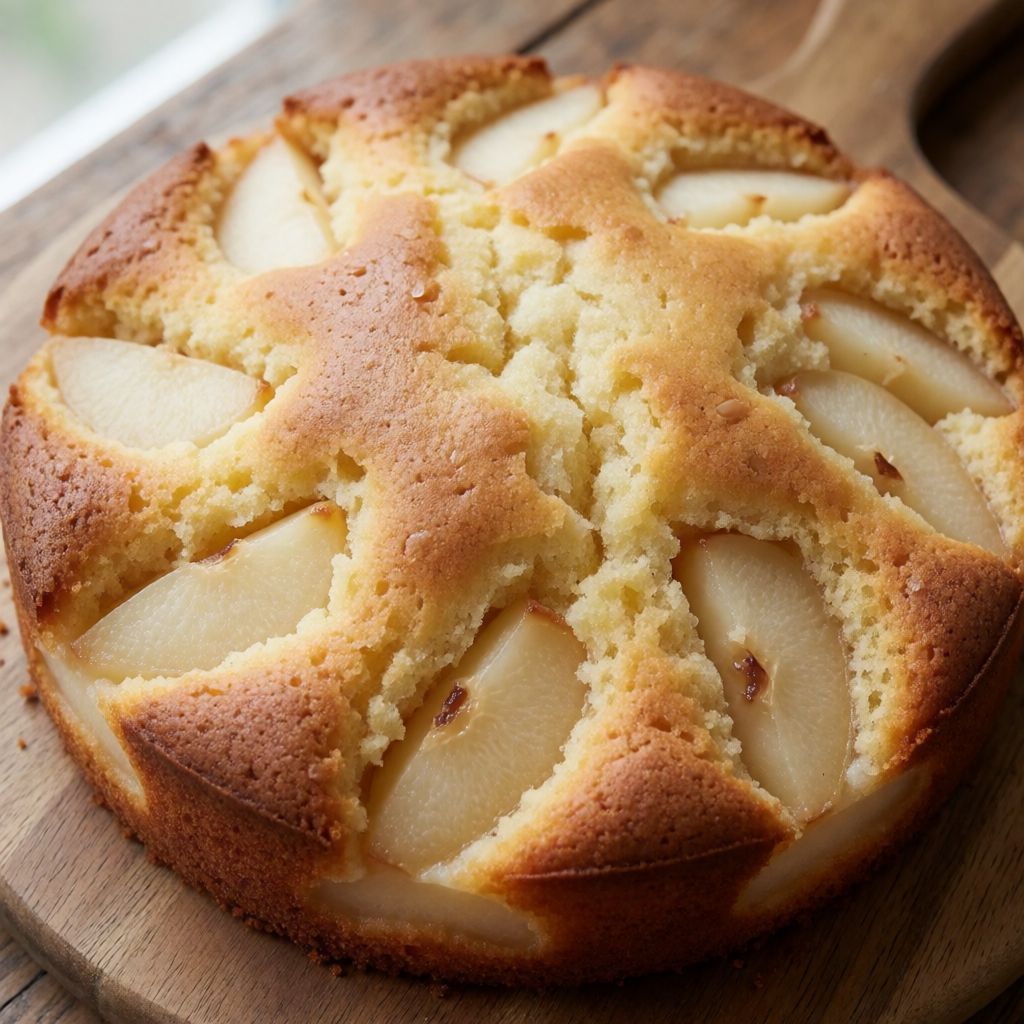
 AI photo
Pear Cake Without Butter
A simple, moist pear cake made without butter, easy to make and lovely with afternoon tea.
Labels are worked out automatically from the ingredients and can be wrong. Check the packaging if it matters to you.
Ingredients
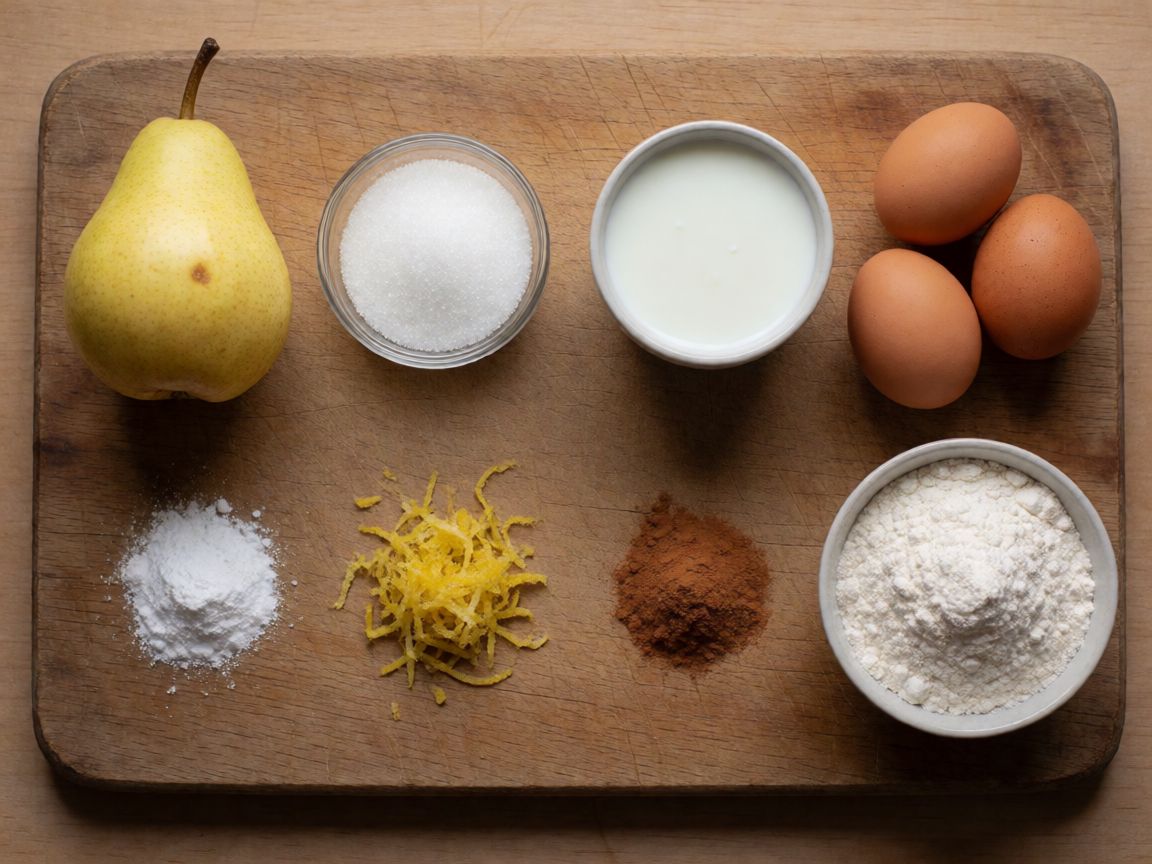
- 700-800 g Pears
- 150 g Caster sugar
- 125 ml Milk warm
- 3 pcs Eggs
- 200 g Plain flour
- 16 g Baking powder
- 1 pcs Lemon zest
- 1 tsp Cinnamon
- Icing sugar to taste









Steps
Peel the pears, cut them in half and remove the core; dice part of them and slice the rest thinly.
In a bowl, whisk the eggs with the sugar, by hand or with a mixer, until the mixture is light and fluffy.
Add the lemon zest, then the sifted flour, baking powder and cinnamon.
Pour in the warm milk and mix until smooth.
Add the diced pears, fold in gently and pour the batter into a 24 cm tin.
Smooth the top of the batter, arrange the thin pear slices on top in a sunburst pattern and sprinkle with sugar.
Bake in an oven preheated to 180°C.
30 minCheck with a wooden skewer; if it comes out dry, turn off the oven and leave the cake to cool.
Before serving, dust the cake with icing sugar to taste.
This is a cake that leans on pears for both its moisture and its structure — there's no butter, no oil, nothing greasy to fall back on. That's the whole trick and the whole risk. Take the fat out of a cake and you'd better have something else carrying the weight: here it's eggs whisked properly, and fruit doing double duty — part of it diced into the batter for softness, part sliced thin and fanned over the top for looks and for a bit of caramelised chew.
Whether it works comes down to two things: how long you whisk those eggs and sugar, and how ripe your pears are. Skip the whisking and treat it like you're just mixing a bowl of porridge, and the cake comes out flat and dense — no butter means no little fat pockets to trap air, so the air has to come from somewhere, and that somewhere is you, beating eggs until the mixture is pale and holds a ribbon off the whisk. That's not decoration, that's your rising agent working alongside the baking powder, not instead of it.
Some say a cake without butter can't be "proper" cake — no, because butter's job here is flavour and tenderness, and you can get tenderness another way: fruit releasing juice as it bakes, keeping the crumb from drying out. What you lose is richness. What you gain is something lighter, closer to a fruit tart that forgot it was a cake.
Pears: 700-800g sounds like a lot until you remember half of it turns into juice during baking. Use pears that give slightly at the stem end when you press — rock-hard ones won't release enough moisture to keep the crumb soft, and overripe mushy ones will collapse into mush rather than holding their slice shape on top. Conference or Comice work well in the UK; if pears are out of season or poor, firm apples sliced thin do the same structural job, though you lose that particular soft-grain texture pears have.
Eggs: three of them are doing the work butter usually does — binding, and more importantly, trapping air when whisked with the sugar. This is why the whisking stage matters more than usual. Room temperature eggs whip up with more volume than cold ones straight from the fridge — if yours are cold, a few minutes in a bowl of warm water first costs you nothing and buys you a lighter cake.
Flour and baking powder: 16g of baking powder for 200g flour is a strong dose — that's deliberate, compensating for the lack of fat, which would normally help a cake rise by melting and creating steam pockets. Sift it with the flour so it distributes evenly; clumped baking powder gives you one lucky air pocket and a dense cake everywhere else. Plain flour is fine here — you're not after chew, you're after a soft crumb, so don't reach for strong bread flour thinking it'll help.
Milk, warm: warming it isn't about speeding anything chemically — it's about not shocking the whisked eggs with something cold, which can knock the air back out of them. Any milk works; whole milk gives a slightly richer result given there's no butter to supply richness elsewhere.
Lemon zest and cinnamon: these aren't filler, they're correcting for pear's fairly mild, sometimes bland sweetness once cooked. Zest only, never the pith — that's where the bitterness lives. If you've no lemon, a splash of vanilla does a similar lifting job, though it won't cut through sweetness the way citrus does.
On the tin and the oven: 180°C with no convection fan assumption is a reasonable domestic oven setting, but ovens vary enough that thirty minutes is a floor, not a verdict — check at that point, and if the top pears haven't started turning amber and slightly jammy at the edges, give it more time rather than trusting the clock. A 24cm tin matters more than it sounds — too small and the middle stays wet under all that fruit and juice; too large and the cake bakes thin and dry before the centre sets properly. Patience here is really just not opening the oven door every five minutes — each time you do, you drop the temperature and the cake sinks slightly where the air escaped, same reason your Sunday roast potatoes go soft if you keep checking them.
·