
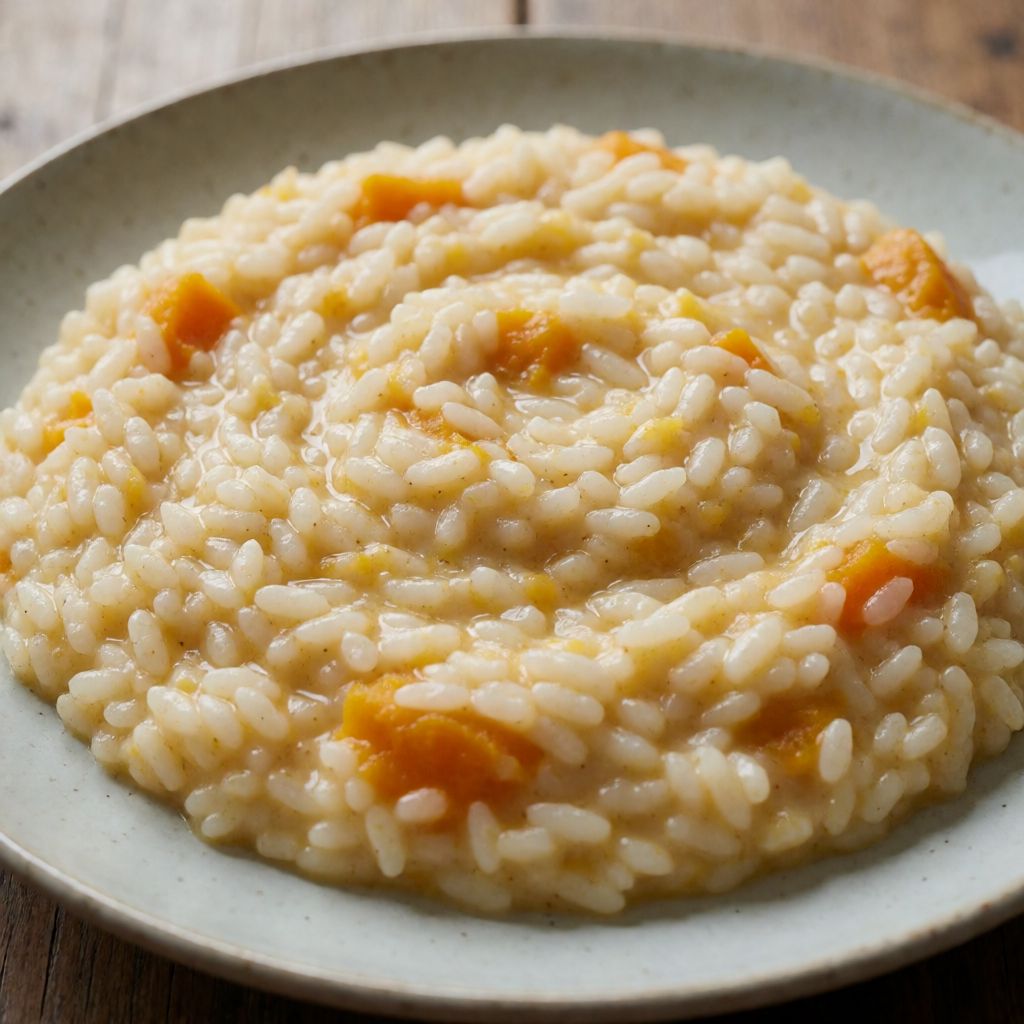
 AI photo
Pumpkin and Gorgonzola Risotto
A creamy risotto with sweet pumpkin and gorgonzola, finished with sage.
Labels are worked out automatically from the ingredients and can be wrong. Check the packaging if it matters to you.
Ingredients
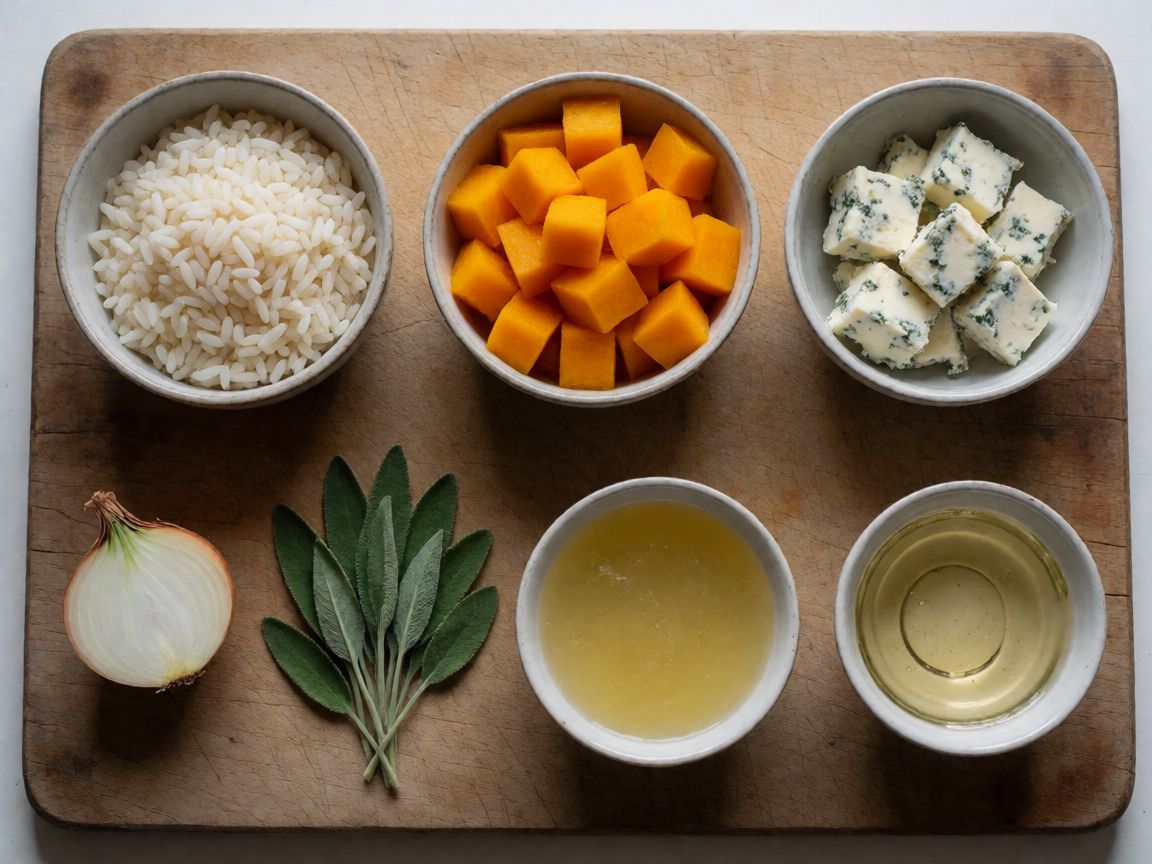
- 250 g Carnaroli rice
- 300 g pumpkin
- 100 g gorgonzola
- 750 ml vegetable stock
- 50 ml white wine
- 0.5 pcs onion
- 6 pcs sage leaves
- salt to taste
- black pepper to taste
- olive oil to taste










Steps
Peel the pumpkin and cut the flesh into small cubes.
Sauté the finely chopped onion in two tablespoons of olive oil with a pinch of salt over low heat, stirring often.
5 minAdd the rice and toast for a few minutes, then pour in the white wine and let it evaporate.
Add the diced pumpkin and some of the stock.
Cook the risotto, gradually adding vegetable stock and stirring often, until the rice is done.
Remove from the heat and stir in a little olive oil, diced gorgonzola and chopped sage.
Divide among plates and garnish with cubes of gorgonzola and fresh chopped sage. Serve at once!
Risotto is not really a recipe, it's a method for persuading starch out of rice while keeping the inside of the grain stubbornly al dente. That's the whole mechanism, and this version just dresses it up with pumpkin for sweetness and gorgonzola for the sharp, salty jolt against it. Two things decide whether it works: the rice, and whether you have the nerve to leave the pan alone for twenty-odd minutes and just stir.
Carnaroli is specified for a reason, not snobbery. It's higher in amylopectin than ordinary long-grain, which means it releases a creamy starch into the liquid around it while the core of the grain stays firm — that's the "bite" people chase and can't always name. Arborio does the same job slightly less reliably; a long-grain rice from the cupboard won't do it at all, it just goes soft and gluey, because it hasn't got the starch architecture for it.
Some say you have to add the stock one ladle at a time, standing over it like a vigil. No — because what actually matters isn't the ritual, it's not drowning the rice. Flood it with all the liquid at once and the grains cook in a bath rather than releasing starch into a thickening sauce around them; add it gradually and each addition gets absorbed into a slowly concentrating cream. The stirring does real work too — it's not fussing, it's physically abrading the grain surface to release starch into the liquid.
Start with the onion, because it's the one step people rush and shouldn't. Low heat here isn't a dial setting, it's a state: the onion should be hissing gently, not crackling, and it should go from white to translucent to pale gold without ever browning at the edges. Browning means the sugars are caramelising and turning bitter, and that bitterness sits underneath the whole dish afterward with nowhere to hide. If your hob runs hot — and most domestic ones do, with no kazan's gentle heat-soak to fall back on — pull the pan half off the ring rather than trust the lowest number on the dial.
Toasting the rice in the fat for a couple of minutes, before any liquid touches it, coats each grain and partly seals the surface — this is what gives you a slightly longer window before everything turns to porridge, not a magic non-stick effect. You'll know it's done when the grains turn faintly glassy at the edges and smell a bit nutty. The wine goes in at that point and should audibly fizz and vanish into steam within half a minute or so — if it just sits there, the pan's gone cold on you and needs more heat before the stock stage.
The stock itself should be hot, kept at a low simmer on a second ring if you have one, a second pot if you don't. Cold stock dropped into risotto drags the temperature down each time, stopping the starch release and stretching the cook unpredictably — this is the single most common reason home risotto turns out gluey and tired rather than creamy. Use vegetable stock here because the pumpkin's sweetness doesn't want to compete with a heavy beef or chicken note; a good bouillon cube dissolved properly is entirely fine, nobody's checking your stockpot credentials.
Pumpkin: cut it small, genuinely small, smaller than a sugar cube, because it needs to break down into the risotto almost as much as it needs to hold its shape — some pieces should collapse into the sauce for sweetness, some should survive as texture. Butternut squash is the obvious substitute if pumpkin's out of season or just not sold near you, and it behaves almost identically. The doneness test for the rice at the end is the same one you'd use for a carrot in a stew — bend, don't bite — the grain should offer slight resistance in the centre without any hard uncooked core, and the whole mass should slump slowly off a spoon rather than sit stiff.
Gorgonzola goes in at the very end, off the heat, because melting cheese directly into simmering liquid tends to split the fat out of it — you get grease on top instead of cheese folded through. Stirring it in once the pan's off the flame lets the residual heat melt it gently into the starchy cream instead. If gorgonzola's too strong or not to hand, any blue with real funk works on the same logic — a mild Danish blue will underwhelm you, a properly ripe Stilton (which, handily, you'll have no trouble finding here) does the job just as well and is arguably more at home on a British table than imported gorgonzola ever was.
Last thing: risotto does not wait. The starch keeps thickening in the pan and on the plate as it cools, so "serve at once" isn't an exhortation, it's physics — leave it ten minutes and you're eating something stiffer and less creamy than what left the pan. Have the plates warm and the people sitting down before it's ready, not after.