
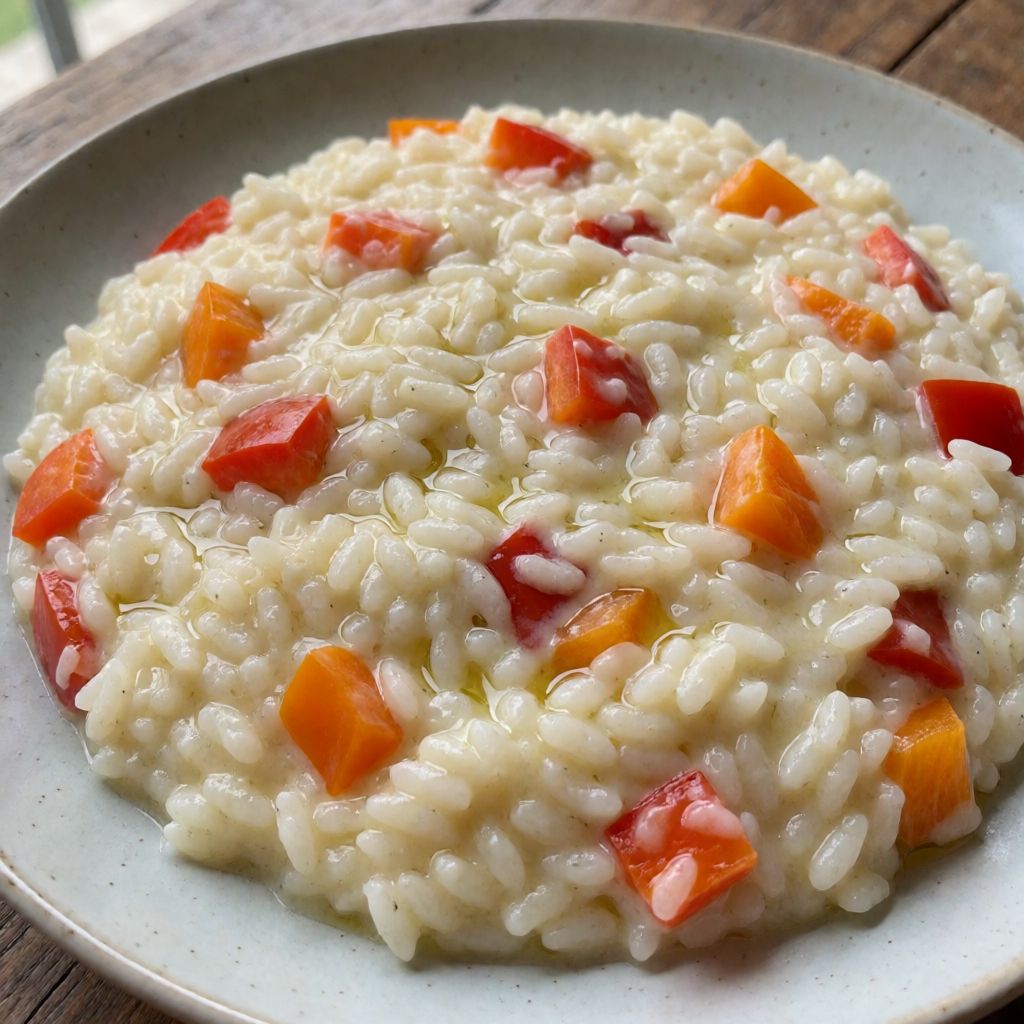
 AI photo
Risotto with Bell Pepper and Gorgonzola
A creamy risotto with bell pepper and sweet gorgonzola.
Labels are worked out automatically from the ingredients and can be wrong. Check the packaging if it matters to you.
Ingredients
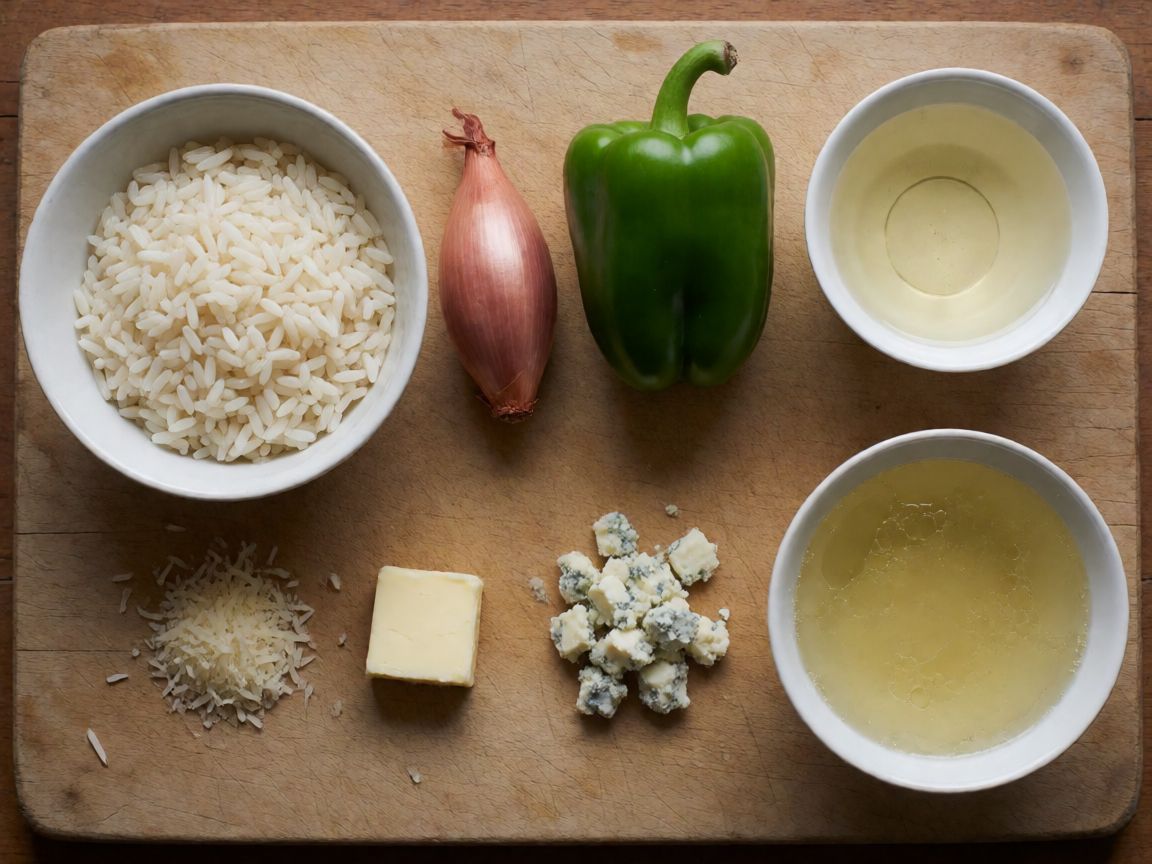
- 350 g Carnaroli rice
- 1 pcs Shallot
- 1 pcs Bell pepper medium, green
- 120 ml White wine
- 2 tbsp Olive oil
- Salt to taste
- Black pepper to taste, ground
- 1 l Vegetable stock
- 120 g Gorgonzola dolce
- 10 g Butter
- 1 tbsp Parmesan










Steps
Fry the chopped shallot in olive oil, add the bell pepper cut into small pieces, and cook for a few minutes.
5 minAdd the rice and toast it, then pour in the white wine and let it evaporate completely.
5 minCook the risotto, gradually adding the vegetable stock, until the rice is done.
15 minSeason with salt, add ground black pepper, and stir the risotto with the gorgonzola dolce and butter until creamy.
2 minServe, sprinkled with Parmesan.
Risotto isn't a rice dish — it's a technique for cooking starch out of a grain slowly enough that it ends up suspended in its own released starch, so the whole thing moves like a wave when you shake the pan. That wave, what Italians call "all'onda", is the only test that matters. Not a timer, not a recipe card — the way it slides.
This version leans on two things doing opposite jobs: bell pepper for a clean vegetable sweetness that survives cooking, and gorgonzola dolce for a soft, almost melting savoury weight at the end. The pepper goes in early and cooks down into the base. The cheese goes in last and barely cooks at all — it just dissolves into heat that's already backed off, which is the whole reason it's added off the direct flame-logic, stirred in rather than simmered.
Carnaroli is specified for a reason that isn't snobbery: it holds a firm core (what Italians call the bite, or "al dente" transferred from pasta) while still releasing starch generously from its outer layer. Arborio does this too but less reliably — it can collapse into mush if you look away. If you can't get Carnaroli, Arborio works, but watch it more carefully near the end; it has less patience in it than Carnaroli does.
What decides whether this dish works isn't the ingredient list. It's whether you add stock in a rhythm the rice can absorb — a ladle at a time, letting it vanish into the grain before the next — rather than drowning it in one go and walking away. Drown it, and you get boiled rice in cheese sauce. Feed it, and you get risotto.
Start with the shallot and pepper, because this is where a myth needs breaking: some say bell pepper has no place in risotto, that it's a pasta-sauce vegetable wandering into the wrong pan. No — bell pepper has almost no acid bite compared to, say, tomato, and its sweetness only gets rounder with heat, which means it won't fight the gorgonzola later. It just needs those few minutes in the oil to soften past its raw crunch — you're not browning it, you're taking the squeak out of it. A green pepper specifically, because red and yellow peppers are riper and sweeter, which would stack sweetness on top of the cheese's own sweetness and flatten the contrast the dish depends on.
Olive oil here is doing a job, not flavouring the dish — it needs to carry heat evenly without burning before the shallot softens. If your olive oil smells strongly of itself, use less of it or thin it with a neutral oil; you want it quiet under the vegetables, not loud over them. Butter arrives separately at the end for a different reason entirely: added cold, off the heat, it emulsifies into the starchy liquid and gives body and shine — this is called "mantecatura", and it's not decoration, it's physics. Fat coats the starch granules and makes the whole dish glossy instead of gluey.
Carnaroli rice: buy it for the starch-to-structure ratio, not the brand name on the packet. A rice labelled "risotto rice" with no variety named is a gamble — it might be low-grade Arborio, which breaks down faster and needs a gentler hand near the end. If a shop genuinely has neither, a short-grain pudding rice is closer in starch content than long-grain ever will be, though the texture will be softer, more forgiving, less "al dente" in the centre.
White wine does two things people usually assume is one: it deglazes the toasted rice (lifting anything stuck from the pan after toasting) and it adds acidity that balances the richness coming later from gorgonzola and butter. It must fully evaporate — not reduce, evaporate — because leftover alcohol tastes sharp and raw, not winey. If you don't drink wine or have none, a splash of dry vermouth does the same acid job, or failing that, a spoon of lemon juice added at the very end instead, since lemon added early just cooks off its brightness.
Vegetable stock should taste like something on its own before it goes anywhere near the rice — risotto only tastes as good as what you feed it, because the rice absorbs flavour, it doesn't create any. Homemade is best for exactly this reason: you control the salt and the intensity. A stock cube dissolved in boiling water works in an ordinary UK kitchen where nobody keeps a pot of vegetable trimmings simmering — just go easy on extra salt afterward, since cubes are usually salted hard already.
Gorgonzola dolce, not the stronger "piccante" version — dolce is younger, creamier, milder, closer to a soft blue than a sharp one. It's chosen because it melts rather than crumbles, folding into the risotto instead of sitting in lumps. If gorgonzola dolce isn't on the shelf, a mild Cambozola or a soft Dolcelatte will behave the same way; a hard, crumbly Stilton won't melt the same and will leave you with little mineral-tasting pockets instead of a creamy whole. Parmesan at the end is seasoning, not substance — a last salty, nutty lift on top, which is also why it's measured in a single tablespoon rather than a handful: the gorgonzola is already carrying the dairy weight of the dish, and two cheeses shouting at once just cancels each other out.
As for heat: nobody's kitchen has a flame that behaves identically to anyone else's, so forget "medium". What you want through the whole stock-adding stage is a lazy simmer — bubbles breaking the surface gently, not a boil throwing stock up the sides of the pan, because a hard boil cooks the outside of the grain faster than the inside can keep up, leaving you with rice that's done on the surface and chalky in the middle. And give it time regardless of what the clock says — fifteen minutes is a floor, not a finish line. Taste a grain. If there's a hard little dot of flour-white centre, it needs more stock and more patience, not more heat.