
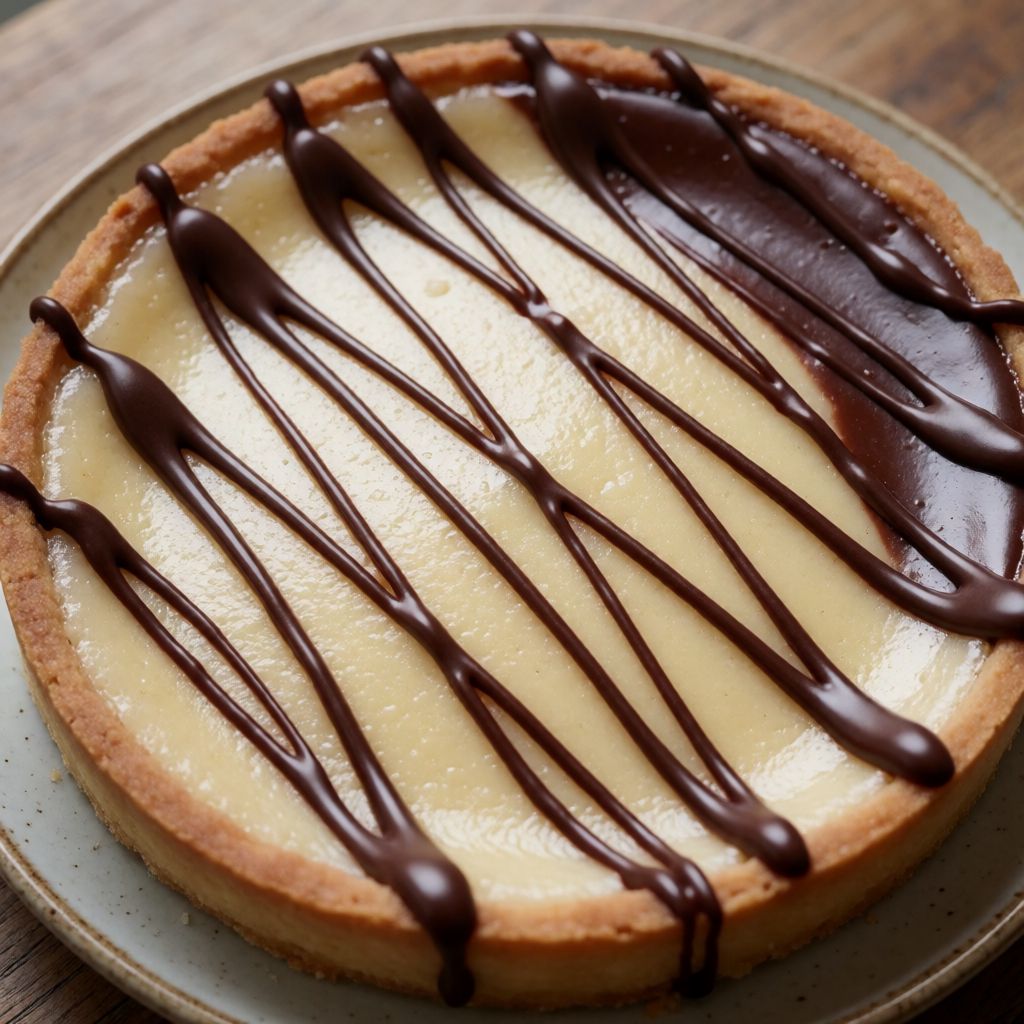
 AI photo
Almond Cake
A rich almond marzipan cake with a glossy chocolate glaze and toasted hazelnuts on top.
Labels are worked out automatically from the ingredients and can be wrong. Check the packaging if it matters to you.
Ingredients
- 200 g Marzipan coarsely grated
- 75 g Caster sugar
- 200 g Butter at room temperature
- 4 pcs Eggs
- 50 g Plain flour
- 60 g Dark chocolate finely chopped
- 50 ml Milk
- 80 g Butter softened
- 200 g Icing sugar
- 50 g Hazelnuts






Steps
Beat the marzipan with the caster sugar until smooth. Add the butter, cut into cubes, and beat until the mixture is smooth and airy. Beat in the eggs one at a time, then fold in the flour at the end.
Spoon the batter into a greased 20 cm springform tin lined with baking parchment on the base.
Bake the cake in an oven preheated to 175°C (fan/convection setting) for about 30 minutes, until golden and cooked through. Let the cake cool slightly in the tin before removing it.
30 minMelt the chocolate in a bain-marie over low heat. Remove from the heat and stir in the milk. Beat the butter with the icing sugar until light and fluffy, then stir in the chocolate-milk mixture.
6 minSpread the chocolate glaze over the cooled cake.
3 minPut the hazelnut kernels in a hot dry pan and toast, stirring, until the skins start to lift. Remove from the heat once the skins begin to flake. Wrap in a clean cloth and rub off the skins. Roughly chop the hazelnuts if you like before sprinkling them over the cake.
Marzipan cake isn't sponge cake with an almond detour. It's built the other way round: almond paste is the base, and butter, eggs and a thimbleful of flour are there to turn it from a block of sugared almonds into something that can carry a bake. That's why there's only 50 g of flour against 200 g of marzipan — the structure is coming mostly from egg protein setting and butter holding air, not from gluten. Treat it as a flour-light cake and it behaves; treat it like a Victoria sponge and you'll wonder why it's heavy and gold has to turn to toffee before it's done.
What decides whether it works is the first move: beating cold-ish, dense marzipan with sugar until it's actually smooth, not just softened. Marzipan grated coarse resists a mixer at first — you're breaking down almond paste, not creaming butter. Skip this and you get streaks of raw almond paste sitting in the baked cake like little dense stones, because they never had the chance to loosen and take in sugar before the butter went in.
The eggs go in one at a time for a reason that has nothing to do with ritual: a fat-sugar-almond mixture holds egg's water content only in small doses. Dump all four in together and it splits — you'll see it curdle, go glossy and separate, because the emulsion can't absorb that much liquid in one go. One at a time, each egg gets beaten in before the next arrives, and the mixture stays silky.
Marzipan itself is the ingredient to get right, and it's not a luxury you can shrug past. Good marzipan is mostly ground almonds with sugar worked in — the almond content should be high enough that it still tastes of almonds, not just sugar with a memory of them. Cheap marzipan, heavy on sugar and light on almond, won't fail outright but the cake comes out sweeter and flatter, because almond's job here is fat and flavour, and sugar can't do either. If you can't get marzipan, you're not really substituting it — you'd be making a different cake, so don't try to fake it with ground almonds and icing sugar stirred together; the fineness of commercial marzipan, worked through a mill, is what lets it blend smooth rather than grainy.
Butter at room temperature means soft enough to dent with a finger, not soft enough to pool. Cold butter won't blend into the marzipan-sugar paste; it'll sit in lumps and melt unevenly in the oven, leaving pockets of grease. Butter that's gone soupy-warm won't hold the air you're beating into it, and the cake loses the lift it depends on, since there's so little flour to give it structure any other way. Any dairy butter at the right softness does this job — there's no substitute here that behaves the same, because you need both fat and the water-in-fat emulsion butter carries.
The eggs are doing double duty: moisture and the protein that sets around 60-70°C to hold the crumb together once the flour's modest contribution runs out. Room-temperature eggs blend in without shocking the butter-fat mixture cold; eggs straight from the fridge make the batter seize briefly, which is exactly when people panic and think they've "split" it for good. They haven't — keep beating gently and it recovers, but it's slower and less pretty.
Flour here isn't for texture, it's a safety net — just enough gluten to stop the cake collapsing once it cools, without making it bready. This is why you fold it in last and briefly: overwork it now and you build gluten you don't want, and the cake turns tough instead of dense-but-tender, which is the whole point of this style.
For the glaze, the dark chocolate wants to be properly dark — low in milk solids, high in cocoa — because its bitterness is doing the job of balancing all that sugar in the marzipan and icing sugar glaze. Melt it over a bain-marie, meaning the bowl sits above simmering water, not in it: chocolate seizes and turns grainy if water gets into it or if it overheats, because the sugar crystals in it clump the moment they're exposed to stray liquid at the wrong temperature. The milk, stirred in once the chocolate's off the heat, loosens it to a spreadable glaze rather than a hard shell — add it too soon over heat and you risk exactly that seizing.
Hazelnuts get toasted dry, no oil, because you're not frying them — you're driving off moisture and loosening the skin, which is bitter and papery and worth losing. The skins start to lift because the nut's natural oils finally reach the surface and the dry heat has shrunk the skin against the kernel underneath; that's your visual cue, not a clock. Wrapping them in a cloth while warm and rubbing is just friction doing in thirty seconds what patience under a tea towel always has — no fancy trick, just heat loosening and cloth scrubbing it off. If you're out of hazelnuts, use any nut with a comparable fat content and a roastable skin — almonds in their skins, for instance — but you're changing the cake's character a little when you do.