
 AI photo
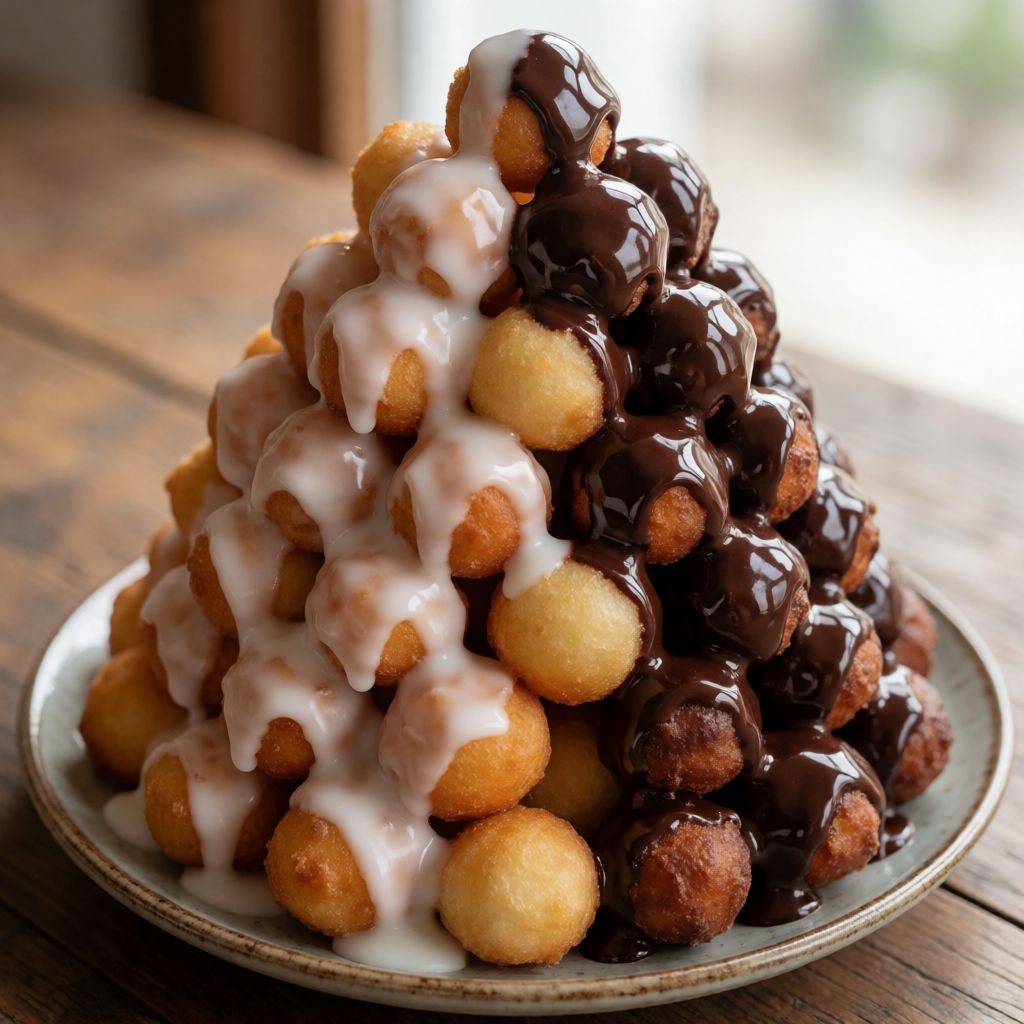
Sicilian Pignoccata
A Sicilian treat of fried dough balls coated in warm honey.
Labels are worked out automatically from the ingredients and can be wrong. Check the packaging if it matters to you.
Ingredients
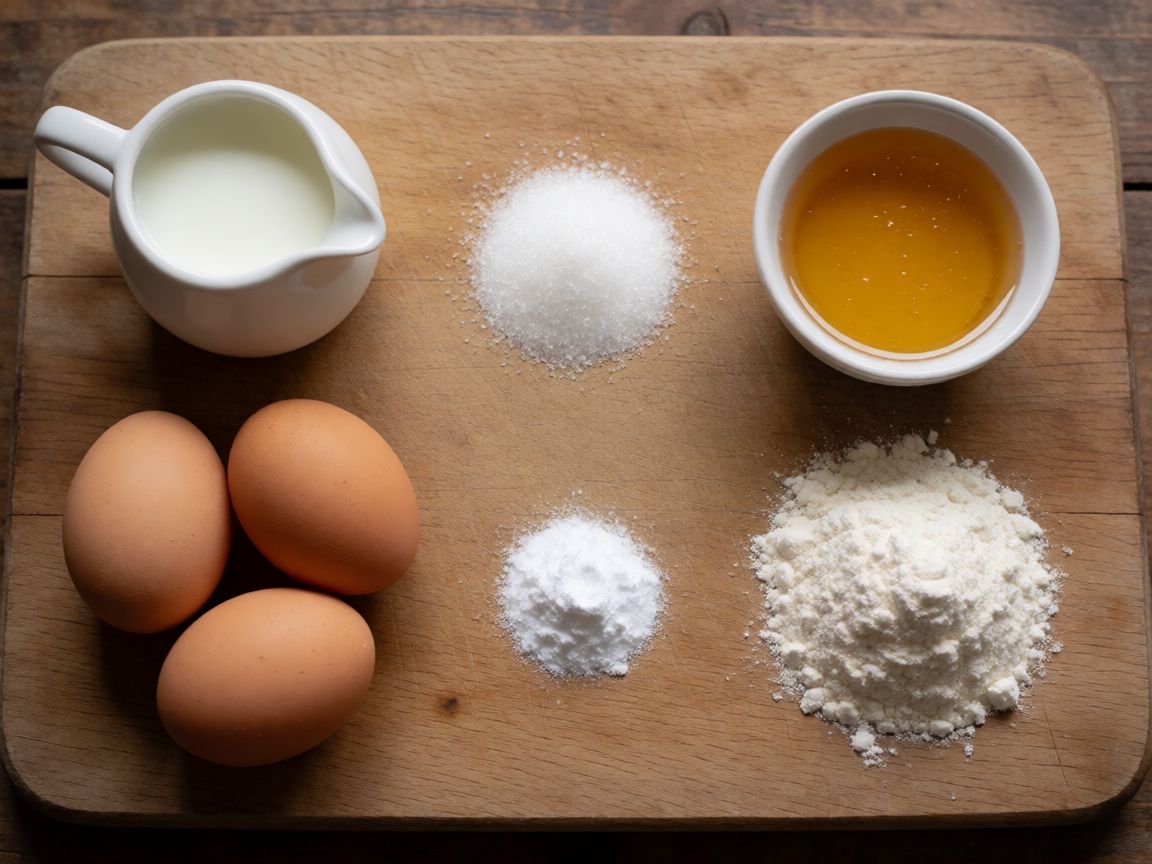
- 3 pcs Eggs
- 250 ml Milk
- 3 tbsp Sugar
- 1 tbsp Vegetable oil
- 0.5 package Baking powder sachet
- Plain flour as needed
- Vegetable oil as needed, for frying
- Honey to taste



Steps
Beat the eggs with the sugar using a mixer until smooth.
Add the milk, baking powder and oil and mix well.
Gradually add the flour, mixing until the batter becomes fairly thick.
Heat the vegetable oil in a saucepan.
Scoop up small amounts of batter with a teaspoon and carefully lower them into the hot oil.
Fry the dough balls until golden.
Place the fried balls on paper towel to remove excess oil.
In a pan, melt the honey, add the fried dough balls and gently toss to coat.
Serve on a small plate.
Pignoccata is basically profiterole dough's cheaper cousin fried into pebbles and glued together with honey. No almonds, no candied peel, no icing in three colours like the posher Sicilian carnival version — this is the home kitchen take, the one a nonna makes when she wants something sweet by teatime and doesn't want to turn the oven on for it. The whole dish is a pile of golden little dumplings, sticky and warm, that you pull apart with your fingers rather than cut with a fork.
What decides whether it works isn't the frying — that part's forgiving. It's the batter thickness. Too thin and your teaspoon drops don't hold a shape, they spread into lacy fritters and soak up oil like a sponge. Too thick and the inside stays doughy and raw while the outside's already dark. You're aiming for a batter that falls off the spoon reluctantly — it should cling, hesitate, then drop, roughly the consistency of a thick pancake batter rather than a cake batter. That reluctance is what gives you a round little ball with a crust rather than a flat puddle.
The honey coating at the end isn't decoration — it's what turns loose fried dough into one dish instead of a bowl of doughnut holes. Melted honey is sticky enough to bind without soaking in and turning everything gluey, which is why you want it barely melted, not boiled. Boil honey and it starts to crystallise and seize as it cools, and you'll be chiselling dessert off the pan rather than serving it.
Eggs here are doing structure, not richness — three eggs against 250ml milk gives you enough protein to set a crust around each ball when it hits hot oil, the same principle as a choux puff holding its shape. Beat them with the sugar until the mixture pales and thickens slightly; that's air going in, and air is what keeps the fried balls from turning dense. Some say you need a stand mixer for this — no, a hand whisk and a bit of elbow patience gets you there, it just takes longer and your arm will know about it.
Baking powder, half a sachet, is your only leavening — there's no yeast, no proving, nothing slow about this dough. It reacts with heat, so the puff you're after happens in the oil, not before. Don't add it and let the batter sit around for an hour expecting it to rise on the counter; it won't, and you'll have wasted the lift when it actually matters.
Flour goes in "as needed" because milk absorbs differently batch to batch, and that vagueness is honest, not lazy — you're building to a texture, not a number. Plain flour, nothing fancier; self-raising would double up with your baking powder and you'd get an uneven, cratered surface instead of a smooth bead. Add it in small handfuls, mixing as you go, and stop the moment a spoonful holds its shape for a second before slumping.
The oil for frying should have no flavour of its own — sunflower, vegetable, rapeseed, whatever's cheapest and neutral in your cupboard. Olive oil's smoke point and flavour both work against you here; you'd taste it through the honey, and it costs too much to use a litre of it for deep frying anyway. In your flat, without a proper deep-fat fryer, use your widest, deepest saucepan and fill it no more than a third full — oil expands and bubbles when dough hits it, and a shallow pool of oil near a full pan rim is how kitchens catch fire. Test readiness with one small ball first: it should rise to the surface and start bubbling within a few seconds. If it sinks and sits, your oil's not hot enough yet and the ball will drink oil instead of frying; if it blackens in half a minute, it's too hot and the inside will stay raw.
Honey is honey — any you have, though a plain, not-too-floral one lets the fried dough taste of itself rather than of lavender or heather. If you're out, a thick sugar syrup with a spoon of golden syrup stirred in gets you something close, though you lose the faint bitterness honey brings, which is part of what stops this pudding from being one-note sweet.
Patience shows up twice here, both times briefly but non-negotiably: once in beating the eggs properly rather than rushing to a half-risen batter, and once in letting the fried balls drain on paper towel before they meet the honey. Skip that second pause and the honey coating slides off a greasy surface instead of gripping it, and you end up with a puddle of honey at the bottom of the plate rather than a sticky little pile of pignoccata.