Meat & fish
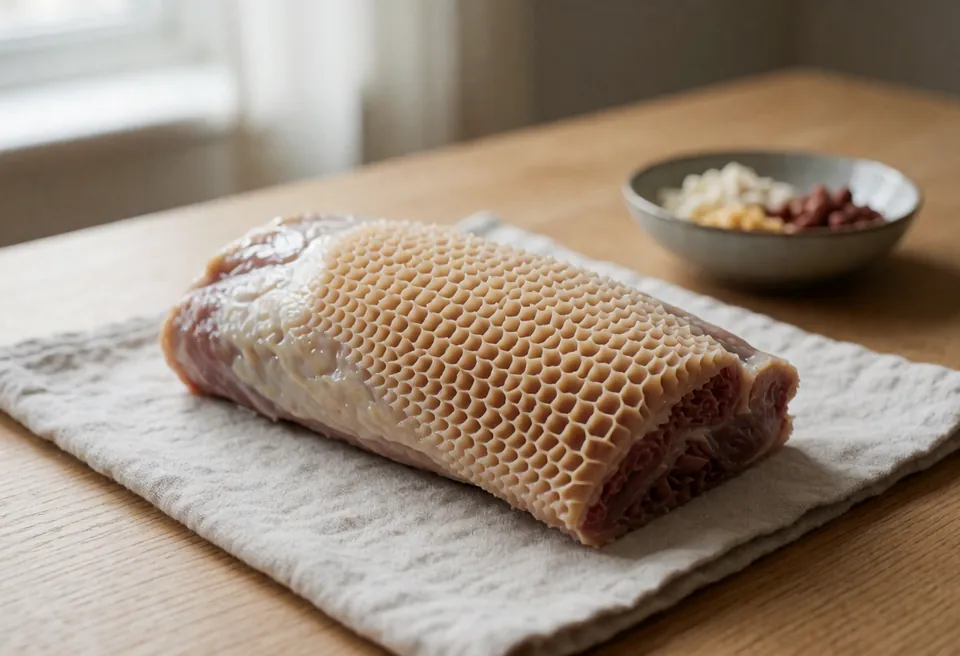
Tripe
The stomach lining of cattle, thoroughly boiled before cooking; used in traditional dishes like tripe soup.
85 kcal per 100 g
Nutrition per 100 g
85 kcal
| Protein | 12.1 g |
|---|---|
| Fat | 3.7 g |
| Carbs | 0 g |
| Fiber | 0 g |
Source: USDA FoodData Central, 2026-09-21. Per 100 g raw (per USDA FDC).
Good to know: Tripe
Let's talk about tripe, the honest part of the cow that scares people off before they even taste it. Cut it, and you feel how tough it is, full of ridges and folds that resist the knife. Cook it fast over high heat and it stays chewy, almost squeaky between your teeth. Cook it low and slow for hours, and it turns soft, giving in to the fork the way good stew meat should. That's what your hands and your spoon tell you, every time.
Choose it by smell first. Good raw tripe smells clean, never sour or sharp. The color varies with how it's been prepared, from pale cream to gray, so don't judge by shade alone. Press it with your fingers — it should feel fresh and cool, springy to the touch, never sticky or slack.
Some cooks say tripe has no taste worth bothering with, that it only fills the pot. No. Simmer it long enough with onion, bay, a little vinegar, and it carries flavor the way bread carries butter.
That misconception leads to a common mistake: people rush it, pull it off the heat early, and serve something tough and rubbery. Give tripe the hours it asks for. It rewards patience, not shortcuts.