
 AI photo
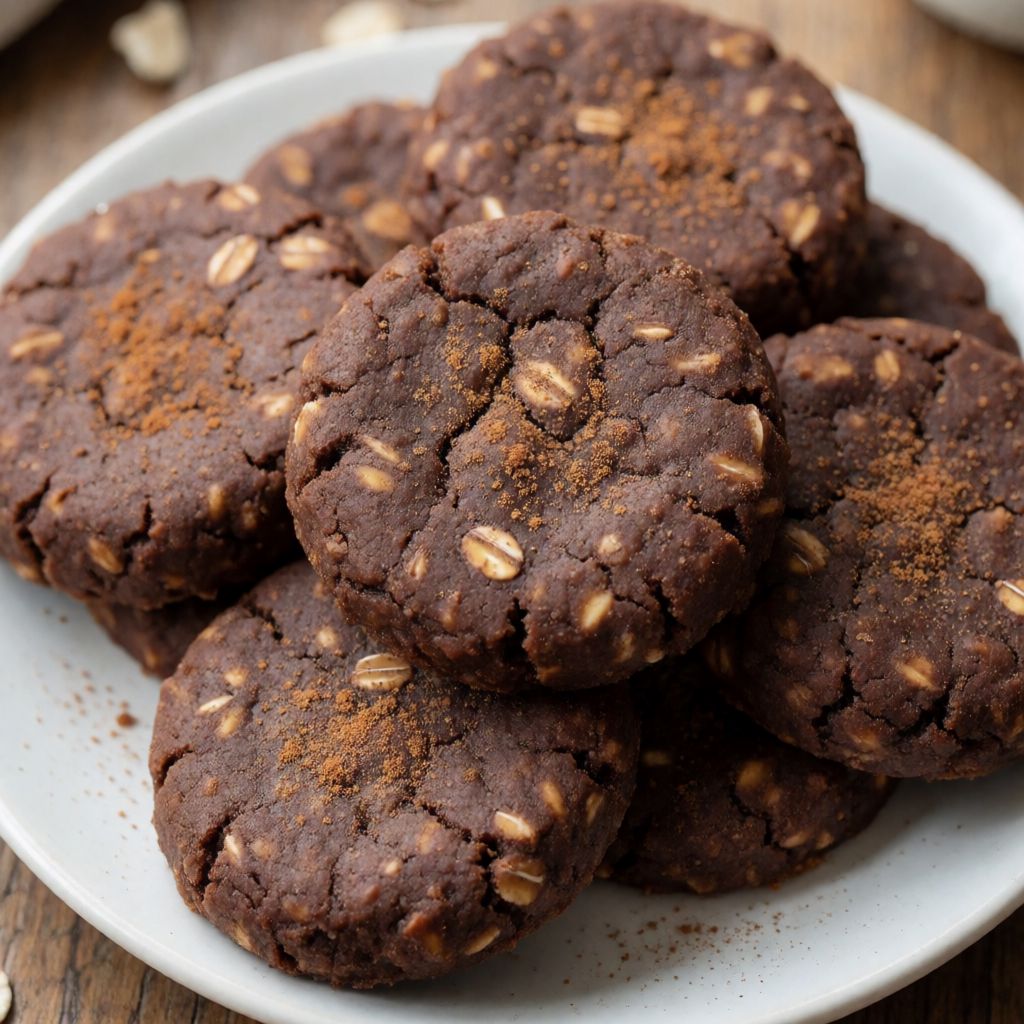
Black Bean and Chocolate Cookies
Fudgy cookies made with black beans, oats and dark chocolate - a sneaky way to pack in extra fibre.
Labels are worked out automatically from the ingredients and can be wrong. Check the packaging if it matters to you.
Ingredients
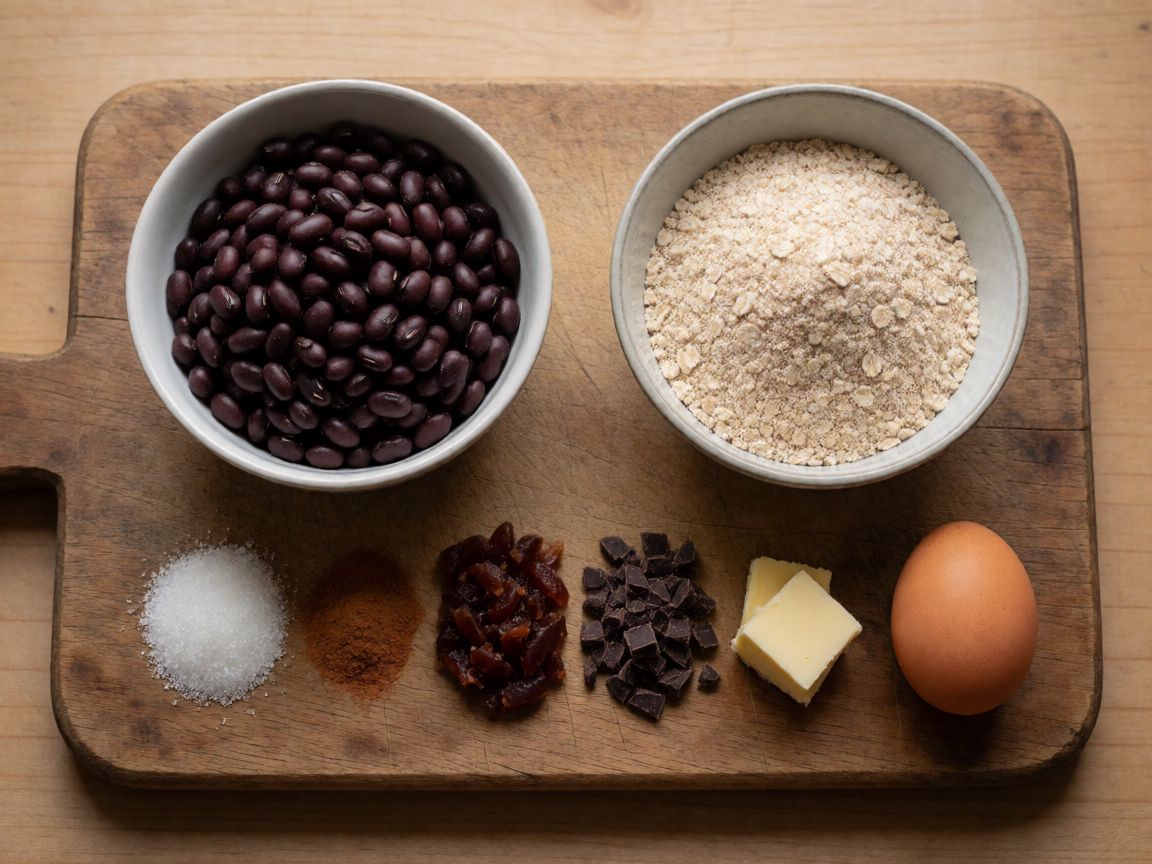
- 1 can Black beans drained and rinsed
- 60 g Rolled oats coarsely ground
- 100 g Caster sugar
- 1 tsp Cinnamon ground
- 0.5 tsp Salt flaked
- 50 g Dates chopped
- 50 g Dark chocolate chopped
- 50 g Butter room temperature
- 1 pcs Egg








Steps
Put the beans in a food processor and blitz until smooth.
In a bowl, mix the beans well with the oats, sugar, cinnamon, salt, dates and chocolate.
Mash the butter and add it to the mixture, mix well, then finally bring the dough together with the egg.
Shape the dough into balls and place on a baking tray lined with baking paper. Flatten the balls slightly with your palm so they spread a little.
Bake in a preheated fan oven at 175°C for about 13-15 minutes.
14 minLet cool slightly on the tray before transferring to a wire rack.
5 min
These are not health-food cookies pretending to be innocent — they're a flourless cookie where a tin of black beans does the job that flour, and half the butter, would normally do. Blitzed smooth, beans bring starch and moisture; they bind the oats, sugar and chocolate into a dough the way flour-and-fat usually would, but with a fraction of the fat and none of the gluten. What you get is dense, fudgy, closer to a brownie that forgot to spread than a crisp biscuit.
What decides whether it works is almost entirely the bean puree. Blitz it properly — not "mostly smooth", actually smooth, no flecks of skin, no bean-shaped lumps hiding under the oats. A single intact bean in a bite is the one thing that gives the game away; smooth puree reads as fudge, lumpy puree reads as "oh, it's beans." This is the whole trick of the recipe and the whole risk of it.
Some say you can't bake with tinned beans because they taste of tin and earth — no, because by the time you've added cinnamon, dates, dark chocolate and a proper pinch of salt, what you're tasting is spice and cocoa, not legume. The beans are structure, not flavour. You rinse them precisely to strip the brine taste that would otherwise fight the sugar.
Don't expect a cookie that snaps. There's no gluten network here to give crispness, so the texture stays soft-set, a bit like a bean-brownie bar shaped into a round. That's not a failure of the recipe — it's what flourless always gives you.
The oats are ballast and bite, not binding — they're there coarsely ground rather than whole because whole oats stay chewy-raw inside a dough this moist and short a bake, while flour-fine oats would vanish and leave you with mush. Coarse is the compromise: enough texture to register as "cookie," not so much that it stays stodgy. If you only have whole porridge oats, five seconds in a processor gets you there — no need to buy a separate bag of "ground oats," that's marketing, not a different ingredient.
The butter is doing far less work than in a normal cookie, and that's the point. In a flour-based dough, fat coats the gluten and stops the cookie turning tough; here there's no gluten to coat, so 50g is just there for richness and a bit of shortness underfoot, not structure. Room temperature matters because cold butter won't mash into a bean puree — you'll get streaks of fat instead of an even dough, and streaks of fat mean patches that fry rather than bake in the oven, going greasy at the edges.
The egg is the actual binder here, more than the butter. It's what sets on baking and holds the bean-oat-sugar mixture together once the moisture drives off; without it the dough would hold its shape cold but collapse to crumbs the moment it's warm. Added last and after the dough's already mostly together — that's deliberate, so you're not over-mixing egg into a wet mass and knocking structure out of it before it's even seen heat.
Dates and dark chocolate are both doing a sugar job as well as a flavour job. Dates bring a concentrated, almost toffee sweetness and a bit of chew that plain caster sugar can't; chocolate, chopped rather than melted, means pockets of actual melted chocolate inside the baked cookie instead of a uniform cocoa flavour throughout. Use a dark chocolate with no smell of its own beyond cocoa — nothing waxy, nothing that smells of vegetable fat — a 70% block, or chocolate chips if that's what's in the cupboard; it only needs to survive a short bake, not temper into anything fancy.
Flaked salt, not table salt, because flaked salt dissolves unevenly and leaves tiny moments of saltiness against the sweetness — in a dough this sweet and this dense, that contrast is doing real work, stopping the whole thing reading as one-note sugary. If you've only got table salt, use half the amount; it's finer and goes further.
On a domestic hob there's no decision to make about heat, because the method is entirely oven and mixing bowl — no browning, no frying, nothing where the wrong flame ruins it. The only place patience actually matters is step one: don't rush the blitzing, and don't rush flattening the balls by hand so they're even enough to bake at the same rate. A fan oven at 175°C for 13–15 minutes is a lower bound, not a target — you're watching for a cookie that's set at the edges but still looks slightly underdone in the centre, because it carries on cooking as it cools on the tray. Pull it when it looks right and it'll be dry by the time it's cold; pull it only when it looks fully done and you'll have lost the fudge for a biscuit.
·