
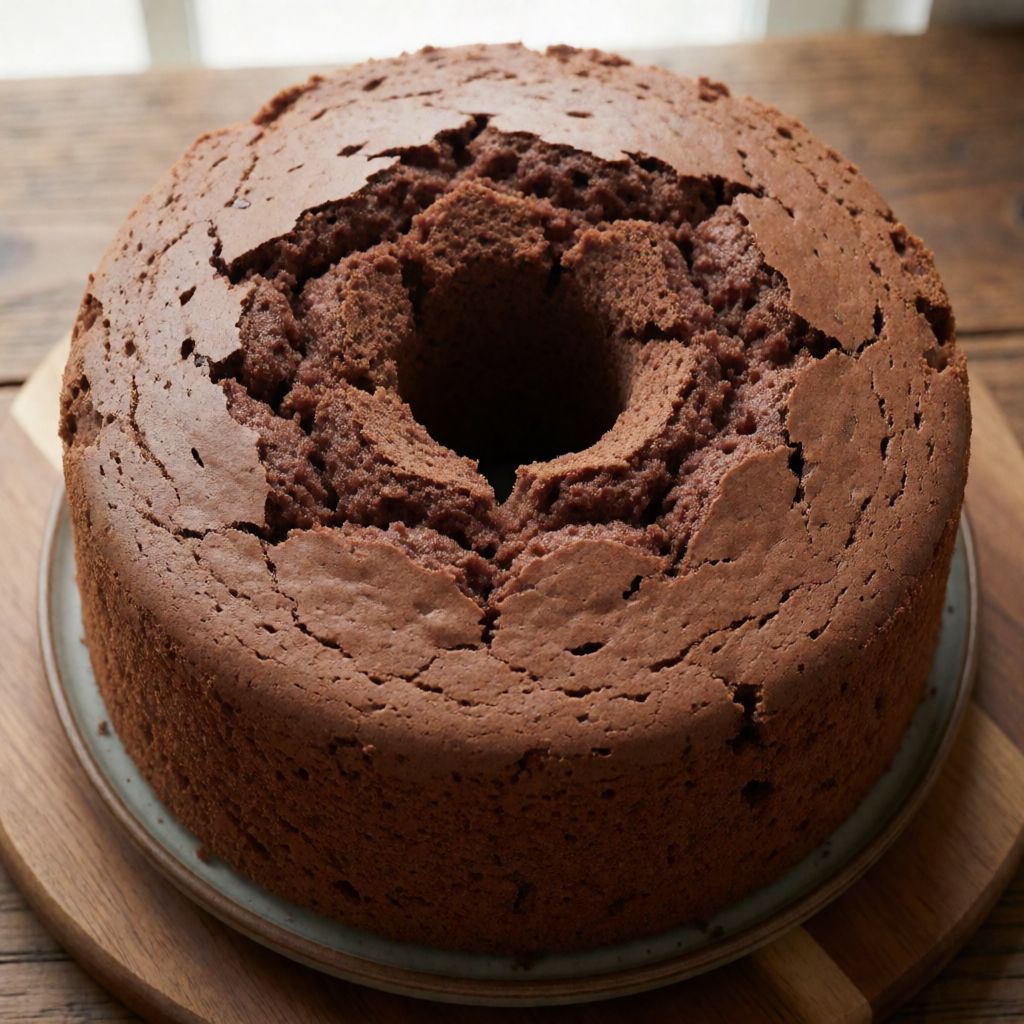
 AI photo
Chocolate Chiffon Cake
A light, airy chocolate chiffon cake made by folding whipped egg whites into a cocoa batter.
Labels are worked out automatically from the ingredients and can be wrong. Check the packaging if it matters to you.
Ingredients
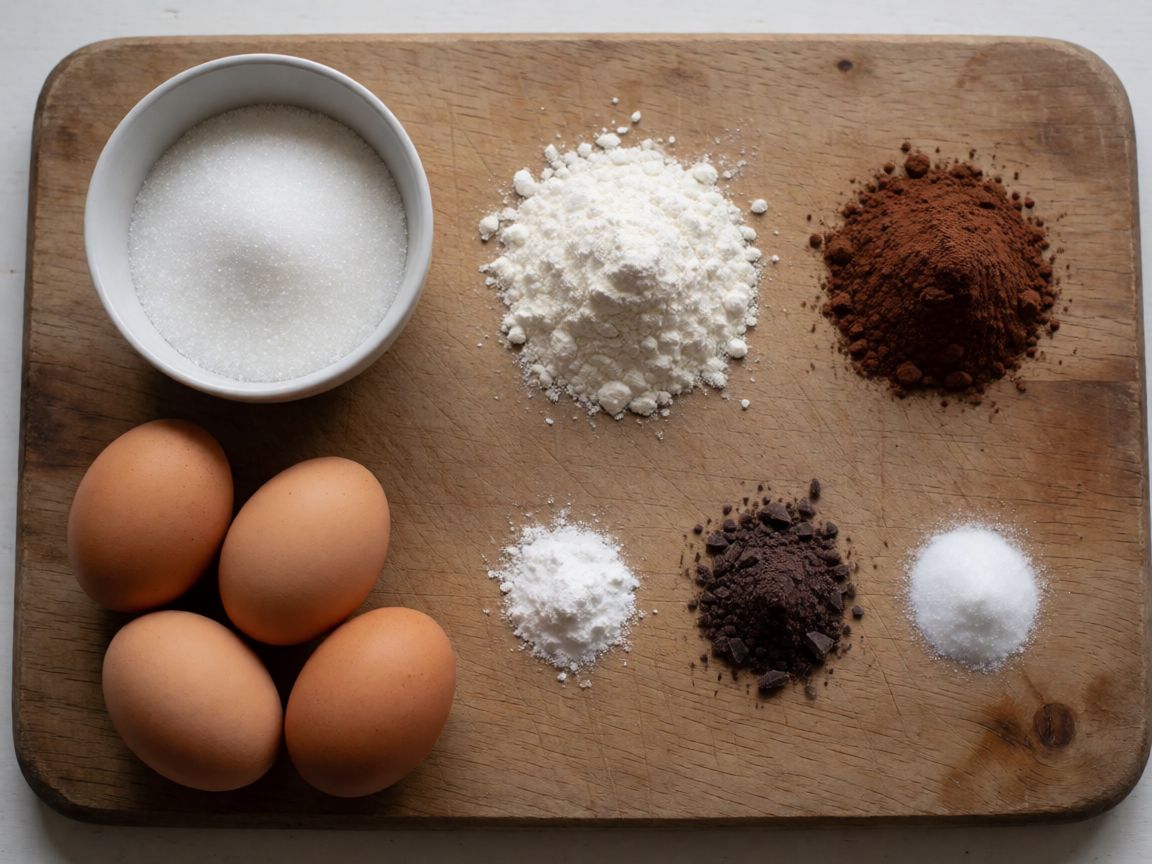
- 4 pcs Eggs
- 220 g Caster sugar
- 190 g Plain flour
- 30 g Cocoa powder
- 150 ml Water
- 65 g Dark chocolate
- 85 ml Sunflower oil
- 8 g Baking powder
- 0.5 tsp Bicarbonate of soda
- 1 pinch Salt









Steps
Preheat the oven to 160°C and melt the dark chocolate over a water bath.
Separate the yolks from the whites, pouring the whites straight into the mixer bowl.
In a separate bowl, mix all the dry ingredients: flour, cocoa powder, baking powder and bicarbonate of soda, sifted, with half the sugar.
In another bowl, mix the yolks with the sunflower oil and water.
Combine the egg mixture with the dry ingredients, whisking by hand until smooth with no lumps.
Add the melted chocolate and mix vigorously until smooth and even.
Turn the mixer to low speed and whisk the egg whites with a pinch of salt; add the remaining sugar and whisk until stiff and fluffy.
Gradually fold the whites into the batter: first add a third of the whites and gently fold with a spatula, then once combined add the remaining two-thirds.
Pour the batter into an 18 cm chiffon cake tin, ungreased and unfloured, and smooth the surface.
Bake at 160°C for 40-45 minutes; check for doneness with a wooden skewer.
45 minRemove the cake from the oven and leave to cool upside down, resting on the tin's feet.
Carefully remove the cake from the tin, using a knife blade to help if needed.
A chiffon cake is what happens when you ask a sponge to be light and a sponge to be moist at the same time, and refuse to pick one. Most cakes solve that problem with butter — butter gives flavour and tenderness, but butter sets solid when it cools, and that's what makes a Victoria sponge dry out in a day. Chiffon swaps the butter for oil. Oil never sets. It stays liquid at room temperature, so the crumb stays soft for days instead of hours. That's the whole trick, and it's an American one from the 1920s — a recipe invented by a man selling insurance who'd found a way to make a cake moist without butter, and sold the formula to Betty Crocker decades later. No mystery, just chemistry he'd worked out alone.
What actually decides whether this cake stands up tall and even, rather than collapsing into something dense, is the egg whites — specifically how gently you fold them in, and whether you grease the tin. Both of those exist for the same reason: trapped air. Whisked whites are a scaffold of tiny air bubbles held up by egg protein. Beat the batter together roughly and you knock the air back out, and the bicarbonate and baking powder alone can't lift that much batter — you get a cake with the structure of a flat, dense brownie wearing a chiffon cake's clothes. Fold gently, a third in first to loosen the thick chocolate batter, then the rest, and you keep the air.
Eggs here are doing structural work, not just binding. Four eggs, separated, means you get two different kinds of lift: the yolks go into the batter with the oil for richness and a bit of emulsifying power, the whites get whisked separately into a foam that's the real engine of the rise. Use eggs at room temperature if you can — cold whites whisk up more slowly and hold less air, which matters more here than in a cake that leans on baking powder alone.
The oil wants to be something with no flavour of its own — sunflower is fine, so is a bland vegetable or rapeseed oil. Olive oil is the wrong choice; it has its own strong taste and that fights the chocolate rather than disappearing behind it. The point of using oil instead of butter isn't just moisture, as above — it's also that oil pours and mixes straight into a batter cold, no melting, no creaming, no risk of curdling the mixture the way cold butter against wet ingredients can.
Cocoa powder and melted dark chocolate are doing two separate jobs, not the same job twice. Cocoa powder, mixed into the dry ingredients, gives colour and a dry, slightly bitter chocolate note running through the crumb. The melted chocolate, stirred in after, brings fat and a rounder, deeper flavour — chocolate bar chocolate tastes different from drinking-chocolate powder because it's carrying cocoa butter. Use a dark chocolate around 60-70% cocoa solids; much higher and the bitterness fights the sugar, much lower and you're basically adding sweetened fat with no real chocolate character.
Baking powder and bicarbonate of soda are both leaveners, but they're not interchangeable here, they're doing different timed jobs. Baking powder reacts twice — a little when it meets liquid, more when it meets heat — so it gives you steady lift through the whole bake. Bicarbonate needs an acid to react with, and cocoa powder is mildly acidic, so the bicarbonate is there specifically to react against the cocoa and also to soften its bitterness a touch. Leave it out and the cake will taste a shade sharper and rise a little less evenly.
The water in with the yolks and oil isn't padding — it thins the batter enough that folding in the delicate egg whites doesn't demand brute force. A stiffer batter needs more mixing to loosen it, and more mixing is exactly what you're trying to avoid once those whites are in. Sifting the dry ingredients earns its place for the same reason: cocoa powder clumps stubbornly, and an unsifted lump of cocoa sitting in the baked cake is a small bitter surprise nobody asked for.
On the skewer test — don't trust the clock alone, as the recipe itself only offers 40-45 minutes as a starting point, not a verdict. A skewer in the centre should come out clean, or with a few moist crumbs clinging, not wet batter. Chocolate cakes are notoriously easy to misjudge this way because the dark crumb can look underdone even when it's finished, so lean on the skewer, not your eyes, and treat the time as the point where you start checking, not the point where you stop.