
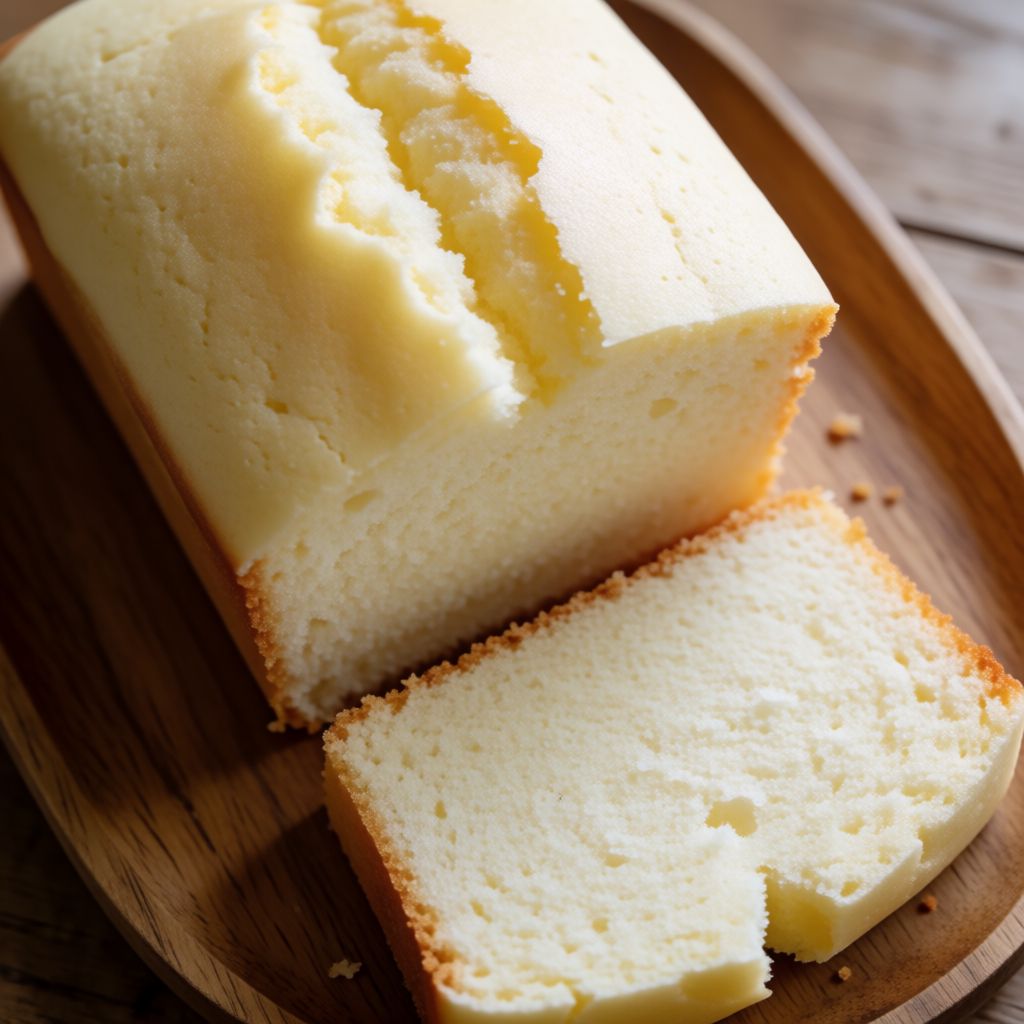
 AI photo
Egg White Ciambella Cake
A light Italian-style ring cake made entirely with egg whites.
Labels are worked out automatically from the ingredients and can be wrong. Check the packaging if it matters to you.
Ingredients
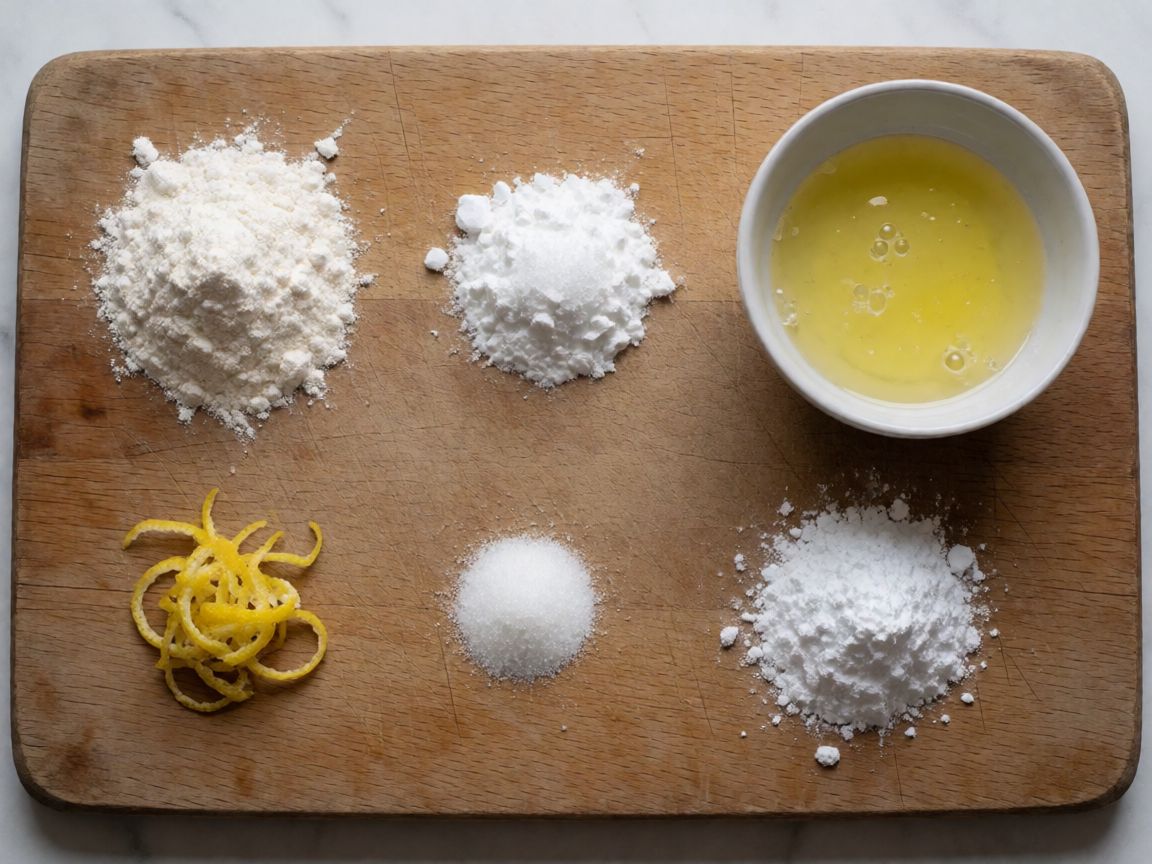
- 100 g Plain flour
- 50 g Potato starch
- 200 g Caster sugar
- 125 g Vegetable oil
- 250 g Egg whites
- 1 pcs Lemon zest
- 16 g Baking powder
- Icing sugar to taste





Steps
Whisk the egg whites to stiff peaks using a hand mixer or stand mixer.
In another bowl, combine the sugar, vegetable oil, flour, potato starch, baking powder and lemon zest, sifting the dry ingredients together.
Fold both mixtures together gently, using bottom-to-top movements.
Prepare a ring cake tin: leave a silicone tin ungreased, or grease and flour an aluminium tin, or line it with dampened baking paper.
Pour the batter into the tin and bake at 180°C for about 30 minutes.
30 minCheck it is done with a wooden skewer; if it comes out wet, leave in the oven for a few more minutes.
Once fully cooled, serve dusted with icing sugar.
A ciambella is the Italian answer to a question every household bakes around: what do you do with a cake when there's no butter and no whole eggs in the plan? This one runs on oil and egg whites alone — no yolks, no fat you have to cream, no butter to soften on a windowsill that's never warm enough anyway. The result is a crumb that's lighter than a Victoria sponge and drier in the good sense — it doesn't coat your tongue, it just dissolves. That's the whole point of the dish: a cake you can eat a proper slice of with your tea and not feel you've committed to anything.
What decides whether it works is not the oven, it's the whisking. Egg whites to stiff peaks is not a box to tick — it's the only rising agent doing real structural work here, because the baking powder alone can't hold a cake this lean. You whisk until the whites stand up on their own, matte rather than glossy, and hold a peak that doesn't slump when you lift the beater. Go past that point — whites starting to look grainy, separating slightly — and you've broken the protein structure; no amount of folding brings that back, and the cake sits flat and dense no matter how much baking powder you threw at it.
Flour and potato starch together, not flour alone — the starch is there to dilute the gluten. Less gluten means a more tender, finer crumb instead of something chewy and bready. If you don't have potato starch, cornflour does the same diluting job; just don't swap in more flour to make up the weight, that defeats the purpose.
The oil instead of butter isn't a health substitution dressed up as tradition — it's simpler mechanics. Butter has to be softened or melted and behaves differently depending on its temperature; oil is liquid at room temperature always, so it blends into the sugar and dry ingredients in one smooth batter with none of the lumping or separating that cold butter causes in an unheated British kitchen in winter. Use any oil with no smell of its own — sunflower, a light rapeseed, a mild vegetable oil — because a strong olive oil will fight the lemon zest instead of carrying it.
Caster sugar, not granulated, matters more here than in a butter cake: it dissolves into the oil-and-flour mixture rather than sitting as grit, since there's no creaming stage to work it in mechanically. Lemon zest only — never the juice — because juice adds acid and liquid that unbalance a batter already carrying no yolks to buffer it; zest gives scent without touching the chemistry.
On baking powder: 16 g sounds like a lot against 100 g flour, and some say — no, because the egg whites are already lifting the cake, so this is just belt-and-braces. Partly true. But the whipped whites lift what's already in the tin; the baking powder keeps lifting as the structure sets in the oven's heat, when the whites' trapped air is starting to expand and could easily escape before the crumb firms up. Skip it and you get a cake that rises in the oven and deflates on the counter.
On the tin: a ring shape isn't decoration, it's function — the hole means no part of the batter is ever more than a couple of centimetres from a hot surface, so a cake this light cooks through evenly without a dense, wet centre. In a British kitchen without a proper ciambella tin, a bundt tin does the same job; if all you have is a round tin, stand an oven-proof glass or ramekin in the middle, which fakes the same geometry. Greasing and flouring (or the damp paper trick) isn't fussiness — it stops the cake tearing itself apart against the tin's sides when it shrinks slightly on cooling, since this crumb has nothing fatty enough to release cleanly on its own.
180°C means a domestic oven running at a true, settled 180 — if yours runs hot or has no fan, that's the one variable you adjust by watching, not by the clock. Thirty minutes is where to start checking, not where to stop: push a skewer into the thickest part of the ring, and if it comes out with wet batter clinging, it goes back in. A skewer with a few moist crumbs, not wet batter, is done — crumbs mean it's set; wet batter means the structure hasn't finished cooking.
And the patience is in the cooling, not the baking. Cut it warm and the crumb, barely held together by whipped egg white, will crush under the knife and taste gummy in the centre even if it's fully baked — it needs to sit and firm up as it cools, same as a soufflé needs to be left alone. Icing sugar goes on only once it's properly cold, otherwise it melts into the surface instead of sitting as a dusting. Eight slices, built for a pot of tea with milk rather than a pudding course after the Sunday roast — it's not a cake that needs an occasion.