
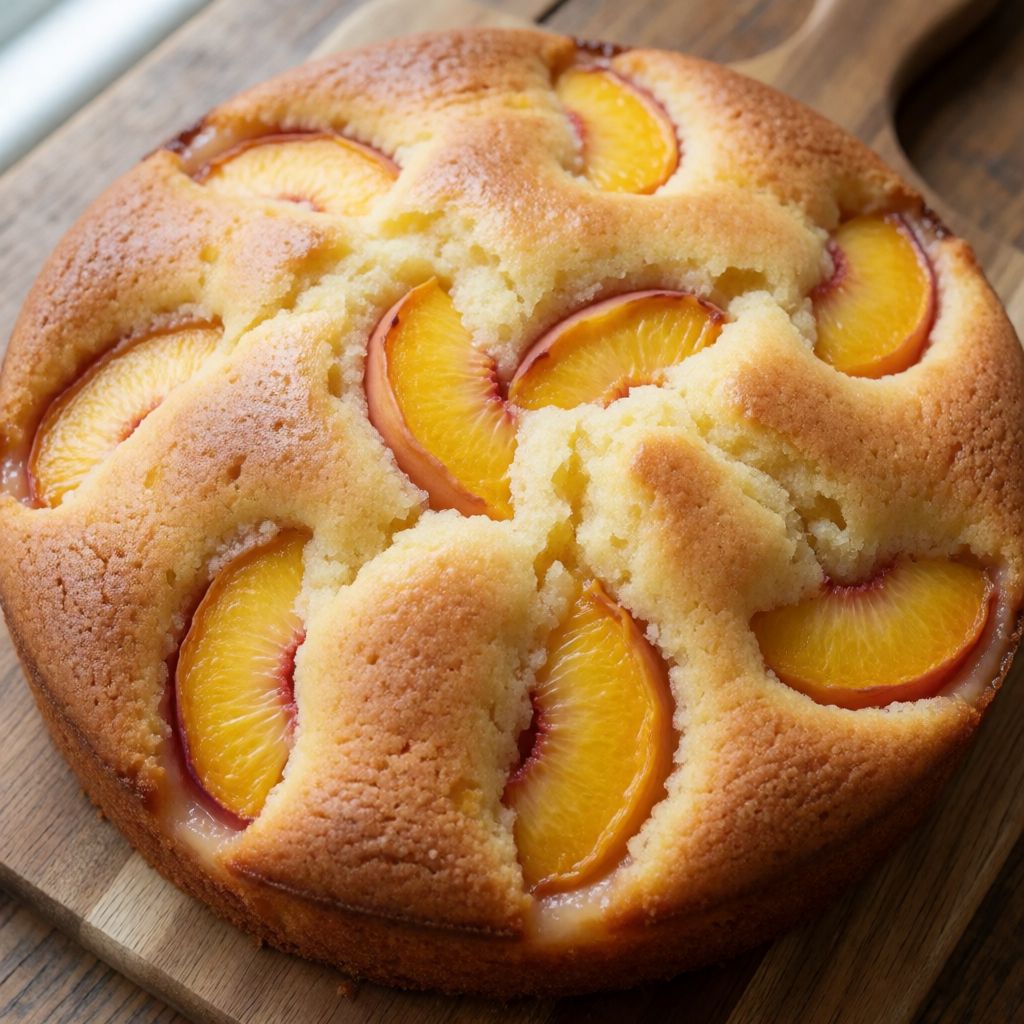
 AI photo
Peach Cake
A soft sponge cake made with pureed peaches and topped with fresh peach slices.
Labels are worked out automatically from the ingredients and can be wrong. Check the packaging if it matters to you.
Ingredients
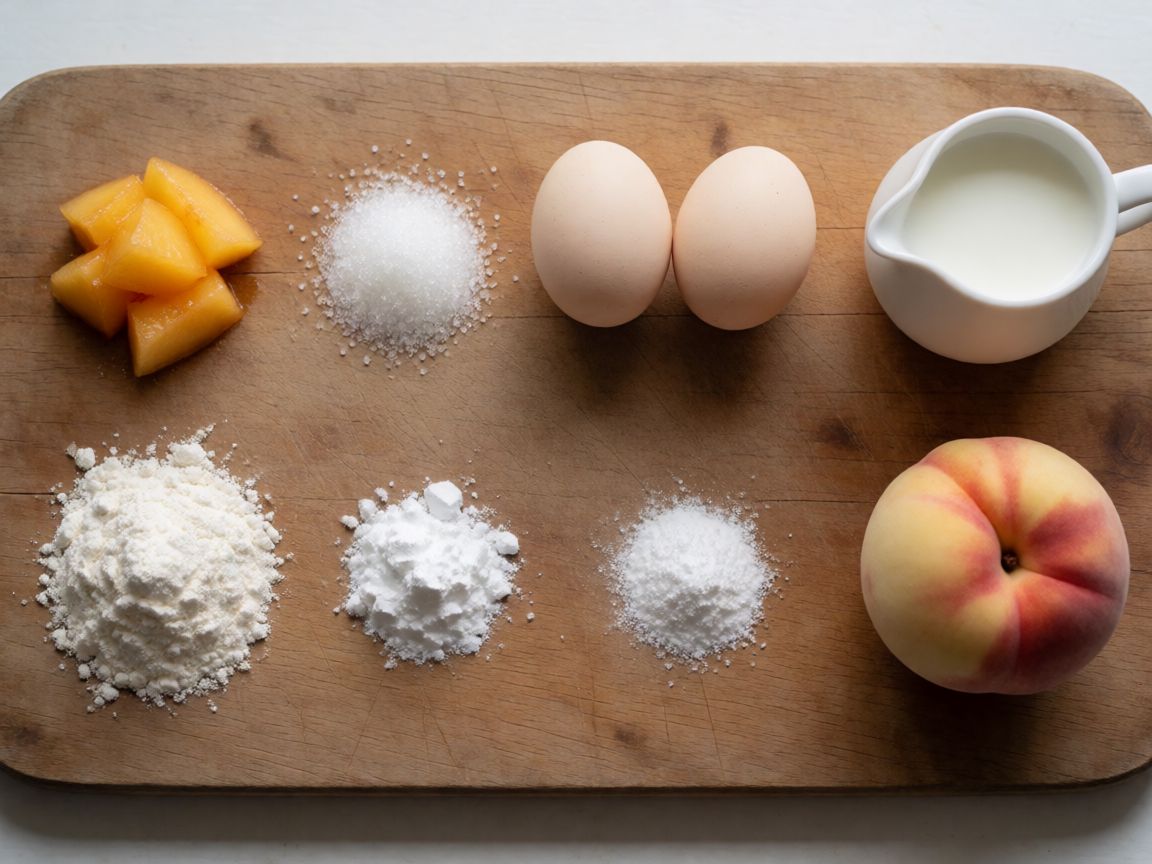
- 280 g Peach
- 160 g Caster sugar
- 2 pcs Eggs
- 90 ml Milk
- 80 ml Olive oil
- 250 g Plain flour
- 50 g Potato starch
- 16 g Baking powder
- 1 pcs Peach for decoration








Steps
Wash and peel the peaches, cut into small pieces and blend until smooth.
In a large bowl, combine the eggs with the sugar and beat with a mixer until pale and creamy.
Continuing to beat, pour in the milk, oil and peach purée.
Sift in the flour, potato starch and baking powder. Mix until smooth.
Pour the batter into a 22 cm tin, greased with butter and dusted with flour.
Slice the peach thinly and arrange it over the surface of the batter.
Bake in a preheated fan oven at 175°C for about 50-55 minutes.
55 minLet the cake cool, then transfer to a serving plate.
This is a peach cake that gets its body from fruit purée instead of butter — the olive oil carries the fat, the blended peach carries the moisture, and together they make a crumb that's dense in a good way, closer to a pound cake than a sponge. What decides whether it works is the purée: too watery and the middle stays gluey under a set top; thick and pulpy, like a soft compote, and the crumb holds together while staying moist for days.
Some say a cake rises because of the eggs being beaten stiff — no, not here. This batter isn't whipped to foam, just beaten until the eggs and sugar go pale and thick, which dissolves the sugar properly and traps a bit of air, nothing more. The actual lift comes from the baking powder, and there's a generous amount of it for the flour here — because potato starch, which replaces a chunk of the flour, has no gluten and no leavening power of its own. It's there to keep the crumb tender rather than bready, cutting the structure down so the cake doesn't turn chewy.
The sliced peach on top isn't decoration in the idle sense — it bakes down into the surface, releasing a little juice as it goes soft, so you get a damp, slightly caramelised top instead of a dry crust. That's the whole point of arranging it just before the tin goes in the oven: do it too early and the batter underneath turns soupy before it even reaches the heat.
Peaches: fresh, ripe ones for the purée — ripe meaning they give slightly under your thumb near the stalk, not rock-hard from the supermarket shelf. A hard peach blends into a thin, grassy liquid with none of the natural sugar and pectin that help the purée set the crumb. If fresh ones are out of season or taste of nothing, tinned peaches in juice (drained well) will do — just expect a wetter batter, so hold back a splash of the milk to compensate. For the top layer, you want a peach that holds its shape when sliced thin — too soft and it collapses into mush rather than keeping a visible ring on the surface.
Caster sugar specifically, not granulated, because the eggs need to dissolve it as you beat, and caster's finer grain does that fast without leaving a gritty bite in the finished cake. If all you've got is regular sugar, give it an extra minute with the mixer.
Olive oil here is doing a job butter would do in another cake, but liquid fat behaves differently — it won't trap air the way creamed butter does, which is exactly why the rise depends entirely on the baking powder rather than on technique. Use an oil with a flavour you don't mind in a sweet cake — mild olive oil, or a flavourless vegetable oil if you'd rather the peach stand alone. Don't reach for anything that tastes strongly of itself; it will fight the fruit.
Potato starch is the less obvious ingredient and worth not skipping or swapping carelessly for more flour — it has no gluten, so it dilutes the flour's structure and keeps the cake from turning rubbery as it cools, which matters because this cake, dense already from the purée, could easily go heavy without it. Cornflour is the nearest stand-in if potato starch isn't on your shelf; same no-gluten logic.
Baking powder: 16 g against 250 g flour is a proper dose, not timid, and that's deliberate — it's fighting against a wet, heavy batter to get any lift at all. Check the tin of the date on yours; old baking powder loses its punch quietly, and you won't know until the cake comes out flat and dense in the middle, with no obvious sign of what went wrong.
On the oven: fan at 175°C is a steady, moderate heat, hot enough to set the crust before the fruit on top turns the surface soggy, but gentle enough that a tin this size — a proper domestic 22 cm — cooks through in the middle without the edges drying out first. If your oven runs hot or has no fan setting, go up 10 degrees and keep an eye rather than trusting the clock; 50–55 minutes is where to start checking, not where to stop. The real test is a skewer through the centre coming out clean, or the surface springing back when you press it rather than leaving a dent — because the peach slices on top make this cake look done well before the middle has set, and cutting into a cake that only looks ready is the most common way this one goes wrong.
Let it cool properly in the tin before you try to move it. Impatience here just means a cake that tears in the middle as you lift it, because the starch and gluten haven't finished firming up while hot — they need the cooling time to set. That's not a dramatic step, just an ordinary kitchen truth: good things need you to wait.