
 AI photo
Penne with Asparagus Cream
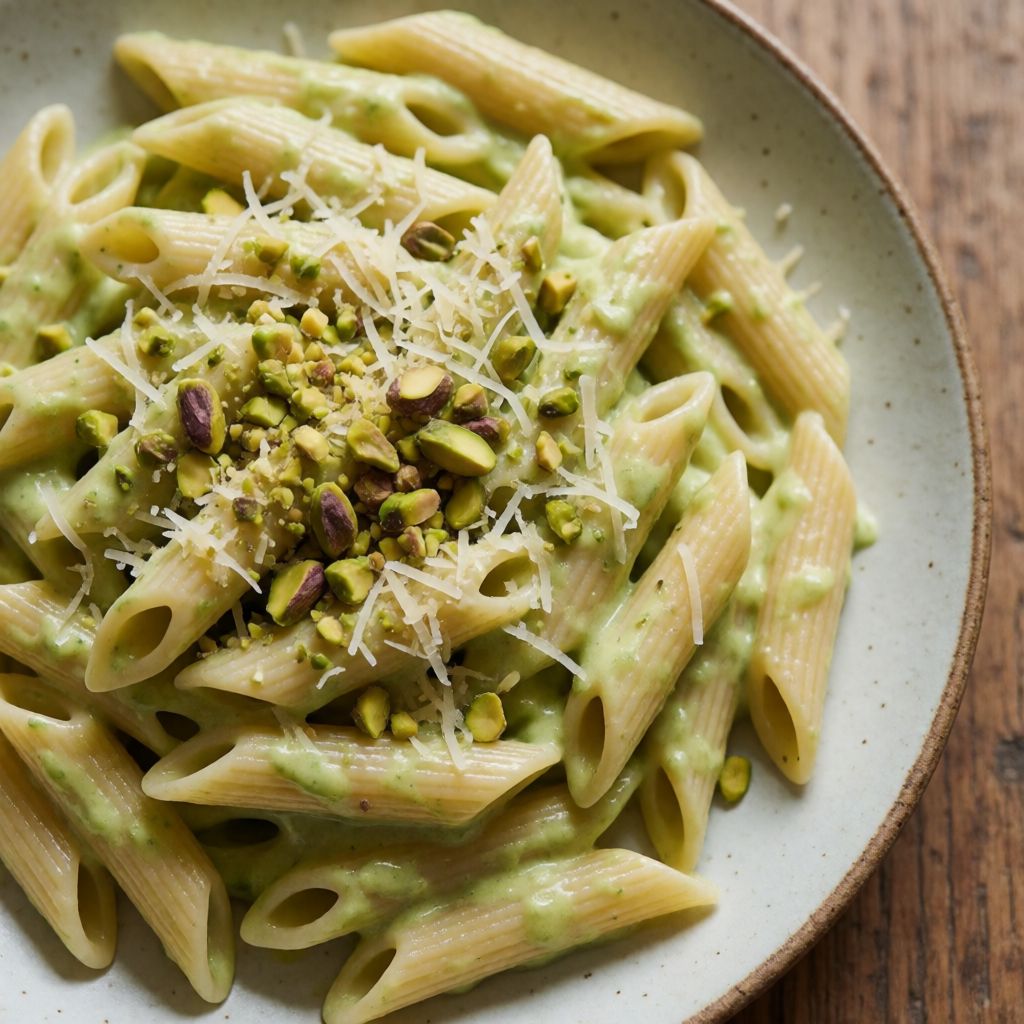
A creamy, fresh asparagus sauce blended with pistachios and hard cheese, tossed with penne pasta.
Labels are worked out automatically from the ingredients and can be wrong. Check the packaging if it matters to you.
Ingredients
- 400 g Penne
- 500 g Asparagus
- Olive oil to taste
- 1 clove Garlic
- 50 g Pistachios
- 50 g Parmesan
- Salt to taste
- Black pepper to taste





Steps
Rinse the asparagus, trim the tough ends and peel away any fibrous skin. Cut into sticks or rounds, setting the tips aside.
Blanch the asparagus for about 2 minutes, then drain.
2 minHeat olive oil in a pan and fry the garlic until golden.
Add the asparagus, keeping most of the tips aside for garnish. Cook over medium heat for about 10 minutes, then season with salt.
10 minBring a large pot of salted water to the boil for the pasta.
Transfer the asparagus with its seasoning to a blender. Add the pistachios and grated Parmesan.
Cook the penne until al dente.
Blend for a few seconds until smooth and creamy.
Pour the sauce back into the same pan.
Drain the penne and toss with the sauce in the pan. Loosen with a little pasta water if needed.
Mix well, add the reserved asparagus tips whole and serve immediately.
What was changed
Parmesan was swapped in, as it is the hard cheese more familiar to UK shoppers.
This isn't a cream sauce in the dairy sense — there's no cream in the ingredient list, and there shouldn't be. The "cream" is the asparagus itself, blitzed with pistachios and Parmesan until it turns silky. That's the whole mechanism of the dish: vegetable, fat, starch, blended smooth enough that your tongue reads it as rich. Get the blending right and you have something that coats penne like a proper sauce. Get it wrong — too little liquid, too few seconds in the blender — and you have asparagus paste sitting miserably on top of pasta.
What decides whether it works is mostly about the asparagus: how it's cooked before it goes anywhere near the blender, and how much liquid ends up in that jug with it. Blanch it too briefly and it stays grassy and fibrous — the blender will chew on it but never make it smooth, because a blade can't do what time and heat are supposed to do first. Overcook it in the pan afterwards and you lose the colour and the faint sweetness that makes this worth doing at all; asparagus goes from green to khaki fast once it's tired.
The other hinge is starch. Pasta water is not an afterthought here, it's practically an ingredient — the sauce as it comes out of the blender is often too thick to move, and thinning it with water that's already carrying starch from the penne means it clings rather than pools at the bottom of the bowl. Salted pasta water doubles as seasoning too, so don't waste it down the sink the moment the penne's drained.
Asparagus: buy it with tight, closed tips — if they're starting to flower open and go papery, the stalk inside is usually woody too, and no amount of blending fixes dry fibre. The bottom third of each spear is genuinely inedible in most UK supermarket bunches — snap it rather than cut it, the stalk breaks naturally where it stops being tender, you'll feel the difference in your hand. Peeling the lower skin on thicker spears isn't fussiness, it's removing the bit that stays stringy no matter how long you cook it — those strings are what end up wrapped round your fork afterwards if you skip this.
Blanching for those couple of minutes does one job: it softens the cell walls enough that the second cook, in the pan with garlic, finishes the asparagus rather than starting it. Some cooks skip blanching and just pan-cook longer — you can, but you'll fight longer against stringiness and you risk the outside going mushy before the inside catches up. Two short cooks beat one long one here.
Garlic first in the oil, and only until golden — past that it turns bitter, and bitterness doesn't blend out, it just spreads through the whole sauce. One clove is plenty; garlic's job here is to perfume the oil the asparagus cooks in, not to announce itself in the final dish. Any oil with no smell of its own does the carrier job — a mild olive oil, not your best peppery bottle, which is wasted once it's cooked down anyway.
Pistachios bring fat and a faint sweetness that plain nuts like almonds don't — if you've only got almonds or even cashews, use them, you'll lose a bit of colour and that particular pistachio note, but the mechanism (fat + bulk, blended smooth) still works. Shell them yourself if you can; pre-shelled ones often taste staler, since the shell is what protects the oil inside from going rancid.
Parmesan is doing double duty — salt and umami, and a bit of body once it melts slightly into the warm sauce. A vegetarian hard cheese works the same way if that matters to you; pre-grated bagged Parmesan tends to be drier and won't melt in as willingly, so grate it yourself if you can.
On a domestic hob, a kazan's constant, even heat isn't something you have — your pan has hot spots, so keep the asparagus moving rather than trusting it to cook evenly on its own. And have your pasta water actually boiling hard before the penne goes in; a timid simmer in a flat's smaller pot cooks the pasta unevenly, soft outside, chalky at the core, and no amount of sauce afterwards disguises that.
Patience here is short but real — those 10 minutes of pan-cooking the asparagus aren't filler, they're where the vegetable actually becomes saucy rather than crunchy. Rush that stage and the blender will show you exactly what you skipped.
·