
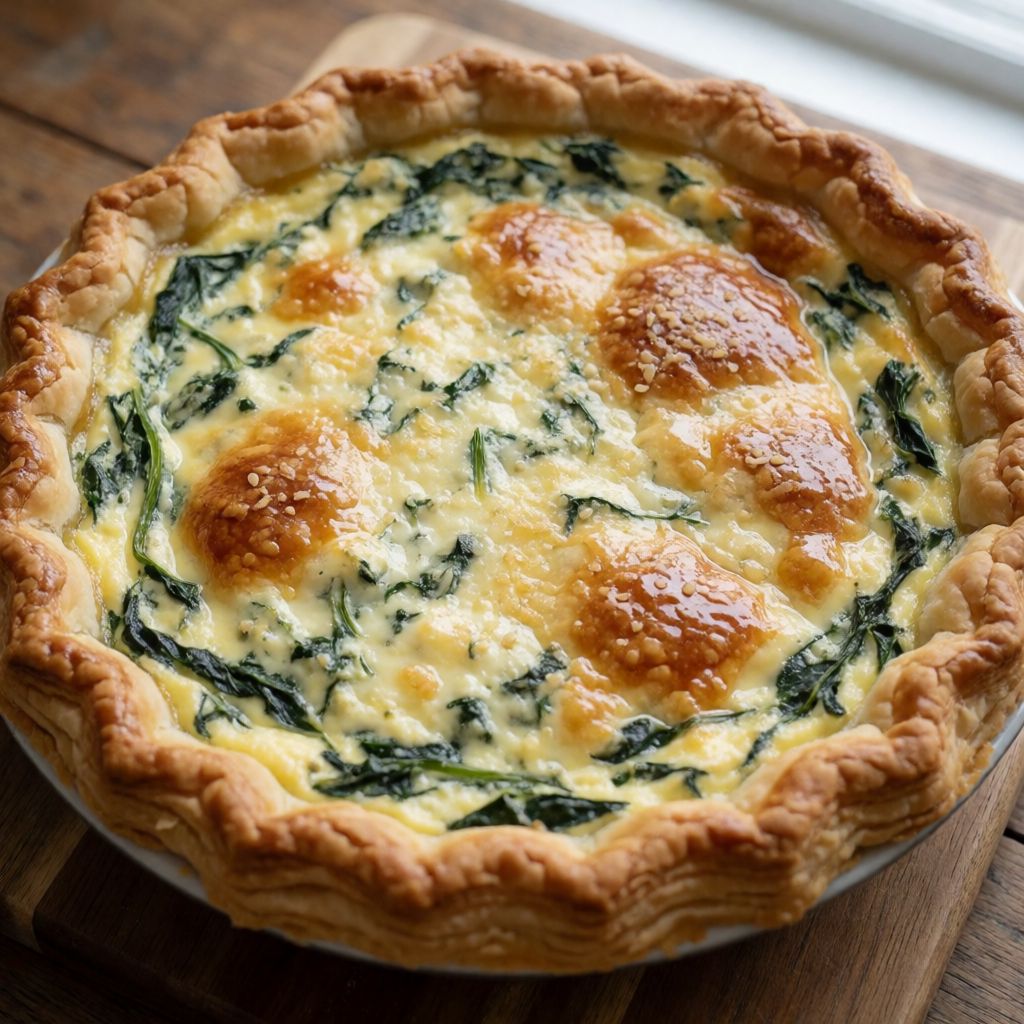
 AI photo
Savoury Ricotta and Spinach Pie in the Air Fryer
A savoury pie with a crisp pastry case, filled with ricotta and spinach, baked in the air fryer.
Labels are worked out automatically from the ingredients and can be wrong. Check the packaging if it matters to you.
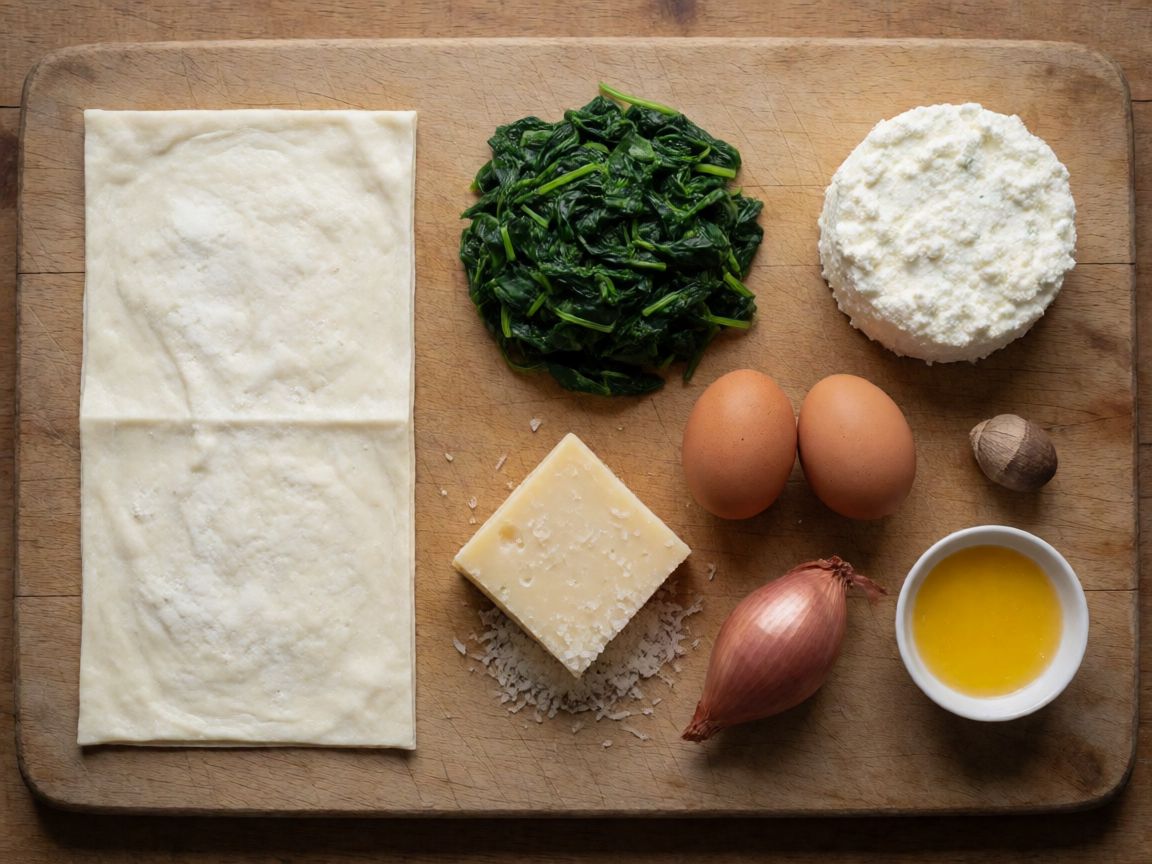
Ingredients









Steps
Heat a little cold-pressed olive oil and fry the finely chopped shallot until golden.
Add the spinach (fresh or frozen) and cook until it releases its liquid.
12 minSqueeze out the excess liquid from the spinach, then blend or finely chop it with a knife.
In a bowl, mix the ricotta with the egg, add salt, black pepper and nutmeg.
Add the Parmesan and mix well.
Fold the prepared spinach into the ricotta mixture.
Lay the pastry, together with the baking paper, into a 20 cm tin.
Prick the base with a fork and spoon in the ricotta and spinach filling.
Fold over the edges of the pastry to form a rim, and brush with beaten egg yolk if liked.
Bake the pie in the air fryer at 180°C.
30 min
This is a torta salata, the Italian answer to a quiche, but without the custardy slump — ricotta and egg hold their own shape, so you get a pie that slices clean rather than oozing. What decides whether it works isn't the filling, it's the water. Spinach is mostly water, and every bit you don't drive out before it meets the pastry becomes steam that softens the base from underneath. You're fighting sog on two fronts: the cooking, and the squeezing.
Some say frozen spinach is "cheating" — no, it isn't, because frozen spinach has already been blanched and shocked once, so its cell walls have already let go of structure. It actually releases water faster and more predictably than fresh, which bolts upright and resists wilting until it suddenly collapses all at once. Either works. What matters is what you do after it collapses: squeeze it in your fists, in a sieve, in a tea towel, however hard you can, until no more comes out. That liquid is the enemy of a crisp base.
The air fryer here isn't a gimmick, it's doing the job a proper kazan-sized domestic oven struggles with in a small flat: fast, enclosed, circulating heat that hits the pastry rim from all sides and sets it before the filling has time to weep into it. 180°C in this basket is hot enough to puff and colour pastry without scorching a filling that's mostly egg and cheese — egg sets around 70–80°C, long before pastry even thinks about burning, so the filling is never the limiting factor. The base is.
The pastry itself you buy ready-rolled, and that's not laziness, it's arithmetic. Puff pastry is built from folding butter between dozens of thin layers — a proper lamination takes patience most Sunday-roast kitchens don't have spare on a weeknight, and a shop-bought block has already done that waiting for you. If you want to make your own, fine, but know what you're taking on: time, a cold worktop, and a fridge that isn't crammed with the roast's leftovers.
Ricotta is the filling's backbone, not its flavour — it's mild on purpose, made from whey rather than curd, so it sets soft without turning rubbery the way a firmer cheese would under heat. If you can't get ricotta, look for anything with the same logic: fresh, unaged, mild, and not too wet — cottage cheese drained and blitzed smooth gets you close, though it carries a slight tang ricotta doesn't have.
Parmesan or Grana Padano isn't there for bulk, it's there for salt and savoury depth that ricotta and spinach, both quiet ingredients, don't supply on their own. Grana Padano is simply the younger, slightly milder cousin — less aged, less sharp, a touch cheaper because it spends less time maturing. Either does the job; what you want is a hard cheese that melts into the mix rather than sitting in lumps, so grate it fine.
The shallot fried in oil until golden is doing more than adding onion flavour — it's also drying slightly in the pan, losing its own water before it ever meets the spinach, so it doesn't add another source of moisture to a filling that's already fighting for firmness. Use any oil with no smell of its own if you're out of olive oil — a neutral vegetable oil works, though you lose the faint grassiness olive oil brings; don't reach for something strongly flavoured like sesame, it'll fight the nutmeg rather than sit behind it.
Nutmeg here isn't decoration, it's tradition carrying its own logic forward — the classic pairing with spinach and ricotta (think Italian ravioli fillings) exists because nutmeg's warmth cuts through leafy, slightly mineral greens the way pepper alone can't. A pinch is plenty; it should be felt, not tasted outright.
The egg yolk wash is purely cosmetic — colour and shine, nothing structural — so skip it without guilt if you haven't got a spare yolk lying about after making the filling's egg go in whole. And the fork-pricked base matters more than it looks: those little holes let trapped steam escape through the pastry rather than building up underneath it and pushing the base away from the filling, which is the real cause of that soggy, separated bottom people blame on "bad pastry" when it was really trapped steam all along.
·