
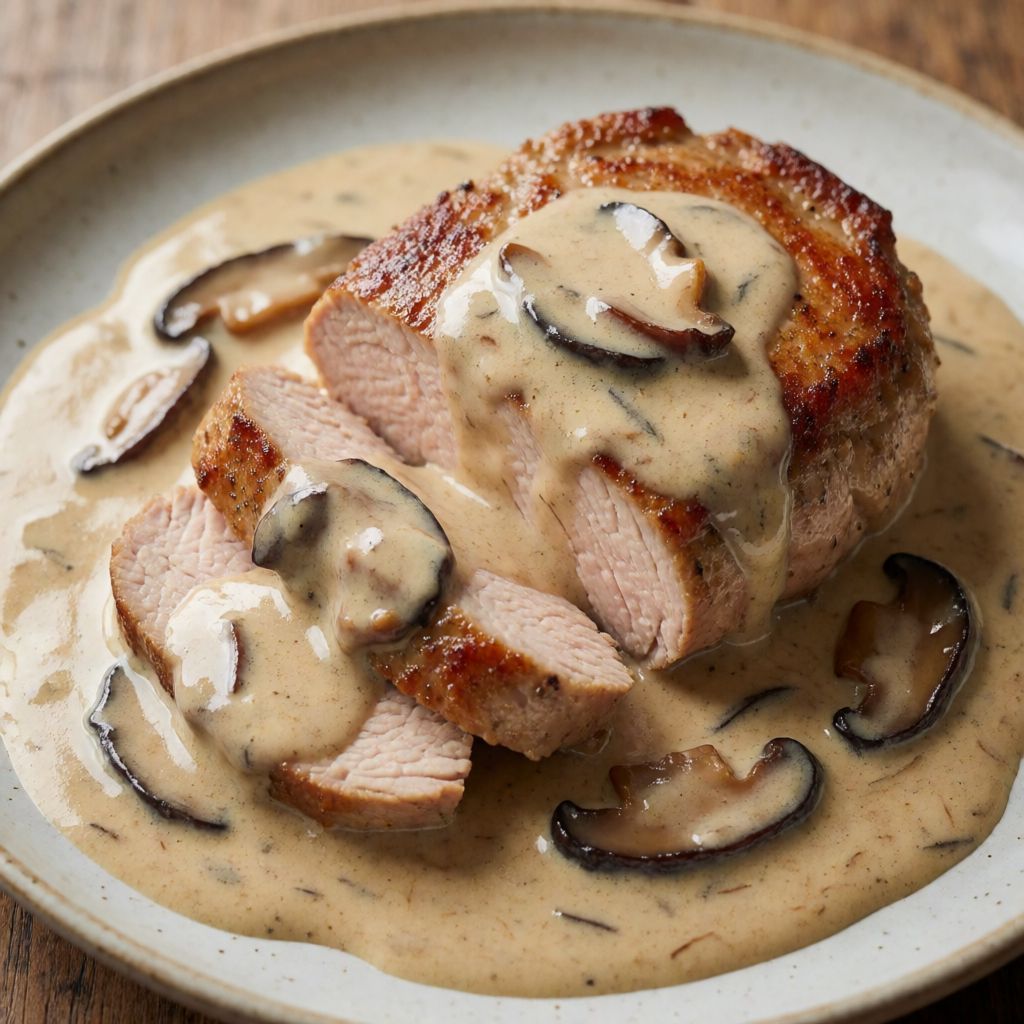
 AI photo
Turkey Breast "Maître d'Hôtel"
A quick pan-fried turkey breast finished with brandy, dried porcini and cream.
Labels are worked out automatically from the ingredients and can be wrong. Check the packaging if it matters to you.
Ingredients
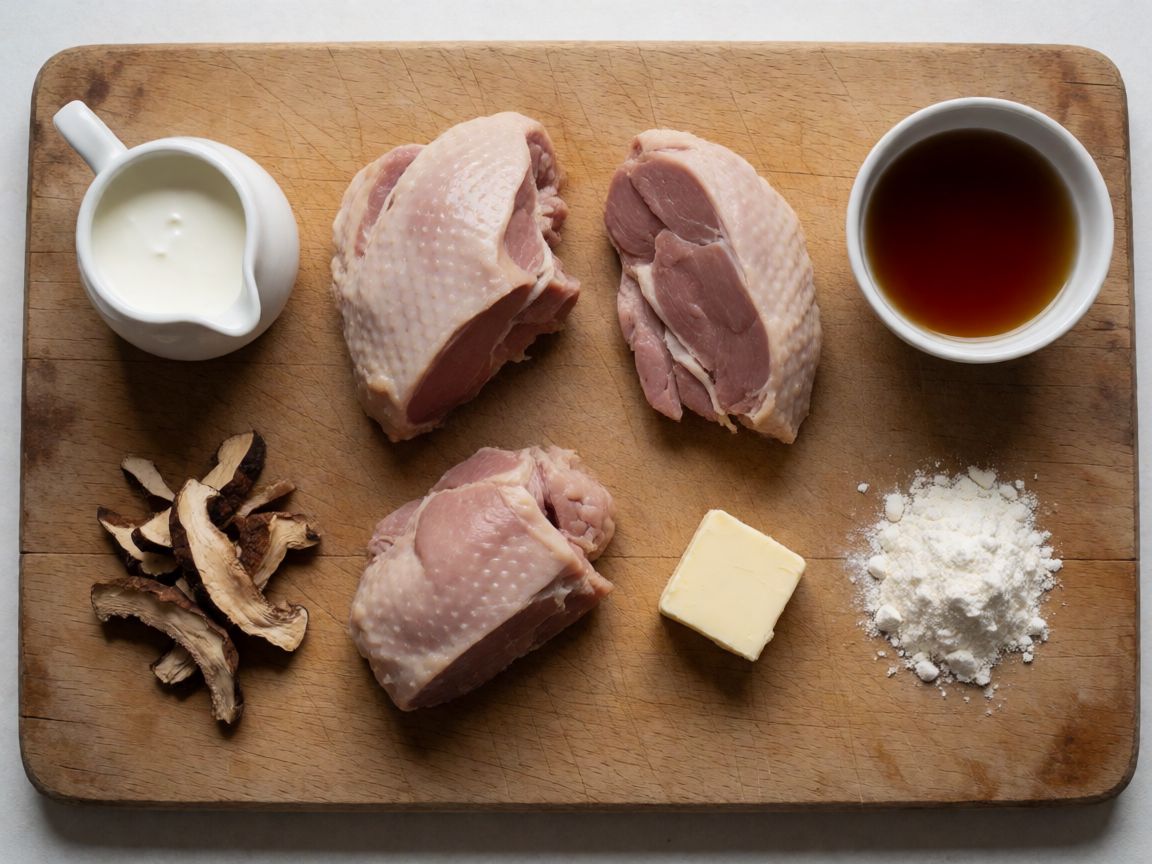
- 4 pcs Turkey breast steaks
- ml Double cream
- g Dried porcini mushrooms
- g Butter
- g Plain flour
- ml Brandy
- pinch Salt to taste







Steps
The night before, cover the dried porcini mushrooms with hot water and leave to soak overnight.
Season the turkey breast steaks with salt and coat them in flour.
Melt the butter in a frying pan, add the steaks and quickly brown on both sides.
Add the brandy and flambé.
Once the flame has died down, transfer the steaks to a plate.
Into the same pan, pour a quarter of the double cream and the chopped mushrooms.
Return the steaks to the pan and cook for about 5 minutes, until the sauce turns lightly creamy. Doneness: 74°C inside.
5 minServe hot.
This is a turkey breast cooked the way old brasseries cooked a quick cut: flour it, brown it fast in butter, set it on fire with brandy, then finish it in a cream sauce lifted by dried porcini. "Maître d'hôtel" here doesn't mean a fancy garnish — it's shorthand for a pan sauce built in the same vessel the meat browned in, nothing wasted, nothing washed up halfway through.
What decides whether it works is the browning, not the sauce. A turkey breast steak is lean and thin — it has almost no fat of its own to protect it, so if the pan isn't properly hot when the steak goes in, you don't get colour, you get grey meat weeping water into butter. The flour coat isn't there for crunch; it's there to catch and hold that colour, and to thicken the cream later without you needing a separate roux.
The soaking of the porcini isn't patience for its own sake dressed up as ritual — dried mushrooms are leather until water gets back into the cell walls, and overnight in hot (not boiling) water is what rehydrates them without cooking the flavour out into the soaking liquid you're about to throw away. Some say you can rush this with a ten-minute soak. No — ten minutes softens the surface and leaves a rubbery core; you'll bite into it in the finished dish and know.
Turkey breast steaks: this is the whole lean muscle sliced thin, which is why it browns fast and overcooks faster. Chicken breast steaks are the honest substitute — same lack of internal fat, same need for a hot pan and a short stay in it. Don't reach for turkey escalopes that have been bashed paper-thin for schnitzel; they'll be done before the sauce has any body.
Dried porcini: these give you concentrated mushroom flavour that fresh mushrooms simply don't have — drying intensifies the glutamates, which is the actual reason dried porcini cost what they cost and fresh field mushrooms don't do the same job. If you have none, a strong dried mixed mushroom bag works, soaked the same way; fresh chestnut mushrooms sautéed hard until they brown will get you partway there, but you're trading depth for convenience, and you should know that's the trade.
Butter: it's there as the browning medium and later melts into the sauce for body. Any fat with no flavour of its own would do for the browning step alone — a neutral oil, say — but then you lose the second job butter does, which is enriching the cream once the mushrooms and residual pan flavour go in. If you're avoiding dairy fat, use oil for the sear and accept a thinner sauce; don't try to fake butter's body with more flour.
Plain flour: its job is twofold — helping the crust form in step 3, and thickening the cream later, since the flour left clinging to the meat sheds into the sauce as it simmers. This is also why you don't need a separate flour-and-butter paste for the sauce; the dredge already did that work. Skip it and your sauce stays thin and separates when the brandy and cream meet.
Brandy: any spirit with enough alcohol to burn and a flavour you actually like works here — Cognac is traditional because it was the brandy to hand in French kitchens, not because the dish demands a particular bottle. Some say flambéing "burns off the alcohol" entirely — no, it burns off most of it and concentrates what's left into flavour; it's a cooking technique, not a disappearing act, so don't do this near children or with your sleeve hanging over the pan.
Double cream: UK double cream is thick enough to reduce into a proper sauce without splitting, which is exactly why this recipe specifies it rather than single cream or milk — lower-fat creams curdle when they hit a hot pan with brandy and acid from the mushroom liquid still in it. Adding it in two stages — a quarter first, then building — isn't fussiness; it's giving the sauce a chance to come together gradually rather than shocking it all at once.
The 74°C mark for the finished steaks is the one number here you shouldn't treat as decoration: turkey, like chicken, needs to get there to be properly done, and because the steaks are thin, that point arrives fast once they're back in the simmering sauce. A probe thermometer removes the guessing; failing that, cut one open — the juice should run clear, not pink, and the meat should have gone from translucent to properly opaque right through.