
 AI photo
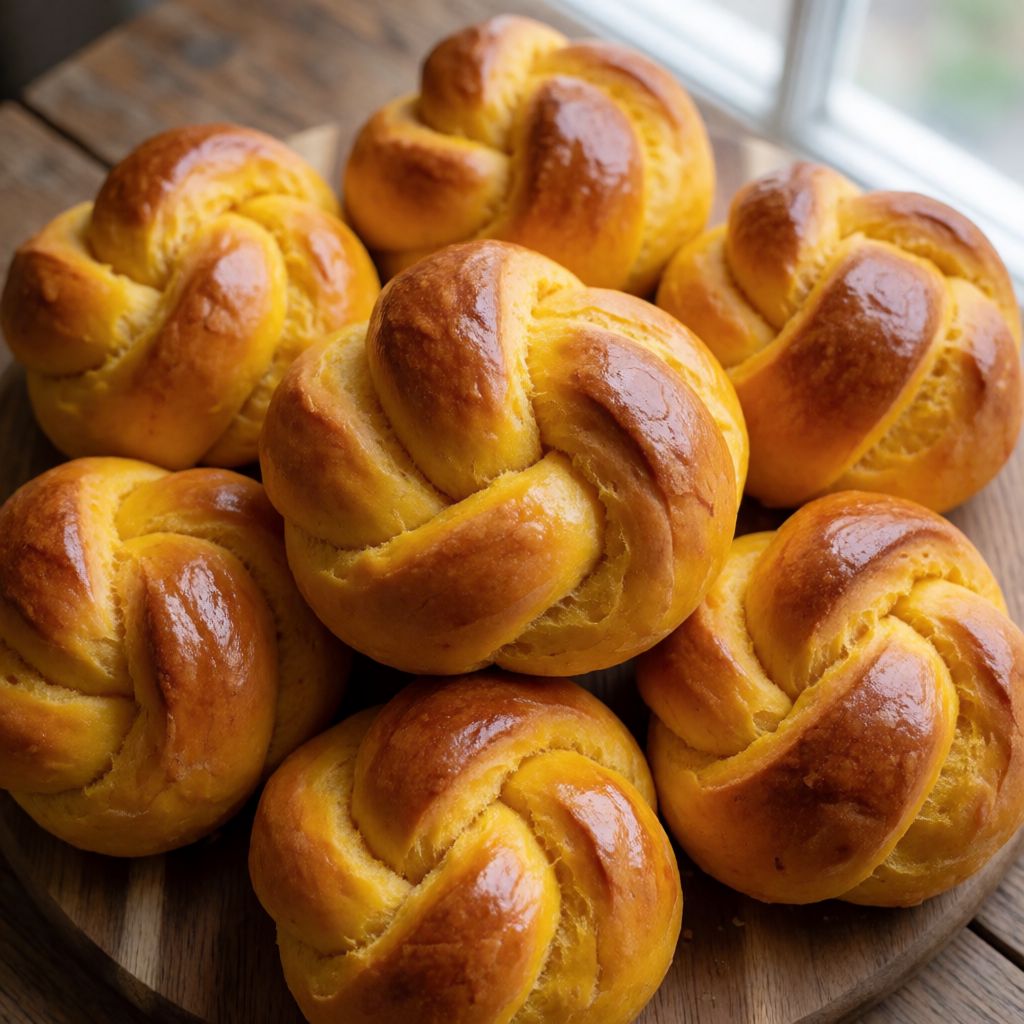
Carrot Knot Buns
Soft yeasted buns twisted into knots, filled with a spiced carrot and date cream and glazed with honey syrup.
Labels are worked out automatically from the ingredients and can be wrong. Check the packaging if it matters to you.
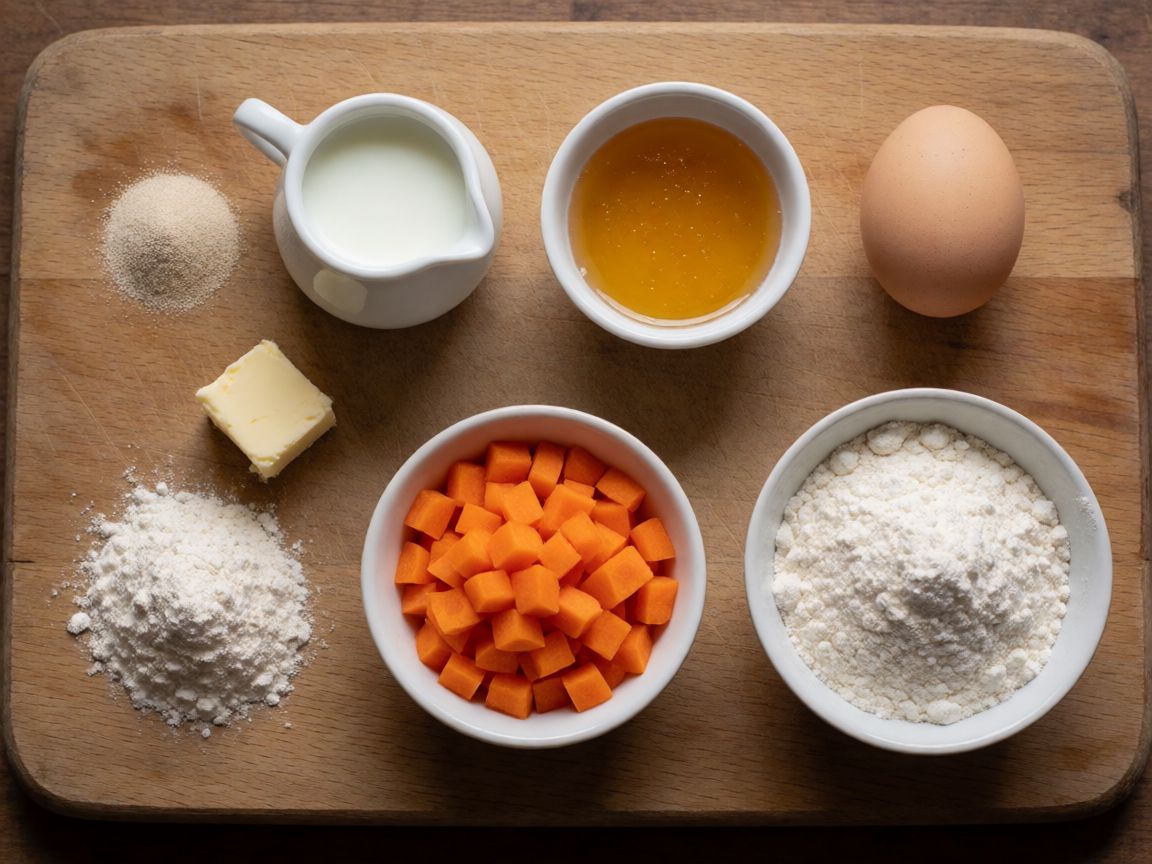
Ingredients














Steps
Warm the milk to about 35°C, stir in the yeast in a bowl, then add the olive oil, honey, salt and egg. Mix well.
Gradually add the wholemeal flour, then the plain flour a little at a time, and knead the dough until smooth and elastic.
Cover the bowl and leave the dough to rise for 1 1/2 hours on the kitchen counter.
90 minPut the carrot into a pan of lightly salted boiling water and cook for about 20 minutes, until the carrot is soft.
20 minDrain, then put the carrot, butter, dates, cinnamon and cardamom into a blender and blitz until smooth.
Roll out the dough into a large square about 1 cm thick.
Spread the dough with the carrot cream and fold one half over the other.
Cut the dough into strips and tie each strip into a knot.
Place the carrot buns on a baking tray lined with baking paper and leave to prove for 45 minutes.
45 minBrush the buns with beaten egg and bake in a preheated fan oven at 175°C for 16-20 minutes, until golden.
18 minMix the honey with the water and, as soon as the buns come out of the oven, brush them with this sweet honey syrup.
Let the buns cool slightly on a wire rack.
12 min
This is a yeasted bun with a sweet carrot-and-date paste folded through it, then twisted into a knot so the filling shows in stripes rather than hiding inside a spiral. Think of it as a cousin of cinnamon rolls, except the filling isn't butter and sugar but boiled carrot blitzed with dates, cinnamon and cardamom — closer to carrot cake in a bread shape. What decides whether it works is not the shape at all, it's the dough: enough gluten development to hold a knot without tearing, and a filling dry enough that it doesn't turn the dough to paste as it proves.
Some say carrot has no place in a sweet bun, that it's a vegetable smuggled in for virtue's sake. No — carrot cooked soft and blitzed with dates behaves exactly like a fruit puree: it brings moisture and a gentle sweetness without the grittiness of raw sugar, and it's cheap, which is half the reason it ended up in cakes and buns in the first place, going back to wartime sugar rationing in this country. Nothing mystical, just a vegetable standing in for fruit when fruit was dear.
The two flours matter for the same reason: wholemeal alone gives you a dense, heavy crumb because its bran cuts the gluten strands short; all plain flour gives you a soft, forgettable roll. Together you get structure with a bit of weight and nutty flavour behind it — enough backbone to hold a knot shape through baking without the bun spreading flat and losing its folds.
Fresh yeast and milk warmed to about 35°C — blood-warm, test it on your wrist, no thermometer needed — because above roughly 50°C you start killing the yeast outright, and cold milk just makes it sulk and take forever. If you can only get dried yeast, use about a third of the weight and you don't need to proof it in liquid first, just mix it straight into the flour. The honey and egg in the dough aren't decoration: honey feeds the yeast a little and keeps the crumb soft for longer once baked, the egg adds richness and a touch of structure from its protein. Olive oil here stands in for the fat a British baker might reach for as butter or vegetable oil — any oil with no smell of its own does the job of keeping the crumb tender, though a fruity olive oil will leave a faint trace of itself, which some like and some don't; a neutral oil if you'd rather the carrot speak alone.
The carrot must actually go soft — bends without resistance when you press it with a spoon, not just "cooked for 20 minutes" — because an underdone carrot stays fibrous even after blending, and you'll bite into stringy threads inside what should be a smooth filling. Dates do two jobs: sweeten without the grainy aftertaste of white sugar, and bind the puree so it's thick enough to spread without soaking into the dough. If you've no dates, dried figs or even a spoon of soft brown sugar will sweeten it, though you lose some of that caramel depth. Cinnamon and cardamom aren't interchangeable with "mixed spice" out of a jar — cardamom especially has a sharp, almost citrus lift that mixed spice doesn't carry, so if you're substituting, lean on more cinnamon and accept a flatter, cosier flavour rather than chase cardamom's brightness with something else.
Rolling the dough to about a centimetre thick and no thinner is the real safeguard here: too thin and the carrot cream soaks straight through when you fold it, gluing the layers together into a soggy seam instead of leaving the clean folded structure that lets a knot actually hold its shape. The fold-then-cut-then-tie sequence is what turns a flat spread sheet into individual buns — each strip, once knotted, traps the filling along its length rather than letting it spiral out of view, so you see the carrot colour at every twist, which is the whole visual point of a "knot" over a plain roll.
Proving for 45 minutes after shaping is the second rise, and here doneness is again something you check with a finger, not a clock: press a knot gently and if the dent slowly fills back in, it's ready; if it springs back instantly, give it more time; if the dent just stays sunk, you've gone too far and the bun will collapse a little in the oven. A kitchen that's cool — most British kitchens in winter — will push this well past 45 minutes, so treat the time as the minimum, not the target.
175°C in a fan oven is hot enough to set the crust and develop colour through Maillard browning before the inside dries out, but a domestic oven's fan can run hotter at the edges of the tray than the centre, so rotate the tray if your oven does that, and watch for "golden" rather than trusting 16 minutes blindly — pale buns need another few minutes, dark ones at 16 are already done and waiting longer just dries them.
The honey-water glaze brushed on straight from the oven is not optional shine for a photograph — it's what keeps the crust from turning leathery as the bun cools, sealing in the steam that would otherwise just evaporate and leave you with a dry top. Twelve buns from this amount of dough feeds a gathering rather than a single sitting — good for a Sunday after the roast, with tea, while they're still faintly warm in the middle. And the whole process, proof twice, wait twice, is not something to rush through on a weekday evening: patience is the actual ingredient that separates a bun with proper structure from a flat, dense knot that just about resembles the idea of one.