
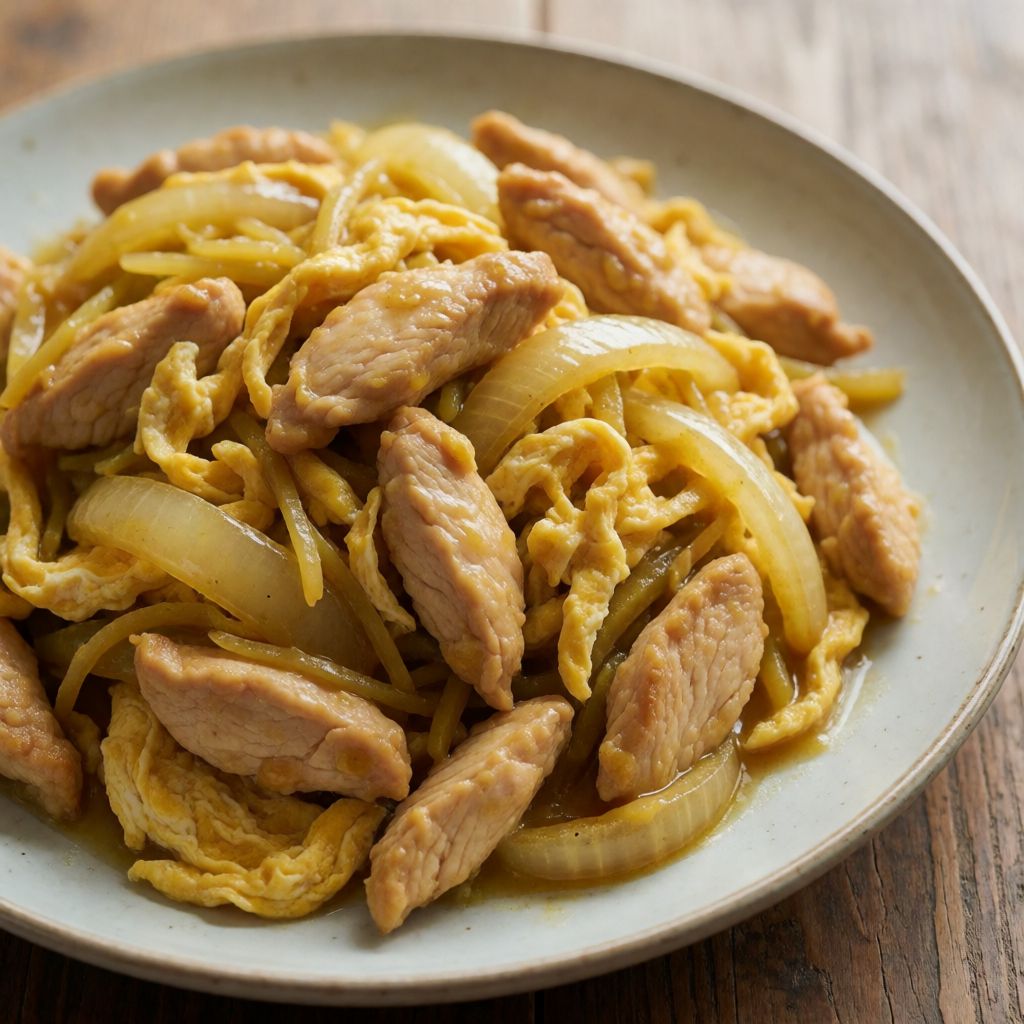
 AI photo
Chicken and Vegetable Wok
A quick chicken and vegetable wok with noodles and coconut milk.
Labels are worked out automatically from the ingredients and can be wrong. Check the packaging if it matters to you.
Ingredients
- 3 pcs Eggs
- 45 ml Water
- 400 g Chicken breast cut into thin strips
- 1 tbsp Curry paste yellow
- 1 pcs Onion cut into thin wedges
- 1 tsp Ginger finely grated
- 3 clove Garlic finely chopped
- 200 g Broccoli broken into florets
- 1 pcs Pepper diced
- 150 g Carrot cut into thin strips
- 400 ml Coconut milk
- 300 g Noodles
- 100 g Spinach
- 4 tbsp Sesame oil for frying
- Salt
- Black pepper
- 3 pcs Spring onion sliced
- 40 g Cashews roughly chopped
- 1 bunch Coriander fresh, roughly chopped















Steps
Beat the eggs with the water, adding a little salt and pepper, until frothy, and pour into a very hot wok with oil.
2 minStir quickly, then let it set into a fluffy omelette. Set the omelette aside on a plate.
2 minAdd more oil to the hot wok and fry the chicken, curry paste and onion, stirring constantly for a few minutes.
5 minReduce the heat to medium and add the ginger, garlic, broccoli, pepper, carrot and coconut milk. Let it simmer for 5 minutes, meanwhile cooking the noodles according to the pack instructions.
5 minCut the omelette into strips and add the omelette, noodles and spinach to the dish, mix well and divide among bowls.
2 minSprinkle with cashews, spring onion and coriander.
1 min
This is a wok dish in the loosest, most honest sense of the word — meaning you probably won't use a wok at all, you'll use whatever wide pan you own, and that's fine. What makes it work isn't the shape of the pan but the order of events: everything goes in hot and fast, in sequence, so each thing keeps its own texture instead of turning into a uniform stew. The curry paste and coconut milk carry the whole dish — they're doing the job a long-simmered stock would do in a proper Thai kitchen, except here they do it in five minutes flat.
What decides whether this succeeds or just becomes "chicken in sauce with noodles" is heat management on a domestic hob, which was never built for this. A British induction or gas ring gives you one size of flame per burner, not the three distinct zones a kazan gets from being curved — so you have to fake it by moving the pan on and off the heat, or by timing your additions so the pan never cools down enough to start stewing instead of searing.
The vegetables go in order of how long they can survive without turning to mush: broccoli and carrot first because they want bite, pepper close behind, spinach dropped in right at the end because spinach is basically water held together by politeness and thirty seconds of heat is all it can take before it disappears. Some say you should add everything together to "let the flavours mingle" — no, because mingling flavours and keeping textures are opposite goals, and this dish needs both the sauce flavouring everything and the carrot still having a spine.
The omelette at the start looks like a detour but it's structural: you're pre-cooking the egg separately because egg dropped into a crowded, saucy wok just curdles into rags, it never sets into something you can slice. Beating in the water isn't tradition for its own sake — it's steam. The water flashes to vapour in contact with hot metal and that's what puffs the egg up light instead of leaving it dense and rubbery. Pour it into oil that's properly hot — you'll know because it should set almost on contact, not slowly weep and spread. If it spreads and takes a minute to firm up, your pan was never hot enough and the egg will be tough everywhere else too.
Chicken breast cut into thin strips cooks by surface area, not by weight — thin means the outside sears before the inside has time to dry out, which is the whole point of cutting it that way rather than leaving it in a lump. If your chicken comes out chewy, the strips were too thick or the pan wasn't screaming hot when they went in, so the meat steamed in its own juice instead of browning.
The curry paste is concentrated aromatics and chilli, usually fried in oil before liquid is added, because the flavour compounds in dried spice and chilli are largely oil-soluble — bloom it in the fat with the onion and chicken rather than stirring it straight into the coconut milk, or it'll taste flat and raw. Any yellow curry paste will do; they vary jar to jar by sweetness and salt, so taste before you add more salt later in the recipe — an easy place to oversalt a dish that already has a seasoned paste in it.
Ginger and garlic go in after the chicken has had its hot, dry minutes, not before, because both burn in seconds at searing heat and turn bitter — they want the gentler, wetter environment that starts once the coconut milk goes in and the pan drops to a simmer rather than a sear. This is also the point where "medium heat" stops being vague: you're after a lazy bubble, not a hard boil, because coconut milk's fat can split and turn grainy if you drive it too hard.
Coconut milk itself is mostly there for body and the way it carries fat-soluble flavour from the paste and aromatics through the whole dish — if you don't have it, a thinned-down natural yoghurt won't do the same job because it has no fat to speak of; you'd be closer with a light cream plus a splash of water to loosen it, accepting you lose the coconut character entirely.
Noodles cooked separately and folded in at the end rather than cooked in the sauce is about not wanting them bloated with liquid they can't hold — they'll keep absorbing moisture on standing anyway, so slightly undercooking them when you drain them gives you a buffer.
Cashews and spring onion go on raw, at the table, because their whole job is contrast — crunch and sharp green bite against a soft, sauced dish — and heat would only soften them into agreeing with everything else, which defeats the purpose of having them there at all.